4. AARP Family Caregiving — best free tools and information
AARP offers free caregiving guides, a caregiver community, benefit checklists, and state-specific resources for members and non-members alike. Best for: caregivers who want reliable, easy-to-read information anytime.
5. Medicaid HCBS and self-directed care — best financial help
Many state Medicaid home- and community-based services (HCBS) programs offer self-directed care, which in some states lets a family member be paid to provide care. Benefits vary widely by state. Best for: lower-income families who need financial support and in-home care.
6. VA Caregiver Support Program — best for veterans'' families
The VA''s Caregiver Support Program offers a caregiver support line, respite, training, and — for eligible post-9/11 and legacy veterans — a monthly stipend through the Program of Comprehensive Assistance for Family Caregivers. Best for: families caring for a veteran.
7. Alzheimer''s Association — best for dementia caregivers
The Alzheimer''s Association runs a free 24/7 helpline (1-800-272-3900), support groups, and care-planning resources tailored to dementia. Best for: caregivers navigating Alzheimer''s or another dementia.
How to choose the right resources for your family
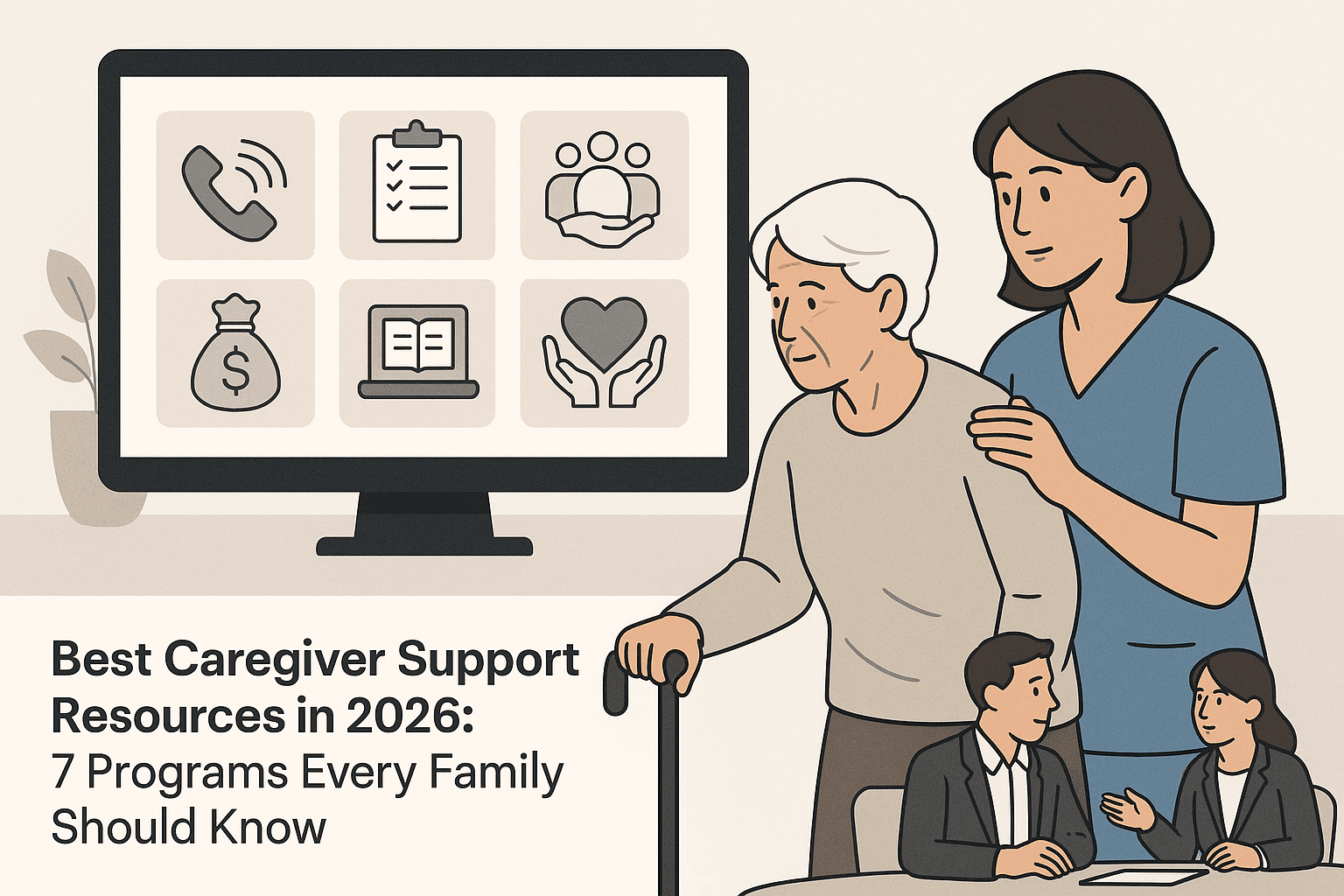
Match the resource to your most urgent need. If you need a break, ask your Area Agency on Aging about respite and adult day programs. If you need money, look into Medicaid HCBS self-directed care or, for veterans'' families, the VA stipend. If you need information and community, start with the Family Caregiver Alliance and AARP. And if the person you care for has dementia, the Alzheimer''s Association helpline should be on speed dial. The single best first step for most families is one call to the Eldercare Locator or your local AAA, which can route you to everything else.
Can I get paid to care for a family member?
In many states, yes. Some Medicaid self-directed care programs and the VA Caregiver Support Program allow eligible family members to be paid or receive a stipend. Rules, pay, and eligibility vary by state and program, so contact your Medicaid office or the VA to check.
What is respite care and how do I find it?
Respite care provides temporary relief so a caregiver can rest — through in-home help, adult day centers, or short facility stays. Your Area Agency on Aging or the Eldercare Locator can connect you to local respite options, some of which are low-cost or subsidized.
Where can I find emotional support as a caregiver?
Support groups, both in person and online, are widely available through the Family Caregiver Alliance, the Alzheimer''s Association, and local AAAs. Talking with others who understand caregiving is one of the most effective ways to reduce burnout.
This article is for educational purposes only and is not medical, legal, or financial advice. Program availability, eligibility, and benefits vary by state and change often — confirm current details directly with each resource or your local Area Agency on Aging.