If you are turning 65, this is the first fork in the road. Getting it right protects you from coverage gaps and late-enrollment penalties. Here are the 7 differences that actually matter (learn more about the 12 best ways to live happy, healthy, and wealthy in retirement in 2026 and beyond).
1. What each part covers
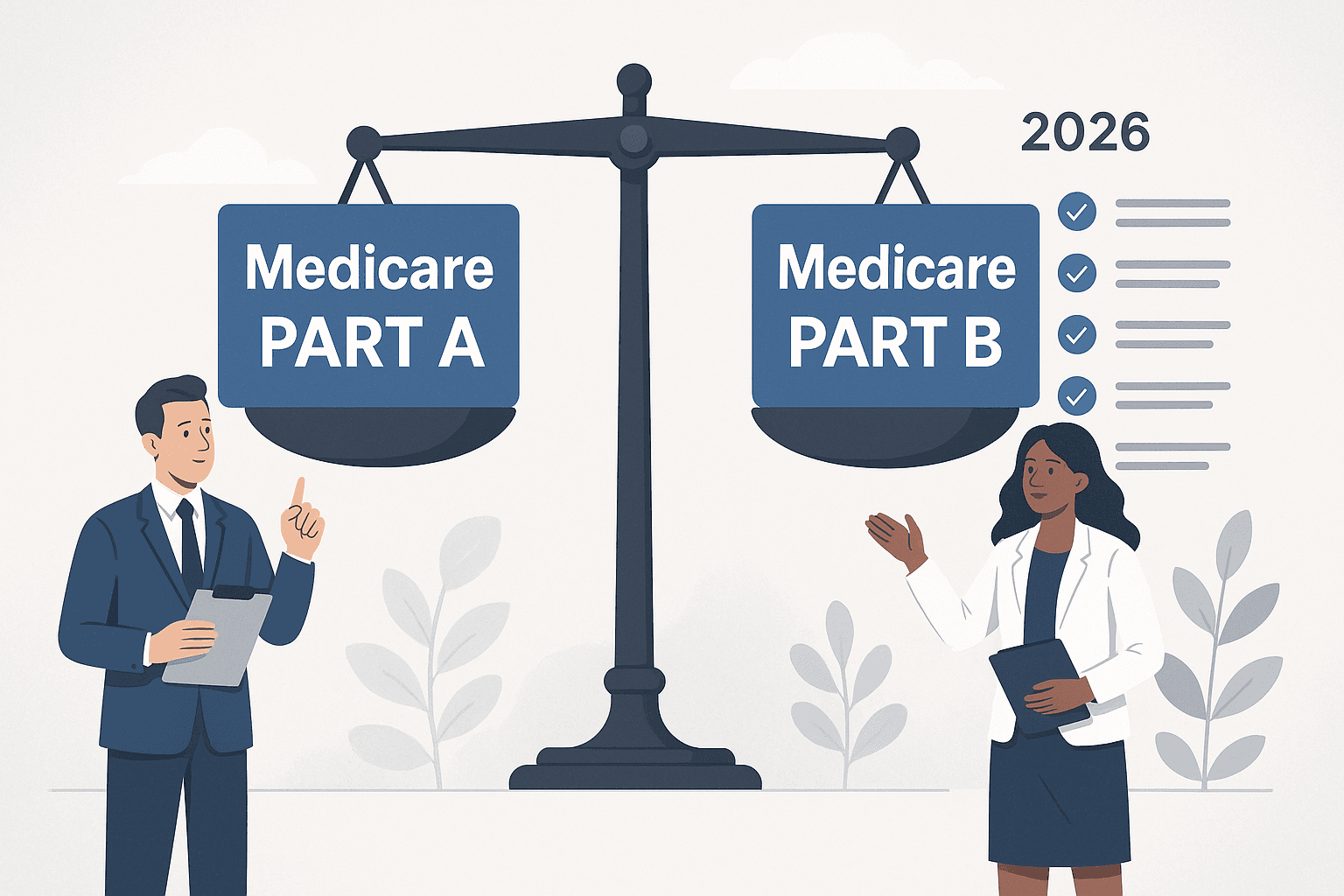
Part A (Hospital Insurance) covers inpatient hospital stays, skilled nursing facility care, hospice, and some home health care. Think "admitted to the hospital overnight."
Part B (Medical Insurance) covers doctor visits, outpatient care, preventive services, lab tests, durable medical equipment, and most vaccines. Think "everything outside the hospital bed."
The two are designed to work together — Part A handles the room, Part B handles the physician who treats you in it.
2. What each part costs
This is the biggest practical difference:
- Part A is premium-free for about 99% of beneficiaries, because you (or a spouse) paid Medicare taxes for at least 40 quarters (10 years) of work. If you didn't, the 2026 premium can run up to $518/month.
- Part B has a standard monthly premium of $185 in 2026, deducted from most people's Social Security check. Higher earners pay more through IRMAA (income-related surcharges).
3. Deductibles and cost-sharing
- Part A uses a per-benefit-period deductible ($1,676 in 2026) that covers your first 60 days in the hospital. After day 60, daily coinsurance kicks in.
- Part B has a lower annual deductible ($283 in 2026), after which you typically pay 20% of the Medicare-approved amount for most services — with no annual out-of-pocket cap under Original Medicare.
That missing out-of-pocket cap is why many beneficiaries add a Medigap policy or choose Medicare Advantage.
4. Enrollment: automatic vs. active
- If you already collect Social Security before 65, you are usually enrolled in both Part A and Part B automatically.
- If you are not yet collecting Social Security, you must actively sign up during your 7-month Initial Enrollment Period (the 3 months before your 65th birthday month, the month itself, and the 3 months after).
Miss it, and Part B can carry a lifelong late-enrollment penalty of 10% for each 12-month period you delayed.
5. When you can delay without penalty
Part A is almost always worth taking at 65 since it's free. Part B is where timing matters:
- If you have creditable employer coverage (from your job or a spouse's active employment), you can usually delay Part B penalty-free and enroll later through a Special Enrollment Period.
- Retiree coverage, COBRA, and marketplace plans do NOT count as creditable for this purpose — a common and costly mistake.
6. How they fit into the bigger Medicare picture
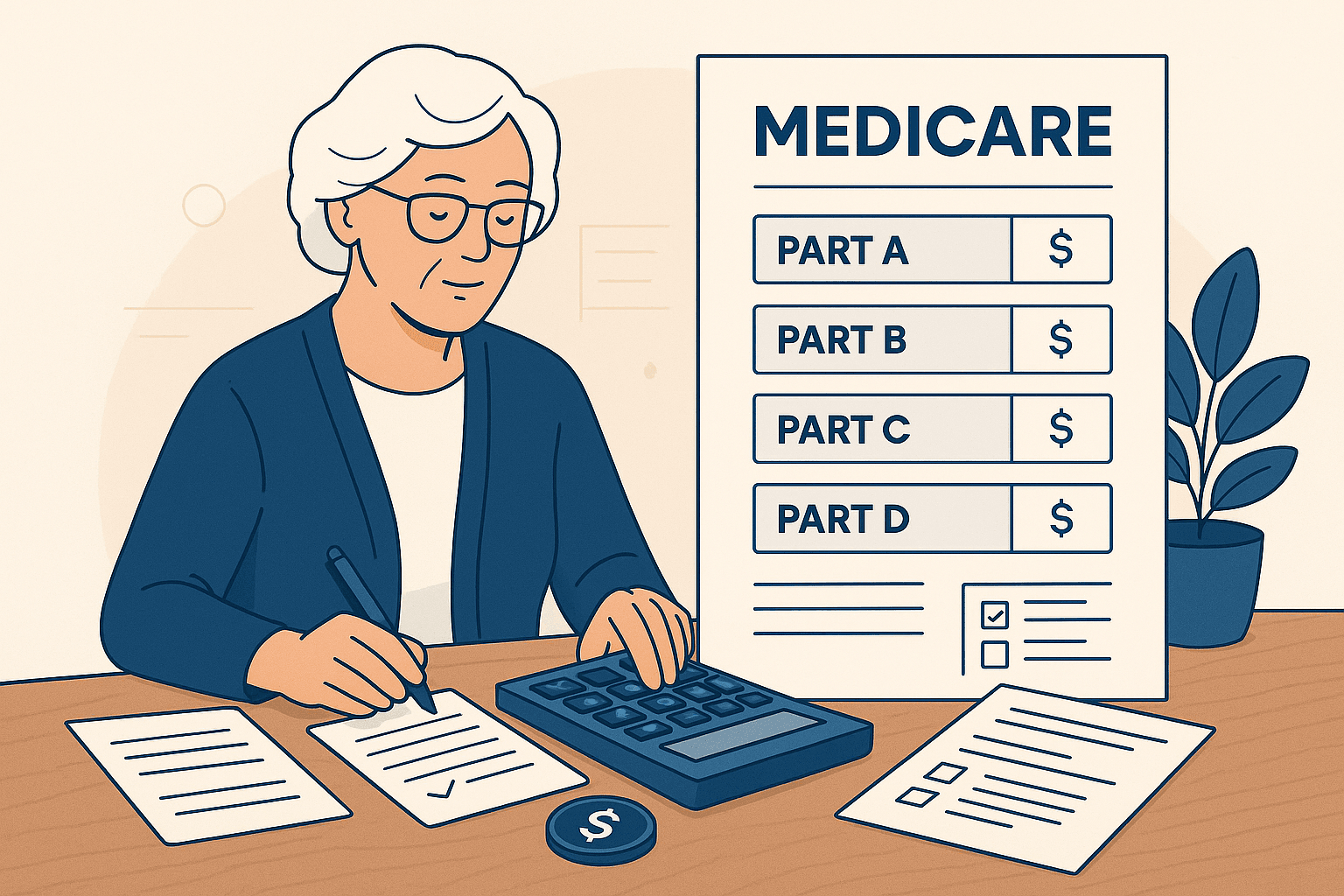
Parts A and B together are called Original Medicare. From there:
- Part C (Medicare Advantage) bundles A and B (usually plus drug coverage) through a private plan.
- Part D adds prescription drug coverage.
- Medigap supplements Original Medicare by covering much of the 20% Part B leaves behind.
You must be enrolled in both Part A and Part B before you can buy a Medigap or Medicare Advantage plan.
7. The one-line summary for each
- Part A = inpatient/hospital, usually free, per-stay deductible.
- Part B = outpatient/doctor, $185/month in 2026, 20% coinsurance with no cap.
Which should you take at 65?
Most people should take both at 65 unless they have creditable employer coverage. Part A is free and rarely worth delaying. Part B is only worth delaying if you have active employer insurance — and even then, confirm it's creditable in writing before you skip it.
If you're unsure whether your current coverage counts, that's exactly the moment to talk to a licensed advisor or your State Health Insurance Assistance Program (SHIP), which offers free, unbiased help.
Educational information only, not insurance or medical advice. Premiums, deductibles, and rules are for 2026 and can change — verify current figures at Medicare.gov before making decisions.