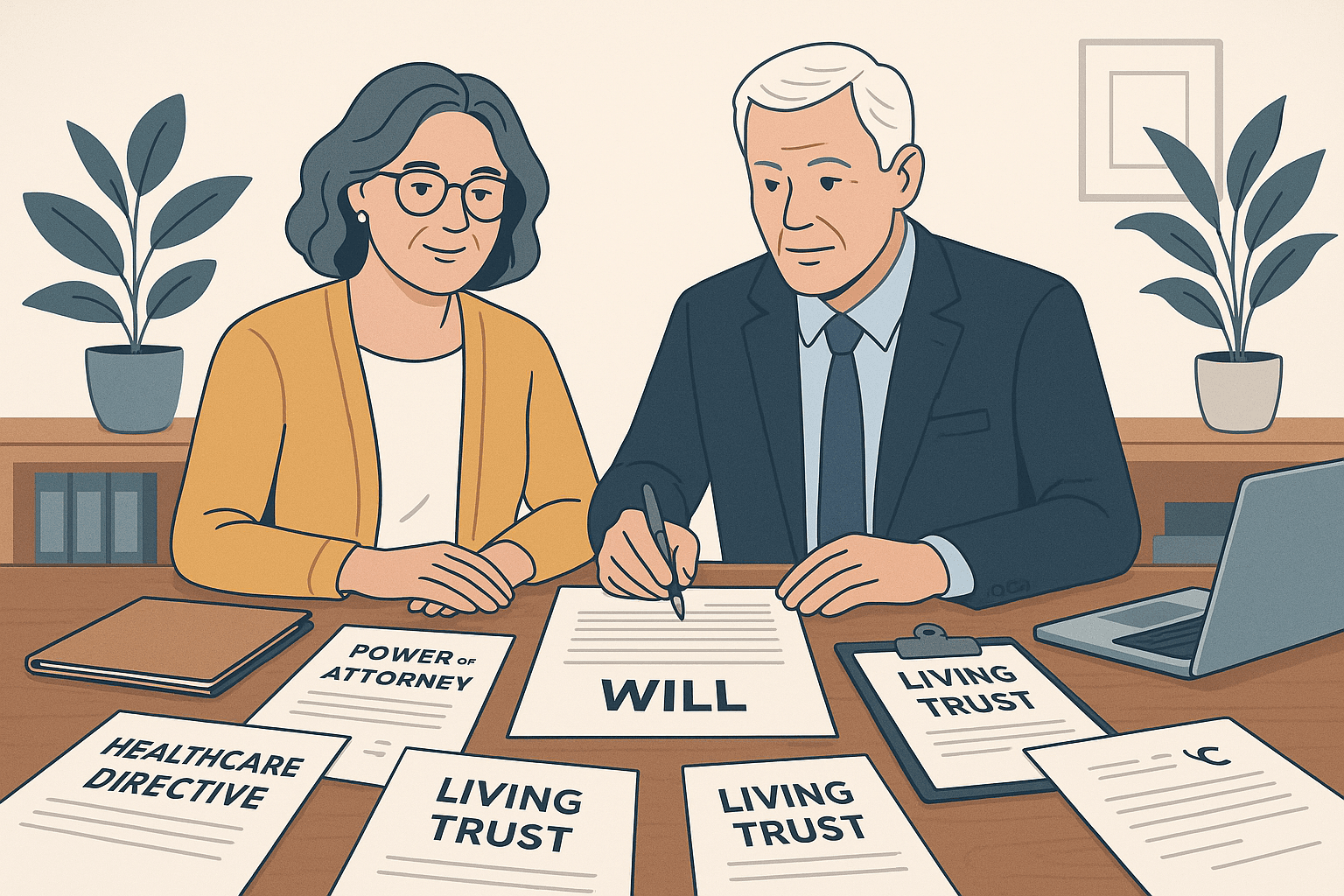
The Core Documents at a Glance
| Document |
What It Does |
Who It Protects |
| Will |
Directs who inherits your assets |
Your heirs |
| Financial POA |
Lets someone manage money if you can't |
You, while living |
| Healthcare POA + living will |
Names a medical decision-maker and your wishes |
You, while living |
| Beneficiary designations |
Pass accounts directly, outside the will |
Your named beneficiaries |
A living trust is an optional fifth tool that can help avoid probate. Last updated: June 2026. Laws vary by state — confirm requirements with a local estate attorney.
1. Last Will and Testament
A will is the foundation. It names who inherits your property, who serves as executor, and — critically for younger families — guardians for any dependents. Without a valid will, state "intestacy" laws decide who gets what, which may not match your wishes.
Key Points
- Must meet your state's signing and witnessing rules to be valid
- Assets passing by a will generally go through probate
- Review it after major life events: marriage, divorce, deaths, new grandchildren
Who Needs One
Essentially every adult. It is the single most important document if you have none.
2. Financial Power of Attorney
A financial (or "durable") power of attorney names someone to handle your money — paying bills, managing accounts, filing taxes — if you become unable to. "Durable" means it stays in effect if you become incapacitated.
Key Points
- Choose a trusted agent and at least one backup
- A "durable" POA survives incapacity; a non-durable one does not
- Without one, your family may need a costly court guardianship
Who Needs One
Every senior. This is the document that prevents court intervention if you lose capacity.
3. Healthcare Power of Attorney and Living Will
These cover medical decisions. A healthcare power of attorney (or healthcare proxy) names someone to make medical choices if you can't speak for yourself. A living will (advance directive) states your wishes about life support and end-of-life care.
Key Points
- Pick someone who will honor your wishes under pressure
- Discuss your preferences with that person in advance
- Give copies to your doctor, hospital, and proxy
Who Needs One
Every senior. It spares loved ones from guessing during a crisis.
4. Beneficiary Designations
Retirement accounts, life insurance, and many bank and brokerage accounts pass directly to the people you name as beneficiaries — and these designations override your will. Outdated beneficiaries are one of the most common and costly estate-planning mistakes.
Key Points
- Review beneficiaries on every account regularly
- Name contingent (backup) beneficiaries too
- Coordinate them with your overall plan so nothing conflicts
Who Needs This
Anyone with retirement accounts, life insurance, or payable-on-death accounts.
5. Living Trust (Optional but Powerful)
A revocable living trust holds your assets during life and distributes them after death without probate. You keep control while living and can change it anytime.
Pros
- Avoids probate, which can be slow and public
- Provides privacy and smoother management if you're incapacitated
- Useful if you own property in more than one state
Cons
- Costs more to set up than a simple will
- You must "fund" it by retitling assets into the trust
- Not necessary for everyone
Who Needs One
Seniors with larger or multi-state estates, privacy concerns, or a desire to avoid probate. Many people are well served by a will alone.
Quick Comparison: Will vs. Living Trust
| Feature |
Will |
Living Trust |
| Avoids probate |
No |
Yes (for funded assets) |
| Effective during incapacity |
No |
Yes |
| Privacy |
Public record |
Private |
| Setup cost |
Lower |
Higher |
| Best for |
Most people |
Larger or multi-state estates |
Common Estate-Planning Mistakes Seniors Make
The biggest pitfalls are simple: not having documents at all, naming an agent or executor without telling them, forgetting to update beneficiaries after a divorce or death, and creating a living trust but never funding it. Another is hiding documents so well that no one can find them. Keep originals safe but accessible, and tell your trusted people where they are.
How to Get Started
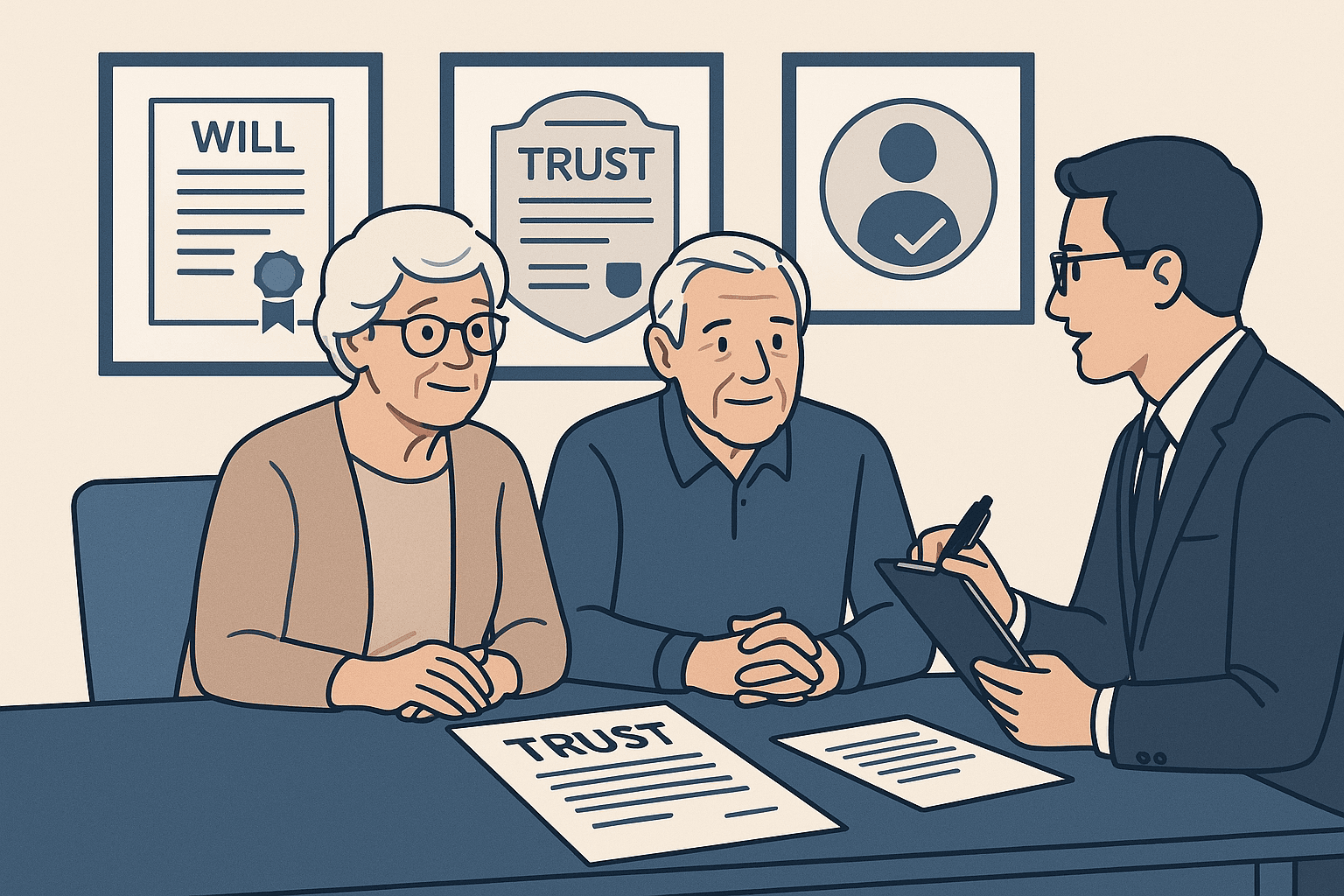
Start by listing your assets and the people you trust. Then meet with a licensed estate attorney in your state, who can ensure your documents are valid and coordinated. Many seniors complete a full plan in one or two meetings. Revisit the plan every few years or after any major life change.
How We Researched This
This guide summarizes widely accepted estate-planning concepts and the documents most commonly recommended for seniors. Because estate, probate, and healthcare-directive laws differ by state, we emphasize confirming details with a licensed local attorney. Last updated: June 2026. We review this guide annually.
Frequently Asked Questions
What documents do seniors need for estate planning?
At minimum: a will, a durable financial power of attorney, a healthcare power of attorney with a living will, and up-to-date beneficiary designations. A living trust is optional.
Do I need a will if I have a trust?
Usually yes — a "pour-over" will catches any assets not titled in the trust and can name guardians. An attorney can coordinate the two.
What's the difference between a will and a living trust?
A will takes effect at death and goes through probate; a funded living trust avoids probate, works during incapacity, and stays private, but costs more to set up.
What happens if I die without a will?
State intestacy laws decide who inherits, which may not reflect your wishes, and the process can be slower and more contentious for your family.
Why do beneficiary designations matter so much?
Because they override your will. Retirement accounts and life insurance pass to the named beneficiary regardless of what your will says, so outdated designations can derail your plan.
Who should I name as power of attorney?
Someone trustworthy, organized, and willing to act in your interest — plus a backup. Discuss the role with them before naming them.
How often should I update my estate plan?
Review it every few years and after major life events such as marriage, divorce, a death, a big change in assets, or a move to another state.
Can I write a will myself?
Some people use templates, but errors can invalidate a will or create disputes. For most seniors, a licensed attorney is worth the cost for peace of mind.
Important Disclosures
This content is for general informational and educational purposes only and does not constitute legal, tax, or financial advice. Estate, probate, and healthcare-directive laws vary significantly by state and change over time. Consult a licensed estate-planning attorney in your state before creating or changing any legal documents.