Applying for Medicare in 2026 comes down to seven clear steps, and the most important one is timing. Your main window to sign up is your Initial Enrollment Period — a seven-month stretch that begins three months before the month you turn 65, includes your birthday month, and ends three months after. Miss it without other coverage, and you could face lifelong late penalties. The good news: for most people the process is straightforward, much of it happens online in under an hour, and this guide walks you through each step in order.
Step 1: Figure Out Your Enrollment Window
Your Initial Enrollment Period (IEP) lasts seven months and centers on your 65th birthday. If you sign up during the three months before your birthday month, your coverage starts the first day of your birthday month — so enrolling early is usually the smart move to avoid any gap.
A few situations change the timeline:
- Still working at 65 with employer coverage? You may qualify for a Special Enrollment Period and can delay Part B without penalty until that coverage ends.
- Missed your IEP with no other coverage? The General Enrollment Period runs January 1 through March 31 each year, though a late penalty may apply.
Step 2: Check Whether You're Automatically Enrolled
Not everyone has to actively sign up. If you're already receiving Social Security or Railroad Retirement Board benefits at least four months before turning 65, you'll typically be enrolled in Medicare Part A and Part B automatically. Your red, white, and blue Medicare card simply arrives in the mail about three months before your birthday.
If you're not yet collecting Social Security, you'll need to apply yourself — which brings us to the next step.
Step 3: Create Your Account and Apply Online
The simplest way to apply is online at SSA.gov, the Social Security Administration's website. Start by creating a free "my Social Security" account if you don't have one. The application itself takes about 10 to 30 minutes, and you can save your progress and return later.
Prefer to talk to someone? You can also apply by calling Social Security or visiting a local office. Have a few details handy: your Social Security number, date and place of birth, and information about any current employer health coverage.
Step 4: Enroll in Part A and Part B
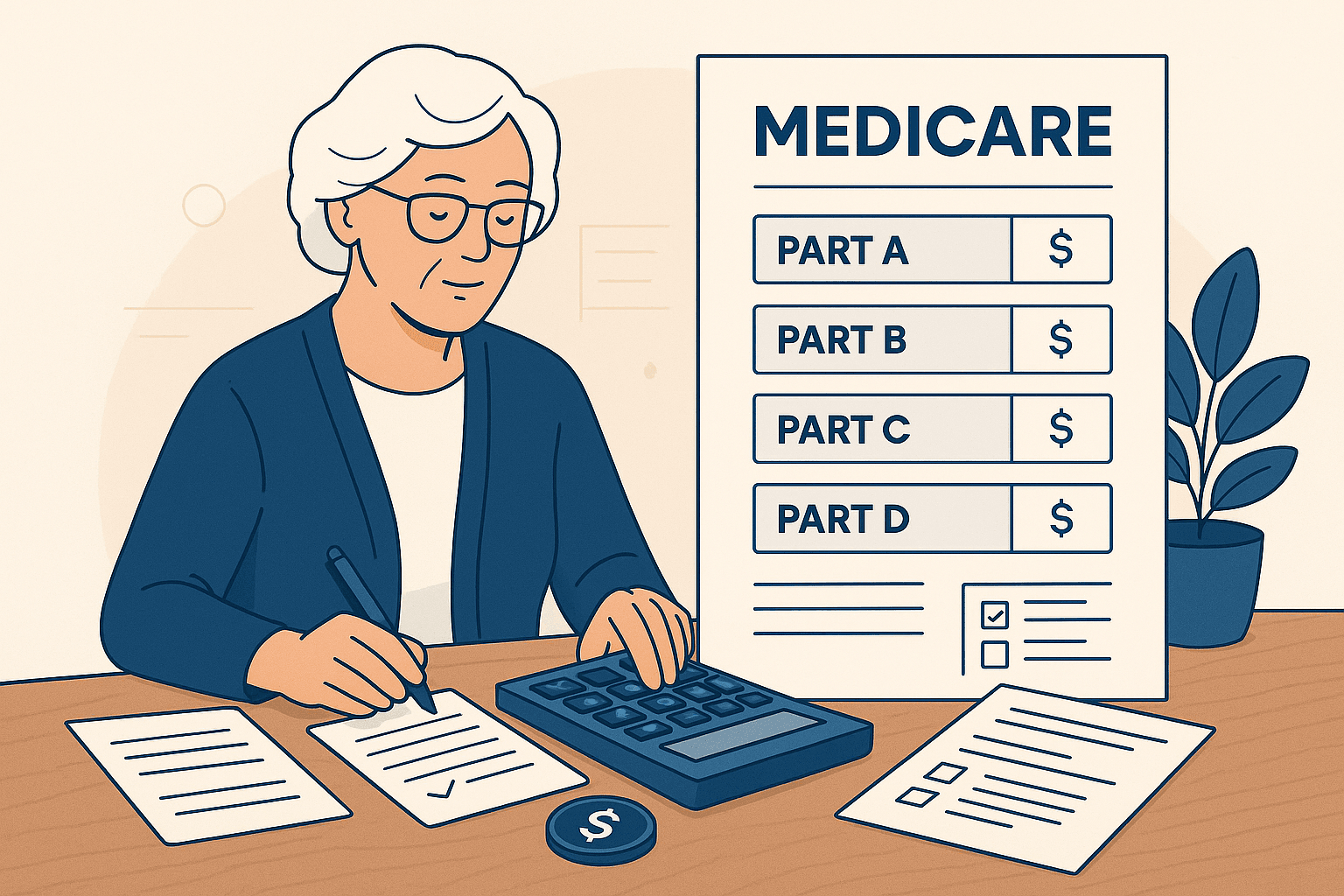
Medicare has two foundational parts:
- Part A (hospital insurance) covers inpatient hospital stays, skilled nursing, and some home health care. Most people pay no premium for Part A because they paid Medicare taxes while working.
- Part B (medical insurance) covers doctor visits, outpatient care, preventive services, and durable medical equipment. Part B has a standard monthly premium that adjusts each year, and higher earners may pay more based on income.
Most people enroll in both. If you have other creditable coverage and want to delay Part B, confirm your Special Enrollment eligibility first so you don't trigger a penalty later.
Step 5: Choose Your Path — Original Medicare or Medicare Advantage
This is the biggest decision, and there's no single right answer. You have two main routes:
Original Medicare (Parts A and B) lets you see any doctor or hospital that accepts Medicare, nationwide. Many people pair it with a Medicare Supplement (Medigap) policy to help cover out-of-pocket costs, and a separate Part D plan for prescriptions.
Medicare Advantage (Part C) bundles Parts A, B, and usually D into one plan from a private insurer, often with extras like dental, vision, or hearing. The trade-off is that you typically use a network of providers and need referrals for some care.
A simple way to decide: if you travel often or want maximum provider freedom, Original Medicare with a Medigap policy tends to fit best. If you prefer one bundled plan with extra benefits and a predictable structure, Medicare Advantage may suit you.
Step 6: Add Prescription Drug Coverage (Part D)
If you choose Original Medicare, you'll want a standalone Part D plan to cover prescriptions — and it's worth doing even if you take few medications today, because signing up late can bring a permanent penalty. If you choose Medicare Advantage, drug coverage is usually built in, so check before adding a separate plan.
When comparing Part D plans, look at each plan's formulary (the list of covered drugs) to make sure your specific medications are included, then compare premiums and pharmacy costs. Medicare's official Plan Finder tool lets you enter your prescriptions and see your real costs side by side.
Step 7: Confirm Your Enrollment and Mark Your Calendar
Once you've enrolled, watch for your Medicare card and your plan's welcome materials in the mail. Review them to confirm your coverage start date and that everything matches what you chose. Keep your card somewhere safe and bring it to appointments.
One last habit worth building: review your coverage every fall. The Annual Enrollment Period runs October 15 through December 7, and it's your yearly chance to switch plans, change drug coverage, or move between Original Medicare and Medicare Advantage as your needs and the plans change.
Your Medicare Application Timeline at a Glance
| When |
What to Do |
| 3 months before turning 65 |
Apply during your IEP so coverage starts on time |
| Birthday month |
IEP continues; enroll if you haven't yet |
| Up to 3 months after |
Final part of your IEP (coverage may start later) |
| Still working past 65 |
Use your Special Enrollment Period when coverage ends |
| Oct 15 – Dec 7 each year |
Review and adjust during Annual Enrollment |
A Few Common Questions
Do I have to take Part B at 65? Not if you have qualifying employer coverage — but confirm it counts as "creditable" so you can delay penalty-free.
Is Part A really free? For most people who worked and paid Medicare taxes for at least 10 years, yes — there's no monthly premium for Part A.
What if I miss my window? You can still enroll during the General Enrollment Period each year, but late penalties may apply and could last as long as you have coverage.
The Bottom Line
Applying for Medicare in 2026 is mostly about acting within your seven-month Initial Enrollment Period and making one key choice between Original Medicare and Medicare Advantage. Start three months before your 65th birthday, apply online at SSA.gov or confirm your automatic enrollment, add the right drug coverage, and review your plan each fall. Take it one step at a time and you'll have the coverage you need without the penalties.
Want help thinking through which path fits your situation? Explore our free retirement and Medicare resources to compare your options at your own pace — no obligation, ever.