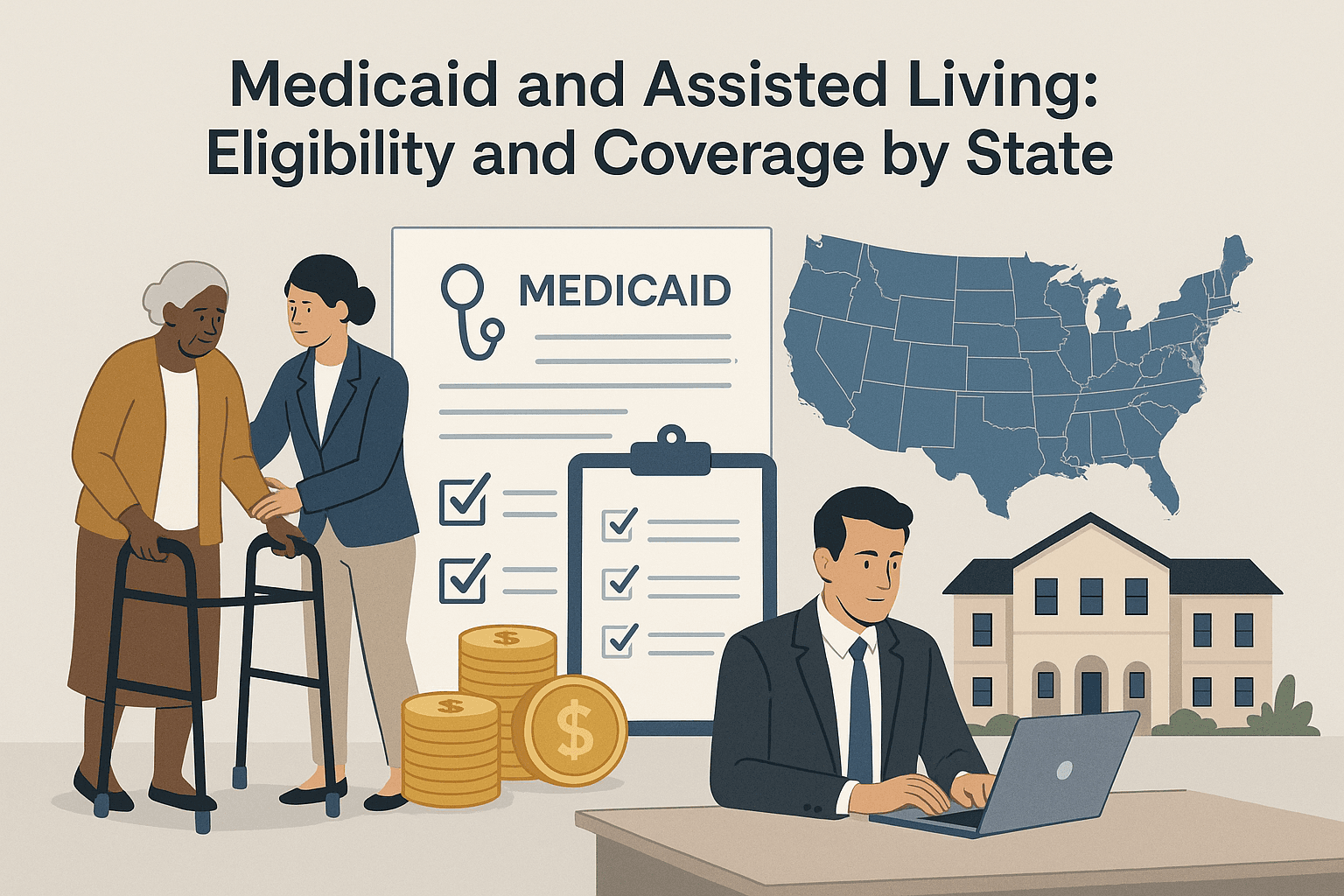
Navigating Medicaid for Assisted Living: A Guide for Low-Income Seniors
Medicaid is the primary public program that helps low-income seniors pay for assisted living, but coverage is not automatic, universal,, learn more about complete guide to assisted living: everything you need to know, learn more about complete guide to independent living for seniors, learn more about the 12 best ways to live happy, healthy, and wealthy in retirement in 2026 and beyond or simple. It operates as a state-administered benefit with strict financial and functional eligibility rules. While Medicaid does not typically pay for "room and board" in an assisted living facility, it can cover the critical personal care, learn more about complete guide to memory care: understanding alzheimer's and dementia care and health-related services that make residing there possible. Understanding this distinction—between funding the care and funding the housing—is the essential first step for any senior or family navigating this complex system. Successfully accessing Medicaid for assisted living requires a clear grasp of state-specific waivers, meticulous financial planning to meet asset and income limits, and a proactive approach to the application process.
For millions of American seniors, the golden years are shadowed by a pressing question: how will I afford care if I can no longer live completely on my own? The dream of aging in place often meets the reality of needing daily assistance with bathing, dressing, or medication management. Assisted living emerges as a compelling middle ground—offering more support than independent living but less intensive, institutional medical care than a nursing home. However, with a national median monthly cost soaring well over $4,500, it remains financially out of reach for those relying solely on Social Security and modest savings.
This is where Medicaid, the nation’s health coverage program for low-income individuals, becomes a lifeline. But here’s the thing: Medicaid’s relationship with assisted living is one of the most misunderstood in elder care. It’s not a straightforward bill-payer like it can be for nursing homes. Instead, it’s a patchwork of state options, waivers, and careful compromises. This guide will demystify that process, providing a clear, step-by-step roadmap for low-income seniors and their families.
The Core Principle: Medicaid Waivers Are the Key
Traditional, or "state plan," Medicaid has a clear mandate to cover nursing home care for those who are eligible. Assisted living, however, exists in a different category. Medicaid’s coverage for it primarily flows through what are known as Home and Community-Based Services (HCBS) Waivers. The name itself is instructive. These waivers allow states to "waive" certain federal Medicaid rules—particularly the requirement that care be provided in an institution—to instead fund supportive services for people in community settings, including assisted living facilities.
Think of it this way: Medicaid isn’t paying your rent at the assisted living facility. It is paying for a personal care aide to help you get dressed, a nurse to administer your medications, and a staff member to coordinate your care—services that just happen to be delivered where you live. You, or another source like Supplemental Security Income (SSI), are typically still responsible for the cost of your room and board. This is the fundamental compromise that makes Medicaid-assisted living possible.
State-by-State Reality: A Geographic Lottery
The critical variable is that these HCBS Waivers are optional for states. Consequently, eligibility, benefits, and even the terminology vary dramatically. Some states have robust waiver programs with dedicated slots for assisted living services. Others may offer more limited programs or use different names, like "Assisted Living Program (ALP)" in New York or "Residential Care" waivers elsewhere.
Moreover, even in states with programs, there are often waiting lists. Waiver slots are frequently capped, creating a scenario where you can be medically and financially eligible but still wait months or even years for services to begin. This geographic patchwork means the first, most crucial step for any family is to investigate the specific programs available in their state by contacting the local Area Agency on Aging or the state Medicaid office.
The Two Gates of Eligibility: Functional and Financial
To access Medicaid assistance for assisted living, you must pass through two distinct gates: one measuring your physical need for care, and the other measuring your financial resources.
Functional Eligibility: Demonstrating the Need for Care
This assessment determines if your level of need justifies the services Medicaid would fund. A state-appointed nurse or social worker will typically conduct an evaluation using a tool like the Activities of Daily Living (ADLs) scale. ADLs include basic self-care tasks:
- Bathing
- Dressing
- Toileting
- Transferring (e.g., moving from bed to chair)
- Continence
- Eating
Needing "hands-on" assistance or supervision with several of these ADLs (often two or three) is a common threshold for qualifying for an assisted living level of care. The assessment will also consider your need for medication management, cognitive status, and overall health stability.
Financial Eligibility: Navigating Strict Limits
This is often the more daunting and complex hurdle. Medicaid is designed for individuals with very limited income and assets. The rules are stringent, but understanding their structure is empowering.
1. Asset Limits: For a single applicant in 2024, the countable asset limit is generally as low as $2,000 in most states. "Countable" assets include cash, bank accounts, investments, and a second car or home. However, key exemptions exist:
- Your Primary Home: It is typically exempt if you intend to return, a spouse or dependent relative lives there, or its equity value is below a state-set threshold (often around $688,000).
- One Vehicle: Usually exempt regardless of value, within reason.
- Personal Belongings & Household Furnishings.
- Prepaid Funeral Plans.
For married couples, the rules offer some protection for the spouse who remains in the community (the "community spouse"). They are generally allowed to retain a much larger portion of the couple's combined assets—often around $154,140—as well as a minimum monthly income allowance.
2. Income Limits: Your monthly income (from Social Security, pensions, etc.) must also fall below a state-determined threshold, which is often tied to the cost of care. However, a pivotal concept here is the "Income Cap." Some states are "income cap" states, meaning if your gross monthly income exceeds a set limit (approximately $2,829 in 2024), you are disqualified, period. Other states use a "medically needy" pathway, where you can "spend down" excess income on medical expenses to qualify.
This is where strategic planning, often with professional guidance, becomes vital. Techniques like establishing a Miller Trust (or Qualified Income Trust) in an income-cap state can allow excess income to be diverted into a special trust to meet the limit, preserving eligibility.
The Application Process: Patience and Precision
Applying for Medicaid is an exercise in meticulous documentation. The process can take several months, and any error or omission can lead to lengthy delays or denial.
You will need to provide a comprehensive paper trail, typically including:
- Proof of identity and citizenship (birth certificate, Social Security card, passport).
- Documentation of all assets: several months of bank statements, investment account records, deeds to property, vehicle titles.
- Proof of all income: Social Security award letters, pension statements, annuity contracts.
- A detailed list of monthly expenses.
- Medical records supporting your functional need for care.
Consider this: the Medicaid agency is performing a forensic financial review, looking back at all transactions for a period of 60 months (5 years) from your application date. This "Look-Back Period" is designed to uncover any assets you may have transferred for less than fair market value to meet the strict limits. If such transfers are found, a penalty period of ineligibility will be calculated, delaying your coverage. Honesty and transparency are non-negotiable.
Life on a Medicaid Waiver in Assisted Living
Once approved, your life in an assisted living facility under a Medicaid waiver operates under specific parameters. You will be responsible for your share of costs, primarily your Room and Board. This is often covered by your monthly income, minus a small Personal Needs Allowance (usually $50-$100/month) that you keep for personal expenses. Medicaid then makes payments directly to the facility or care providers for the covered services outlined in your care plan.
It’s also important to know that not every assisted living facility accepts Medicaid. Those that do may have a limited number of "Medicaid beds." Finding a suitable facility that participates in the waiver program is a critical early step in this journey.
Your Strategic Path Forward
For low-income seniors, the path to Medicaid-funded assisted living is narrow and requires careful navigation, but it is a vital avenue to preserving dignity and safety in later life. The process underscores a broader truth about long-term care in America: it requires proactive education and planning.
Start by contacting your local Area Agency on Aging for state-specific guidance. Gather your financial documents early. If your assets are modestly over the limit, consult with a certified elder law attorney who can advise on permissible planning strategies. Most importantly, understand that you are not seeking a handout, but accessing a benefit program designed for this exact life circumstance. With the right information and a methodical approach, you can secure the supportive care you need in a community setting, turning a daunting challenge into a manageable transition.