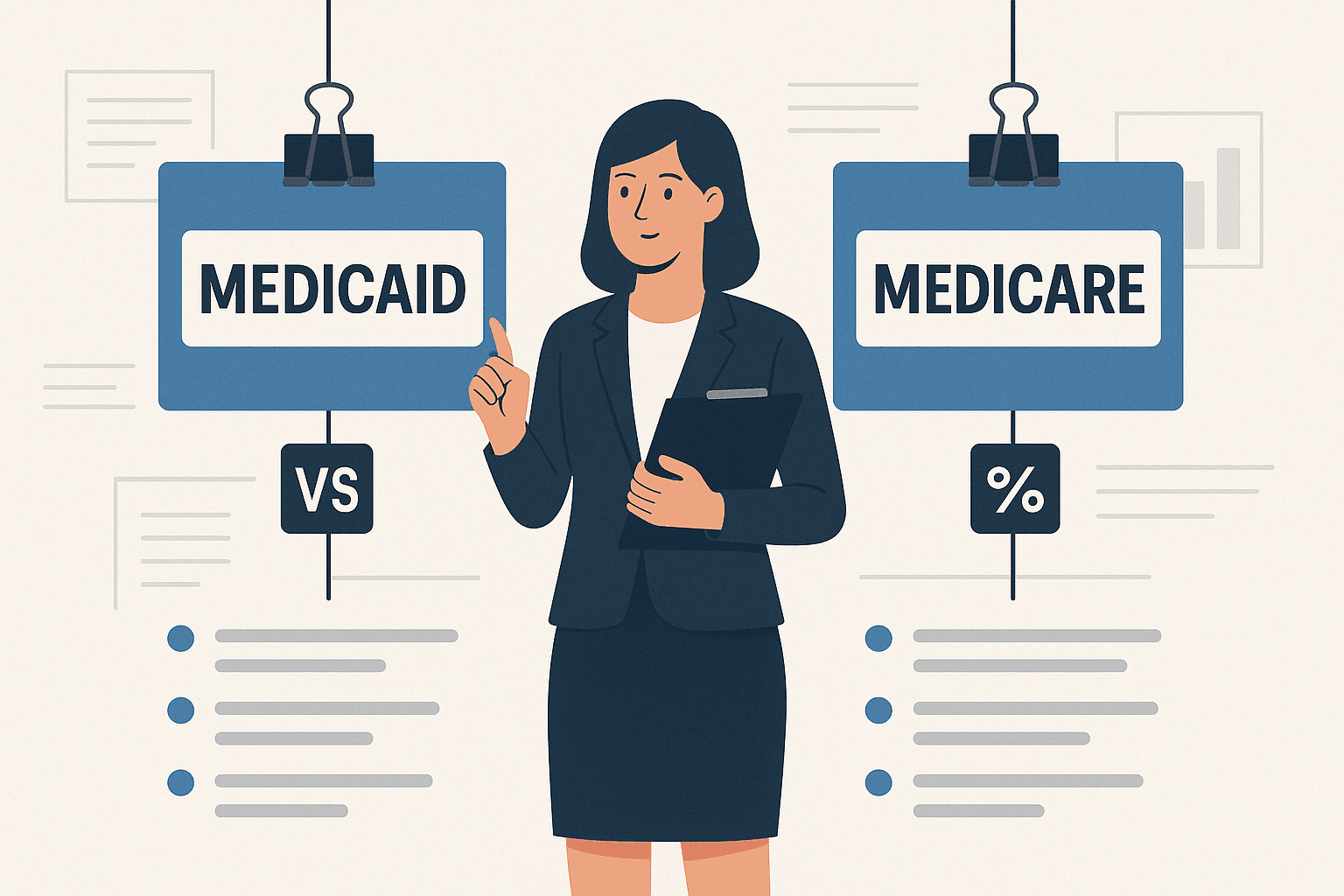
The names sound nearly identical, so the confusion is understandable. But mixing them up can cost you coverage or money (learn more about beneficiary planner tool: organize your beneficiary designations). Medicare follows you because of your age (learn more about complete guide to memory care: understanding alzheimer's and dementia care) or disability; Medicaid helps you because of your financial situation. Here are the seven differences that matter most, plus how the two programs work together.
See what Medicare will really cost you
Use our free Medicare Cost Calculator to estimate your annual premiums, deductibles, and out-of-pocket costs in a few minutes.
Estimate my Medicare costs →Quick Answers
What is the difference between Medicaid and Medicare?
Medicare is a federal health-insurance program based on age (65+) or disability, regardless of income. Medicaid is a joint federal-state program based on income and need. Many people qualify for both, which is called being dual-eligible.
Can you have both Medicare and Medicaid?
Yes. People who qualify for both are called dual-eligible. In that case Medicaid can help cover Medicare premiums, deductibles, and costs Medicare does not, such as long-term care.
Is Medicaid or Medicare better for seniors?
They serve different needs. Medicare is the primary coverage for most seniors, while Medicaid adds help for those with limited income, especially for long-term care. Neither is universally better, and many seniors benefit from both.
Quick comparison
| Feature |
Medicare |
Medicaid |
| Run by |
Federal government |
Federal + state (varies by state) |
| Who qualifies |
Age 65+, or disability/ESRD |
Low income and limited assets |
| Main basis |
Age / work history |
Financial need |
| Typical costs |
Premiums, deductibles, copays |
Little to no cost |
| Long-term care |
Very limited |
Primary payer for nursing homes |
| Coverage rules |
Same nationwide |
Varies by state |
| Enrollment timing |
Set windows around age 65 |
Any time you qualify |
1. Who runs the program
Medicare is a federal program with the same core rules in every state. Medicaid is funded jointly by the federal government and the states, and each state administers its own program — which means eligibility rules, names, and covered benefits vary depending on where you live.
2. Who qualifies
Medicare eligibility is based mainly on age and work history: most people qualify at 65 if they or a spouse paid Medicare taxes, and some younger people qualify through disability or end-stage renal disease. Medicaid eligibility is based on income and assets — it serves people with limited financial resources, regardless of age, including many children, pregnant women, and adults.
3. What it costs you
Medicare is not free. You typically pay premiums (Part B always has one), deductibles, and coinsurance, which is why many people add a Medigap or Medicare Advantage plan. Medicaid, by contrast, charges little to nothing — most enrollees pay no premium and only minimal copays, because the program exists to make care affordable for those with low incomes.
4. What each covers
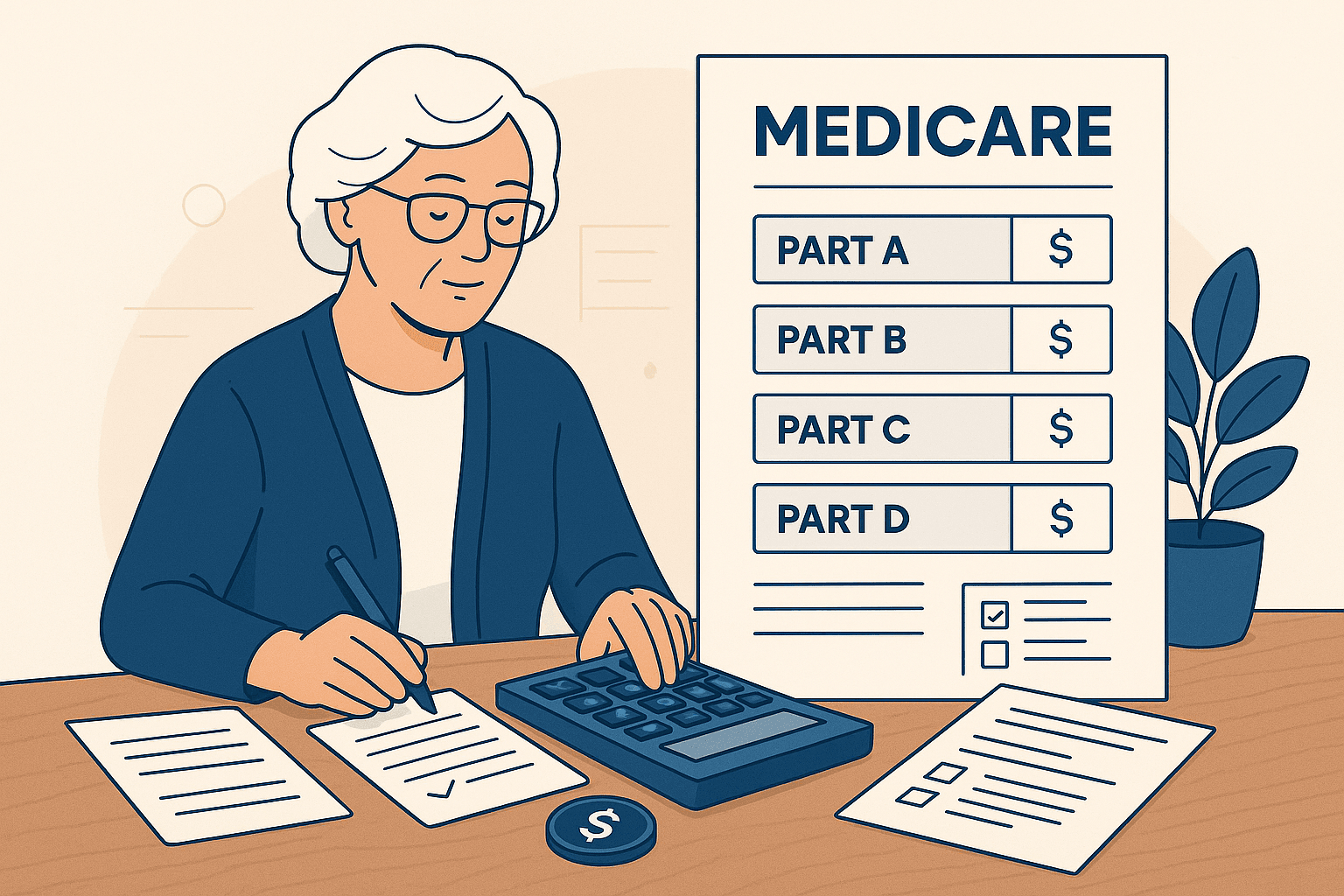
Medicare covers hospital care (Part A), doctor visits and outpatient care (Part B), prescription drugs (Part D), and bundled Advantage plans (Part C). Medicaid covers a broad set of services that often goes further than Medicare — including some dental, vision, and transportation — and crucially, long-term care.
5. Long-term and nursing home care
This is one of the biggest practical differences. Medicare covers only short, skilled nursing stays (up to 100 days after a qualifying hospital stay) and does not pay for ongoing custodial long-term care. Medicaid is the nation's primary payer for nursing home and long-term care, which is why many middle-class families turn to Medicaid planning when a parent needs extended care.
6. How coverage rules vary
Because Medicare is federal, your coverage looks the same whether you live in Florida or Oregon. Medicaid benefits and income limits differ by state — a service or income threshold that qualifies you in one state may not in another, so you must check your own state's rules.
7. When you enroll
Medicare has specific enrollment windows: your Initial Enrollment Period around your 65th birthday, the annual Open Enrollment (Oct 15–Dec 7), and special periods after certain life events. Missing them can mean lifelong late penalties. Medicaid has no fixed enrollment window — you can apply and enroll any time you meet your state's eligibility criteria.
Can you have both Medicare and Medicaid?
Yes. People who qualify for both are called "dual eligible." In that case, Medicare pays first as your primary insurance, and Medicaid acts as secondary coverage — often picking up Medicare premiums, deductibles, and copays, plus services Medicare does not cover like long-term care. Dual eligibility is one of the most valuable combinations available, dramatically lowering out-of-pocket costs for those who qualify.
How to figure out which applies to you
- Start with age and work history. Turning 65 or living with a qualifying disability points to Medicare.
- Check your income and assets. Limited resources may qualify you for Medicaid in your state — even alongside Medicare.
- Apply for both if you might be dual eligible. Many people leave money on the table by not realizing they qualify for Medicaid help with Medicare costs.
- Plan ahead for long-term care. If a nursing home may be in your future, understand Medicaid's role early.
- Use your state's resources. Contact your State Health Insurance Assistance Program (SHIP) for free, unbiased help.
Frequently asked questions
Is Medicare for older people and Medicaid for low income? Broadly yes — Medicare is age- or disability-based, Medicaid is income-based — but the two can overlap for dual-eligible individuals.
Does Medicaid pay for what Medicare doesn't? For dual-eligible people, often yes — Medicaid can cover Medicare cost-sharing and extra benefits like long-term care, dental, and transportation.
Which pays first if I have both? Medicare pays first as the primary insurer; Medicaid pays second for remaining covered costs.
This article is for general educational purposes only and is not insurance, legal, or financial advice. Medicaid rules vary by state and both programs change over time — verify current details with Medicare.gov and your state Medicaid office.