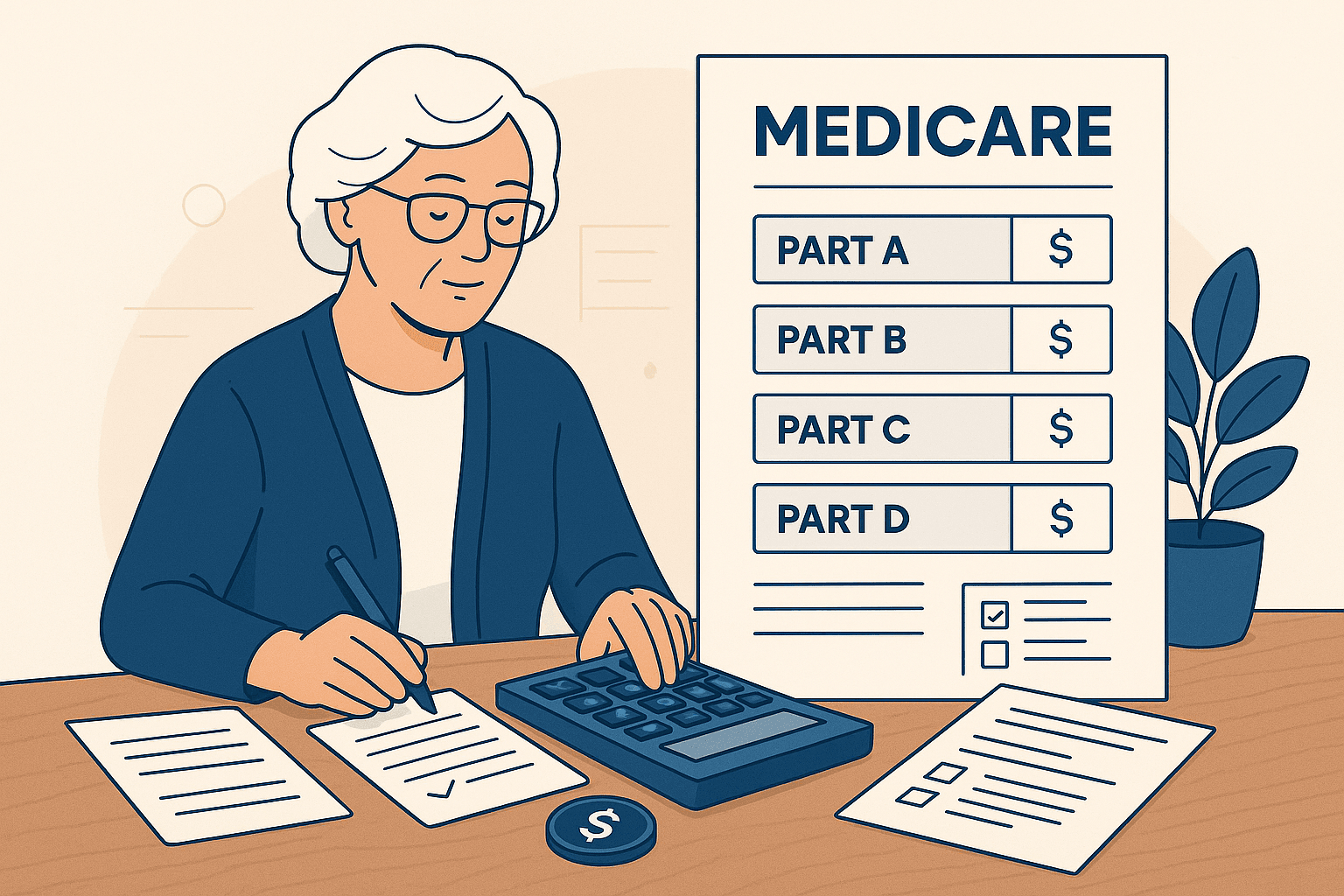
If you are comparing Medicare plans during Open Enrollment 2026, the moves most likely to save real money are: switching to a lower-premium Medicare Advantage plan, reviewing your Part D formulary against your actual prescriptions, applying for the Extra Help program if your income qualifies, and checking whether a Medicare Supplement (Medigap) policy outperforms your current cost-sharing. Medicare Open Enrollment runs October 15 through December 7 and most beneficiaries who reviewed their plans in 2025 found they could save $1,500 to $4,500 annually by making changes. This guide walks through 9 specific plan decisions worth reviewing this enrollment period.
How We Evaluated These Moves
| Criteria |
Weight |
Why It Matters |
| Average annual savings potential |
High |
Moves with higher dollar impact get priority |
| Ease of implementation |
High |
Changes you can complete in one phone call rank higher |
| Applicability to most beneficiaries |
Medium |
Universal moves rank above niche ones |
| Risk of switching |
Medium |
Higher-risk switches need more investigation before acting |
Data sources: CMS Medicare Plan Finder, Medicare Rights Center 2025 Annual Survey, Kaiser Family Foundation Medicare Policy Analysis, CMS Medicare & You Handbook 2026, NCOA Benefits CheckUp database.
9 Medicare Plan Moves to Review During Open Enrollment
1. Compare Your Medicare Advantage Plan Against This Year's Updated Offerings
Best for: All Medicare Advantage enrollees
Average savings potential: $600 to $2,400 per year
Time required: 30 to 60 minutes on Medicare Plan Finder
Medicare Advantage plans change their premiums, copays, drug formularies, and provider networks every January 1st. CMS data shows that over 40% of Medicare Advantage plans made meaningful benefit changes between 2025 and 2026. Review your Annual Notice of Change (ANOC) mailed each September, then compare alternatives on Medicare.gov/plan-compare. Check whether your current doctors remain in-network, your prescriptions remain on formulary, and your premium did not increase more than $30 per month.
What works
- Run the comparison on Medicare.gov/plan-compare — enter your zip code and full drug list
- Check the plan's star rating — plans rated below 3 stars have documented quality concerns
What to watch out for
- Switching Advantage plans mid-year is not permitted except in special circumstances
- Always verify your specific doctors are in-network before switching
Who This Is Best For
Every Medicare Advantage enrollee. Even a 30-minute comparison costs nothing and can identify significant savings.
2. Review Your Part D Drug Plan Formulary Against Your Actual Prescriptions
Best for: All Part D enrollees
Average savings potential: $400 to $2,000 per year for beneficiaries on brand-name medications
Time required: 20 to 30 minutes
Part D drug plans update their formularies annually. If you are on a brand-name medication, your copay could jump from $45 per month to $180 per month with a single tier change. Run your complete drug list through Medicare Plan Finder to find the plan with the lowest total annual drug cost — not just the lowest premium. Note that the Inflation Reduction Act's $2,000 annual Part D out-of-pocket cap (effective 2025) continues in 2026, capping total exposure for high-cost drug users.
What works
- Enter every prescription with exact dose and frequency
- Compare total estimated annual drug cost including premium plus copays
What to watch out for
- Low-premium plans often have high drug copays — always compare total cost, not headline premium
Who This Is Best For
Anyone taking three or more prescription medications or any brand-name drug.
3. Apply for the Extra Help (Low Income Subsidy) Program
Best for: Beneficiaries with limited income and resources
Average savings potential: $5,000 to $6,000 per year in Part D costs
Time required: 1 to 2 hours (application via SSA.gov or in-person SSA office)
Extra Help is a federal program that pays most or all Part D premiums, deductibles, and copays for qualifying beneficiaries. The Social Security Administration estimates 2 to 3 million people who qualify are not yet enrolled. For 2026, a single person earning under approximately $22,590 per year (150% FPL) with limited assets typically qualifies for Full Extra Help. Apply at SSA.gov or call 1-800-772-1213.
What works
- Even if denied previously, re-apply — thresholds adjust annually
- Extra Help automatically qualifies you for Medicare Savings Programs, which can also pay your Part B premium
What to watch out for
- Asset limits apply: approximately $17,220 for individuals, $34,360 for couples (excludes home and one car)
Who This Is Best For
Any Medicare beneficiary with income under 150% of the federal poverty level. This is the highest-value program most qualifying beneficiaries are not using.
4. Check Whether Medicare Savings Programs Pay Your Part B Premium
Best for: Low-to-moderate income beneficiaries
Average savings potential: $185 to $2,220 per year
Time required: 1 hour via your State Medicaid office
Medicare Savings Programs (MSPs) are state-administered programs that pay the Part B premium (approximately $185 per month standard in 2026) and in some cases cost-sharing, for beneficiaries who meet income limits. An estimated 7 million people currently qualify for an MSP they are not using. The Qualified Medicare Beneficiary (QMB) program covers Part B premiums plus most deductibles and copays. Apply through your state Medicaid office.
What works
- Enrollment does not happen automatically — you must apply
- QMB enrollment provides additional protections against balance billing from providers
Who This Is Best For
Medicare beneficiaries on fixed incomes who are paying the Part B premium out of pocket. Even partial MSP benefits can save $1,000 to $2,000 annually.
5. Consider Switching From Medicare Advantage Back to Original Medicare Plus Medigap
Best for: Beneficiaries with complex, ongoing healthcare needs or who travel frequently
Average savings potential: Variable — up to $5,000 per year for high utilizers
Time required: Several weeks — Medigap requires underwriting in most states
Medicare Advantage plans have unlimited cost-sharing exposure up to the annual OOP maximum (which averaged $5,500 to $7,550 in 2025). Medigap Plan G covers all gaps except the Part B deductible (approximately $257 in 2026). For beneficiaries with heavy healthcare utilization — multiple specialist visits, hospitalizations, or complex conditions — Medigap often costs less annually despite higher monthly premiums.
What works
- Estimate your 2025 actual healthcare costs under your current Advantage plan
- Compare that to Medigap Plan G premium plus Part B deductible
What to watch out for
- Switching from Advantage to Medigap outside your initial enrollment window usually requires medical underwriting
- Not all applicants will qualify depending on health history
Who This Is Best For
Beneficiaries who had significant healthcare utilization in 2025, those with chronic conditions requiring frequent specialist care, and those who travel extensively outside their Advantage plan network area.
6. Look for Plans With Dental, Vision, and Hearing Benefits
Best for: Medicare Advantage enrollees who use these services
Average savings potential: $500 to $2,000 per year
Time required: 15 to 20 minutes on Medicare Plan Finder
Original Medicare does not cover routine dental, vision, or hearing. Many Medicare Advantage plans include these as supplemental benefits, but coverage depth varies enormously — from one annual cleaning to $1,500 in dental allowances plus hearing aid credits. If you need dental work or new hearing aids in 2026, a plan with robust supplemental benefits can pay for itself many times over.
What works
- Compare dental allowances and whether your dentist is in-network for the dental benefit
- Check hearing aid allowances — hearing aids cost $2,000 to $7,000 per pair
What to watch out for
- Some dental benefits cover only preventive services — verify covered services before enrolling
- Dental benefits for major work often have waiting periods
Who This Is Best For
Beneficiaries who need dental work, new glasses, or hearing aids in 2026.
7. Review Your IRMAA Status If Your Income Has Dropped
Best for: Beneficiaries paying above-standard Part B or Part D premiums
Average savings potential: $732 to $4,392 per year
Time required: 1 to 2 hours (file SSA Form SSA-44)
IRMAA adds surcharges to Part B and Part D premiums for beneficiaries with 2024 income above $106,000 individual or $212,000 for a couple. If your income dropped significantly in 2024 or 2025 due to retirement, divorce, death of spouse, or loss of income-producing property, you can request a prospective IRMAA reduction using SSA Form SSA-44.
What works
- IRMAA reductions are not automatic — you must proactively file SSA-44 with supporting documentation
- Even a one-tier reduction saves $61 per month in Part B alone ($732 per year)
Who This Is Best For
Beneficiaries paying IRMAA surcharges whose income declined due to a qualifying life-changing event.
8. Explore the Medicare Giveback Benefit (Part B Premium Reduction Plans)
Best for: Medicare Advantage enrollees in counties where giveback plans are available
Average savings potential: $600 to $1,800 per year
Time required: 15 to 20 minutes on Medicare Plan Finder
Some Medicare Advantage plans include a "giveback" benefit that reduces your monthly Part B premium by $10 to $148 per month. The benefit only applies while you remain enrolled in the offering plan. Plans with large giveback amounts often have higher drug copays or narrower provider networks — always compare total cost including premium offset minus increased drug and copay costs.
What works
- Search Medicare Plan Finder for plans in your zip code that include Part B reduction
- Verify that your current doctors are in-network before switching
Who This Is Best For
Beneficiaries in counties where giveback plans exist and whose providers are in-network for the offering plan.
9. Check Your Plan's Star Rating and Switch If It Is Below 3 Stars
Best for: All Medicare Advantage and Part D enrollees
Average savings potential: Improved care quality and avoided complications
Time required: 5 minutes on Medicare.gov
CMS rates Medicare Advantage and Part D plans on a 1 to 5 star scale based on care coordination, member satisfaction, chronic disease management, and customer service. Plans rated below 3 stars have documented quality problems. If you are enrolled in a plan rated 4 or 5 stars, you may switch to it at any time during the year using a Special Enrollment Period — not just during Open Enrollment.
What works
- Find your current plan's star rating at Medicare.gov/plan-compare
- A 5-star plan in your area? You can switch to it even outside Open Enrollment
Who This Is Best For
Every Medicare Advantage enrollee. A 5-minute check costs nothing and can flag whether a quality-based switch is warranted.
Quick Comparison: 9 Savings Moves by Impact
| Move |
Savings Potential |
Effort |
Who It Applies To |
| Compare MA plan offerings |
$600 to $2,400/yr |
Medium |
All MA enrollees |
| Review Part D formulary |
$400 to $2,000/yr |
Medium |
All Part D enrollees |
| Apply for Extra Help |
$5,000 to $6,000/yr |
High |
Limited income/assets |
| Apply for Medicare Savings Programs |
$185 to $2,220/yr |
Medium |
Low-moderate income |
| Switch to Medigap (high utilizer) |
Up to $5,000+/yr |
High |
Complex health needs |
| Find dental/vision/hearing plans |
$500 to $2,000/yr |
Low |
Needing these services |
| File SSA-44 for IRMAA reduction |
$732 to $4,392/yr |
Medium |
Income dropped 2024-25 |
| Explore Part B premium giveback |
$600 to $1,800/yr |
Low |
Available in your county |
| Check plan star rating |
Variable |
Very low |
All MA/Part D enrollees |
How We Researched This
This guide draws on CMS Medicare Plan Finder data, the 2026 Medicare and You handbook, Kaiser Family Foundation Medicare policy briefs, Medicare Rights Center 2025 Annual Survey, NCOA BenefitsCheckUp data, and Social Security Administration Extra Help enrollment statistics. All dollar figures are based on 2026 CMS parameters where available. Last updated: April 2026. We review this guide annually following CMS October plan data release.
Frequently Asked Questions
When is Medicare Open Enrollment 2026?
Medicare Open Enrollment runs October 15 through December 7, 2026. Changes take effect January 1, 2027.
What changes can I make during Medicare Open Enrollment?
You can switch between Original Medicare and Medicare Advantage, change Advantage plans, and change your Part D prescription drug plan.
How do I compare Medicare plans?
Use the official Medicare Plan Finder at Medicare.gov/plan-compare. Enter your zip code and list of prescriptions to compare total estimated annual costs across all available plans.
What is Extra Help and do I qualify?
Extra Help pays most or all Part D costs for qualifying beneficiaries. For 2026, individual income under approximately $22,590 per year with limited assets typically qualifies. Apply at SSA.gov or call 1-800-772-1213.
What is the Part D out-of-pocket cap in 2026?
The Inflation Reduction Act's $2,000 annual out-of-pocket cap on Part D continues in 2026, protecting beneficiaries on high-cost medications.
What is IRMAA and how do I reduce it?
IRMAA is a surcharge for beneficiaries with income above $106,000 individually. If your income dropped due to a qualifying life event, file SSA Form SSA-44 to request a prospective reduction.
Can I switch Medicare plans outside Open Enrollment?
Generally no, but Special Enrollment Periods exist for qualifying life events. You can also switch to any 5-star rated plan at any time during the year.
Should I stay on my current Medicare plan without reviewing?
No. Plans change premiums, formularies, and provider networks every January 1. Review your Annual Notice of Change each September before Open Enrollment closes.
Important Disclosures
This content is for informational purposes only and does not constitute insurance, legal, or medical advice. Medicare plan benefits, premiums, formularies, and eligibility thresholds change annually and vary by location. Consult a licensed insurance agent, State Health Insurance Assistance Program (SHIP) counselor, or call 1-800-633-4227 for free local Medicare counseling. SeniorSimple may receive compensation when readers request quotes through plan links.
Last updated: April 2026