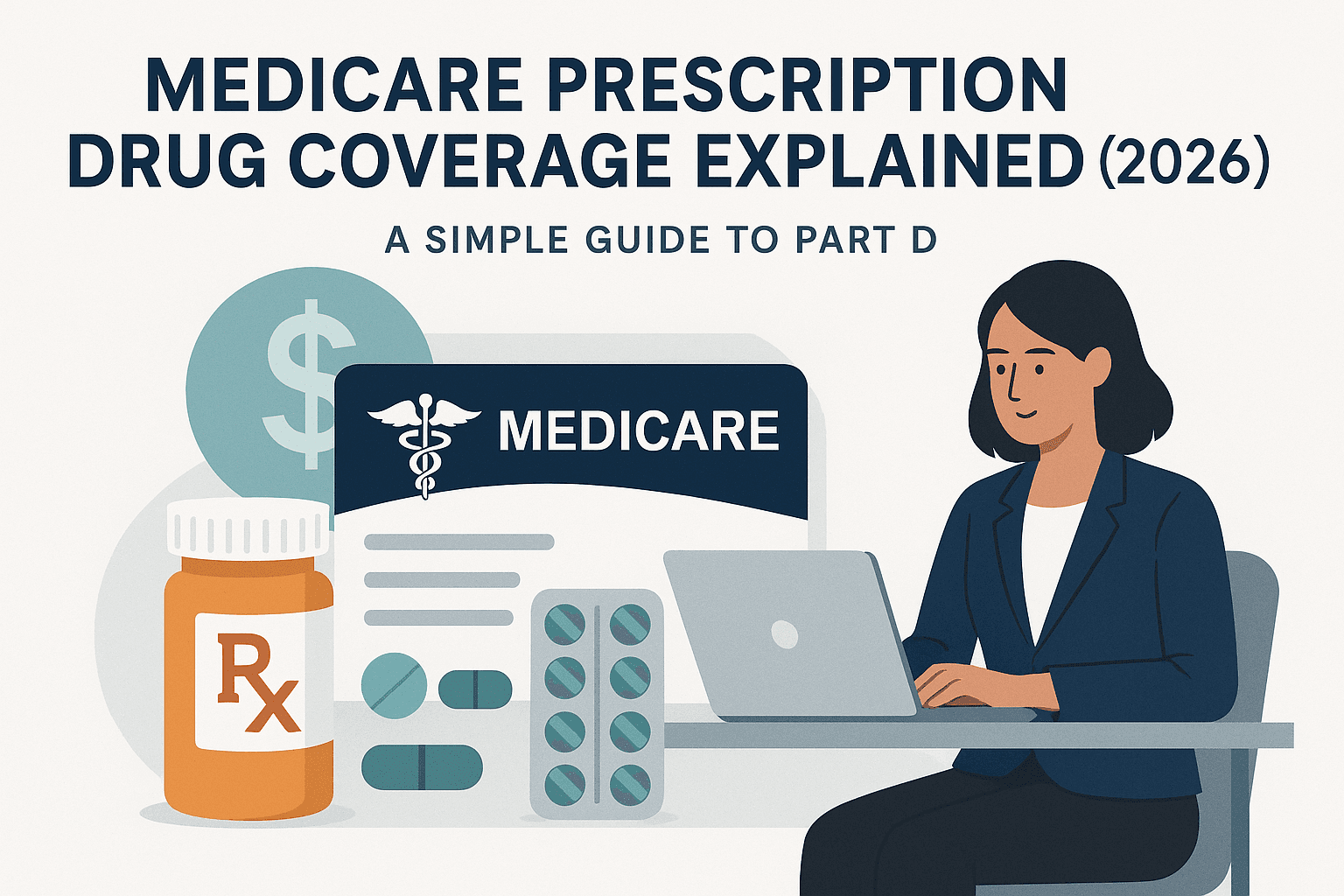
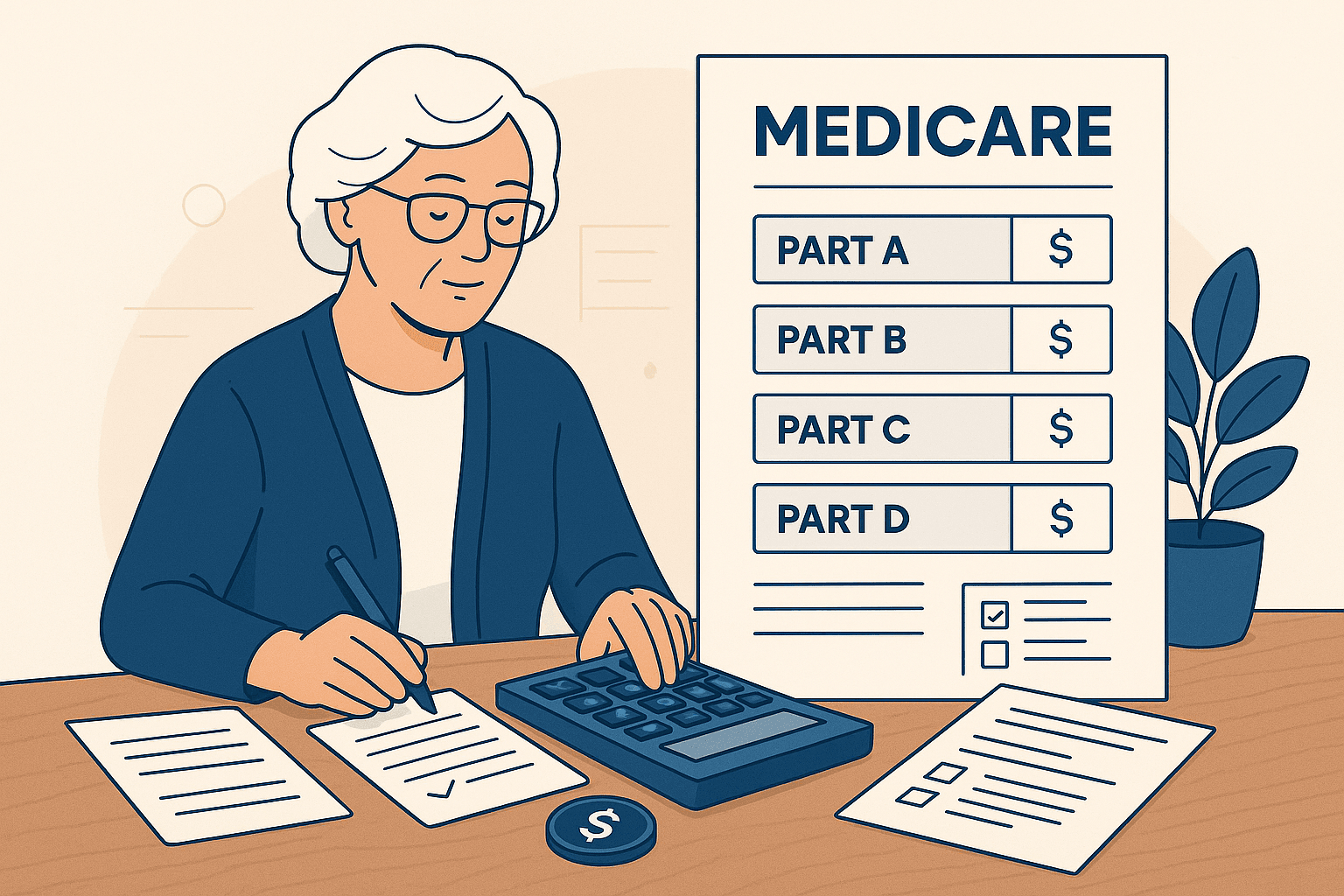
If you''re trying to understand Medicare prescription drug coverage, here''s the simple version: prescription drugs are covered through Medicare Part D, which you get either as a standalone plan added to Original Medicare or built into a Medicare Advantage plan. Part D is offered by private insurers, every plan has its own list of covered drugs (the "formulary"), and costs vary widely — so the right plan depends on the specific medications you take. This guide walks you through how it works, what it costs, and how to choose, in plain language.
The Basics: What Part D Covers
| Element |
What It Means |
| Part D |
Medicare''s prescription drug benefit, run by private insurers |
| Formulary |
The list of drugs your plan covers, grouped into pricing tiers |
| Premium |
The monthly cost of your drug plan |
| Two ways to get it |
Standalone Part D plan (with Original Medicare) or built into Medicare Advantage |
Data sources: Medicare.gov and the Centers for Medicare & Medicaid Services (CMS). Last updated: June 2026. Always confirm current rules at Medicare.gov.
How You Get Prescription Drug Coverage
There are two main paths:
- Original Medicare + a standalone Part D plan. If you have Original Medicare (Parts A and B), you add a separate Part D drug plan from a private insurer.
- Medicare Advantage (Part C) with drug coverage. Most Medicare Advantage plans bundle prescription coverage in with your medical coverage in one plan.
You generally cannot have a standalone Part D plan and a Medicare Advantage plan that includes drugs at the same time. Pick the path that fits how you want the rest of your Medicare set up.
What Part D Costs
Your costs come from several pieces:
- Monthly premium — varies by plan; some are low, others higher with broader coverage.
- Annual deductible — what you pay before the plan starts sharing costs (capped by Medicare each year).
- Copays/coinsurance — your share at the pharmacy, based on the drug''s tier.
- Income-related surcharge (IRMAA) — higher earners pay an extra amount on top of the premium.
Importantly, recent reforms capped annual out-of-pocket spending on covered Part D drugs, which protects people with high prescription costs from unlimited expenses. This is one of the most significant changes in years — confirm the current cap amount for this year at Medicare.gov.
The Formulary: Why It''s the Most Important Thing
Every Part D plan covers a different list of drugs, organized into tiers (generics are cheapest; brand-name and specialty drugs cost more). The single most important step in choosing a plan is checking that your specific medications are on the plan''s formulary and seeing which tier they fall into. A plan with a low premium can still be expensive if your drugs are on a high tier or not covered at all.
When You Can Enroll
- Initial Enrollment Period — around your 65th birthday (the 7-month window surrounding it).
- Annual Open Enrollment — October 15 to December 7 each year, when you can switch plans for the following year.
- Special Enrollment Periods — triggered by life events like moving or losing other coverage.
Watch Out for the Late Enrollment Penalty
If you go without creditable drug coverage for too long after you''re first eligible, Medicare can add a permanent late-enrollment penalty to your premium. If you delay because you have other creditable coverage (like from an employer), keep proof. Otherwise, enrolling on time avoids a lifelong surcharge.
How to Choose the Right Plan
- List your medications — names, dosages, and how often you take them.
- Use the Medicare Plan Finder at Medicare.gov to compare plans against your drug list.
- Compare total annual cost — premium + deductible + estimated copays, not just the premium.
- Check your pharmacy — confirm your preferred pharmacy is in-network for the best pricing.
- Reassess every year — plans change formularies and prices annually, so review during Open Enrollment.
How We Researched This
This guide is based on official Medicare.gov and CMS information, simplified for clarity. We focus on the practical decisions that affect what you actually pay. Medicare rules and dollar figures change each year. Last updated: June 2026. We review this guide annually before Open Enrollment.
Frequently Asked Questions
Does Medicare cover prescription drugs?
Yes, through Part D — either a standalone drug plan added to Original Medicare or coverage built into a Medicare Advantage plan.
How much does Medicare Part D cost?
It varies by plan and includes a premium, possible deductible, and copays. Higher earners pay an income-related surcharge. Compare total annual cost, not just premium.
Is there a cap on what I pay for drugs?
Recent reforms added an annual out-of-pocket cap on covered Part D drugs. Confirm this year''s exact cap at Medicare.gov.
What is a formulary?
It''s your plan''s list of covered drugs, organized into cost tiers. Always check that your medications are covered before choosing a plan.
When can I sign up for Part D?
During your Initial Enrollment Period around age 65, the Annual Open Enrollment (Oct 15–Dec 7), or a Special Enrollment Period after a qualifying life event.
What is the late enrollment penalty?
A permanent surcharge added to your premium if you go too long without creditable drug coverage after becoming eligible.
Can I change my drug plan each year?
Yes. During Open Enrollment (Oct 15–Dec 7) you can switch plans for the next year — and you should review annually.
Do I need Part D if I take no medications?
Many people still enroll in a low-cost plan to avoid the late-enrollment penalty and to be covered if they need drugs later.
Important Disclosures
This content is for informational and educational purposes only and is not medical, legal, or insurance advice. Medicare rules, costs, and dollar amounts change every year and vary by plan and location. Always verify current details at Medicare.gov or with a licensed Medicare advisor before making enrollment decisions.