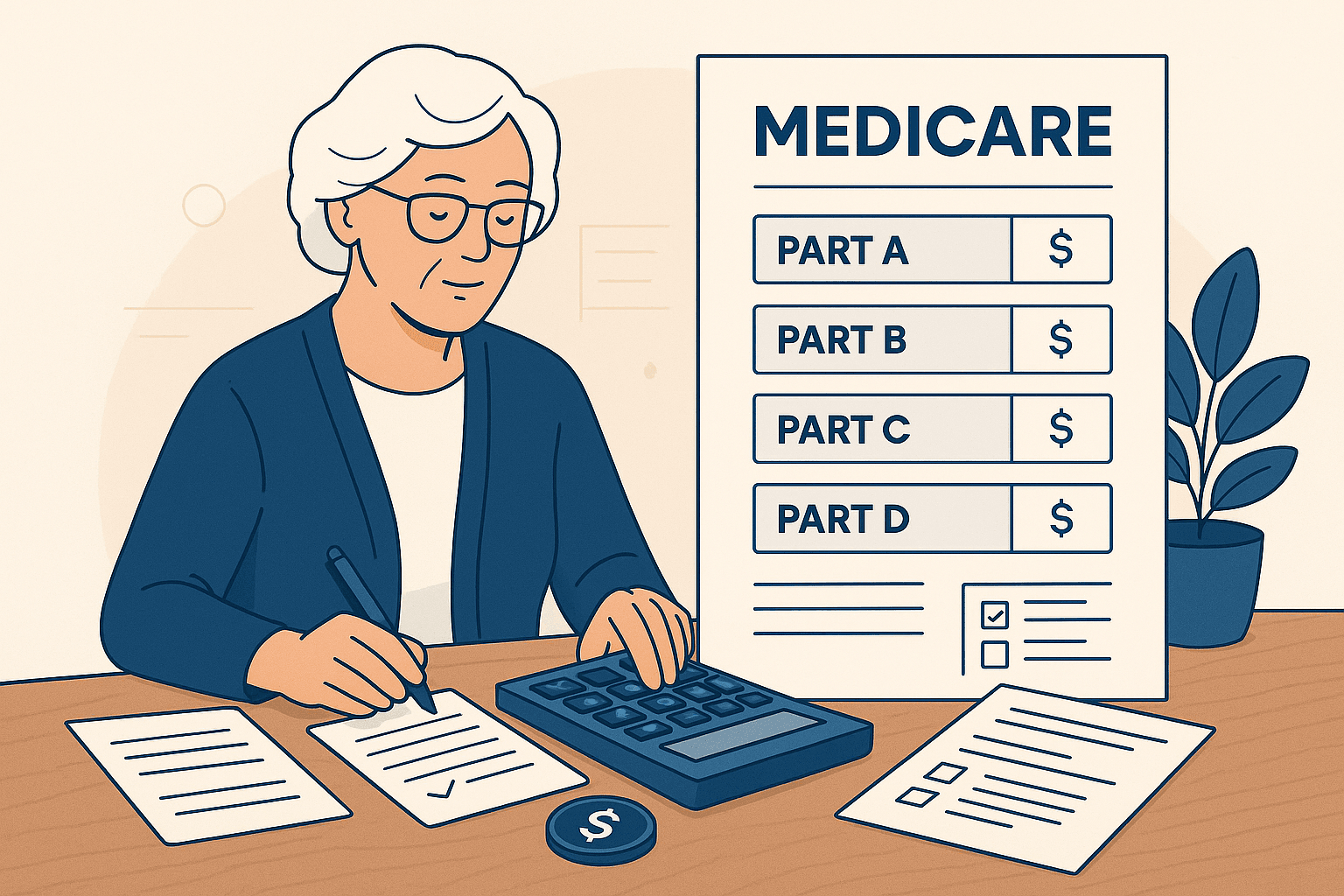
There's no single "best" choice. The right plan depends on your health, your budget, the doctors you want to keep, (learn more about complete guide to memory care: understanding alzheimer's and dementia care) (learn more about disability insurance strategy guide) and how much you travel. This guide walks through how each option works and lays out the honest pros and cons, so you can decide with confidence rather than guesswork.
The two paths, in plain terms
When you enroll in Medicare, you choose one of two routes:
- Original Medicare is the traditional government program. It includes Part A (hospital) and Part B (doctor and outpatient care). You can see almost any doctor in the country who accepts Medicare. Many people add a standalone Part D drug plan and a Medigap (Medicare Supplement) policy to help cover out-of-pocket costs.
- Medicare Advantage (Part C) is offered by private insurers approved by Medicare. These plans bundle Parts A and B — and usually Part D drug coverage — into one plan, often with extras Original Medicare doesn't include. In exchange, you generally use the plan's network of doctors and follow its rules for referrals and approvals.
Original Medicare: pros and cons
Pros
- See almost any doctor. Nearly all providers nationwide accept Medicare, with no network restrictions. This is the biggest advantage for many people.
- Great for travelers and snowbirds. Coverage works the same anywhere in the U.S., so you're not tied to a regional network.
- Predictable costs with Medigap. Pairing Original Medicare with a Medigap policy can make your out-of-pocket costs very steady and easy to budget.
- Fewer approval hurdles. You generally don't need referrals or prior authorization to see a specialist.
Cons
- No built-in out-of-pocket maximum. On its own, Original Medicare has no annual cap on what you might pay — which is why many people add Medigap.
- Extra coverage means extra premiums. A Medigap policy and a Part D drug plan are separate purchases with their own monthly costs.
- Limited extras. Original Medicare generally does not cover routine dental, vision, or hearing.
Medicare Advantage: pros and cons
Pros
- Lower premiums, sometimes $0. Many Medicare Advantage plans have low or no monthly premium beyond your Part B premium.
- Extra benefits bundled in. Many plans include dental, vision, hearing, and fitness perks that Original Medicare doesn't cover.
- All-in-one simplicity. Medical and drug coverage are usually combined in a single plan with one card.
- A yearly out-of-pocket maximum. These plans cap your annual out-of-pocket costs for covered services, which adds protection.
Cons
- Provider networks. You typically must use in-network doctors and hospitals, and going out of network can cost more or not be covered.
- Referrals and prior authorization. Many plans require approvals before certain care, which can add steps and delays.
- Coverage can be regional. Plans are often local, so extensive travel or a move can complicate care.
- Plans change yearly. Networks, drug lists, and benefits can change each year, so it's important to review your plan annually.
Side-by-side comparison
| Feature |
Original Medicare |
Medicare Advantage |
| Doctor choice |
Almost any provider nationwide |
Plan network |
| Monthly premium |
Part B + Medigap + Part D |
Often low or $0 (plus Part B) |
| Out-of-pocket cap |
None on its own |
Yes, annual maximum |
| Dental/vision/hearing |
Generally not covered |
Often included |
| Referrals/approvals |
Generally not required |
Often required |
| Best for travelers |
Strong |
Limited |
| Prescription drugs |
Add separate Part D |
Usually built in |
Which one tends to fit which person?
- You travel often or split time between states → Original Medicare's nationwide access is usually the better fit.
- You want the lowest monthly premium and like bundled extras → Medicare Advantage is worth a close look.
- You have a chronic condition and specific specialists you want to keep → Check whether those doctors are in a plan's network before choosing; Original Medicare with Medigap offers the most freedom.
- You want predictable, steady costs and minimal paperwork → Original Medicare paired with Medigap tends to deliver that.
- You're on a tight monthly budget → A low-premium Medicare Advantage plan may stretch your dollars further, as long as you're comfortable with its network.
A few things to check before you decide
- Confirm your doctors. Make sure the providers you want are covered under the option you're leaning toward.
- Check your prescriptions. Compare how your specific medications are covered and priced.
- Add up the real costs. Look beyond the premium to deductibles, copays, and the out-of-pocket maximum.
- Think about Medigap timing. There's a one-time enrollment window when you first sign up for Part B during which you can buy a Medigap policy without medical underwriting. Switching to Medigap later may be harder, so weigh this early.
- Review every year. Both Medicare Advantage and Part D plans can change annually. The Annual Enrollment Period each fall is your chance to compare and adjust.
The bottom line
Original Medicare rewards freedom and predictability; Medicare Advantage rewards low premiums and bundled extras. Neither is universally better — it's about which trade-offs fit your health, your doctors, your budget, and your lifestyle. Take time to compare your real options, and don't hesitate to get help working through the details before you enroll.
This article is for educational purposes only and is not insurance or medical advice. Medicare rules, plan benefits, networks, and costs vary by plan and location and change each year. Confirm current details at Medicare.gov or with a licensed Medicare advisor before making any enrollment decision.
Authoritative sources