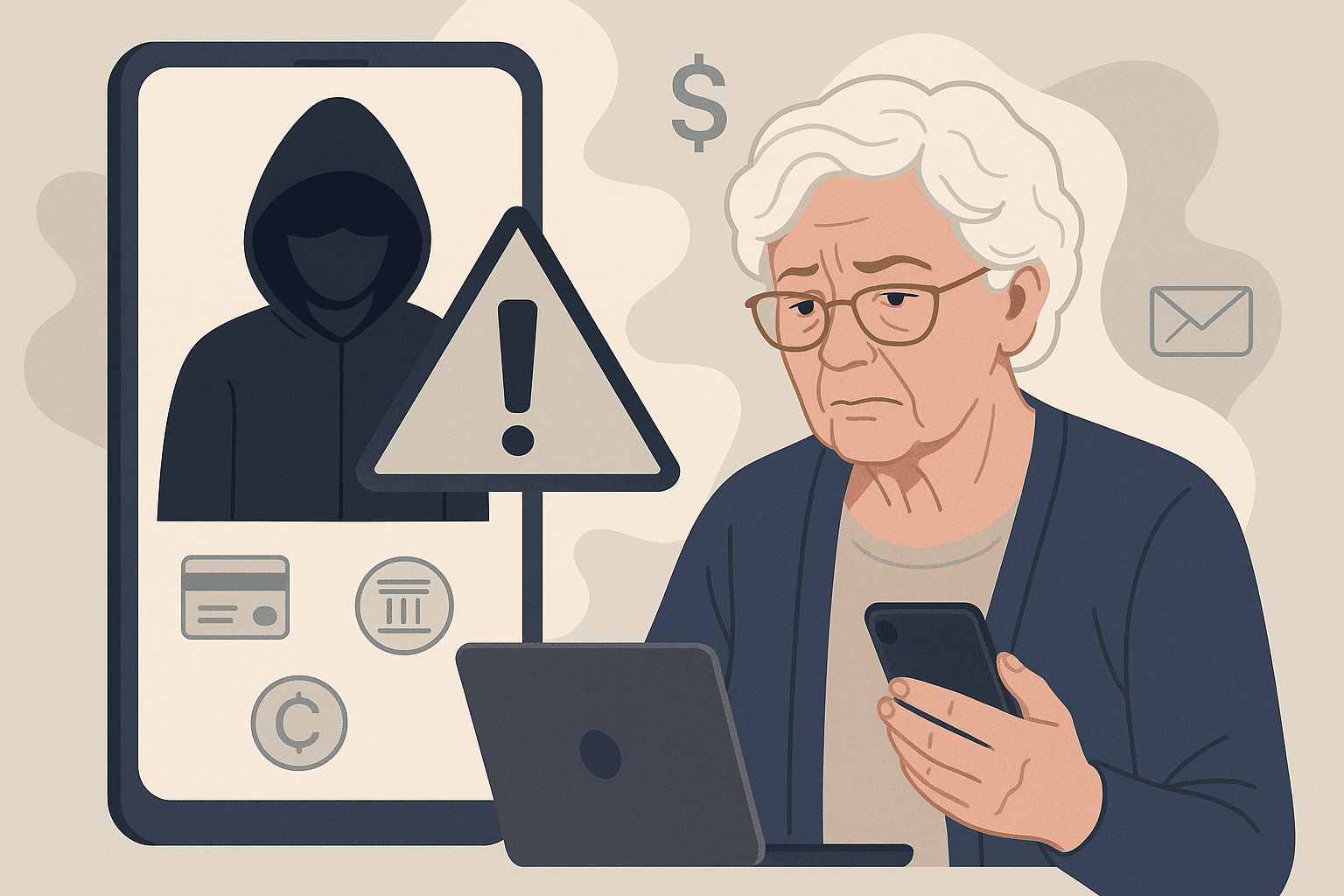
The most dangerous scam targeting seniors in 2026 is the government impersonation call — a fraud where criminals claim to be from the IRS, Social Security Administration, or Medicare threatening arrest or benefit suspension unless you pay immediately. Americans 60 and older lost $3.4 billion to fraud in 2023 (FBI IC3 data), more than any other age group. These 8 schemes account for the majority of those losses. Each entry below includes exactly what the scam sounds like, the red flags to recognize it, and the specific steps to protect yourself.
How We Identified These Schemes
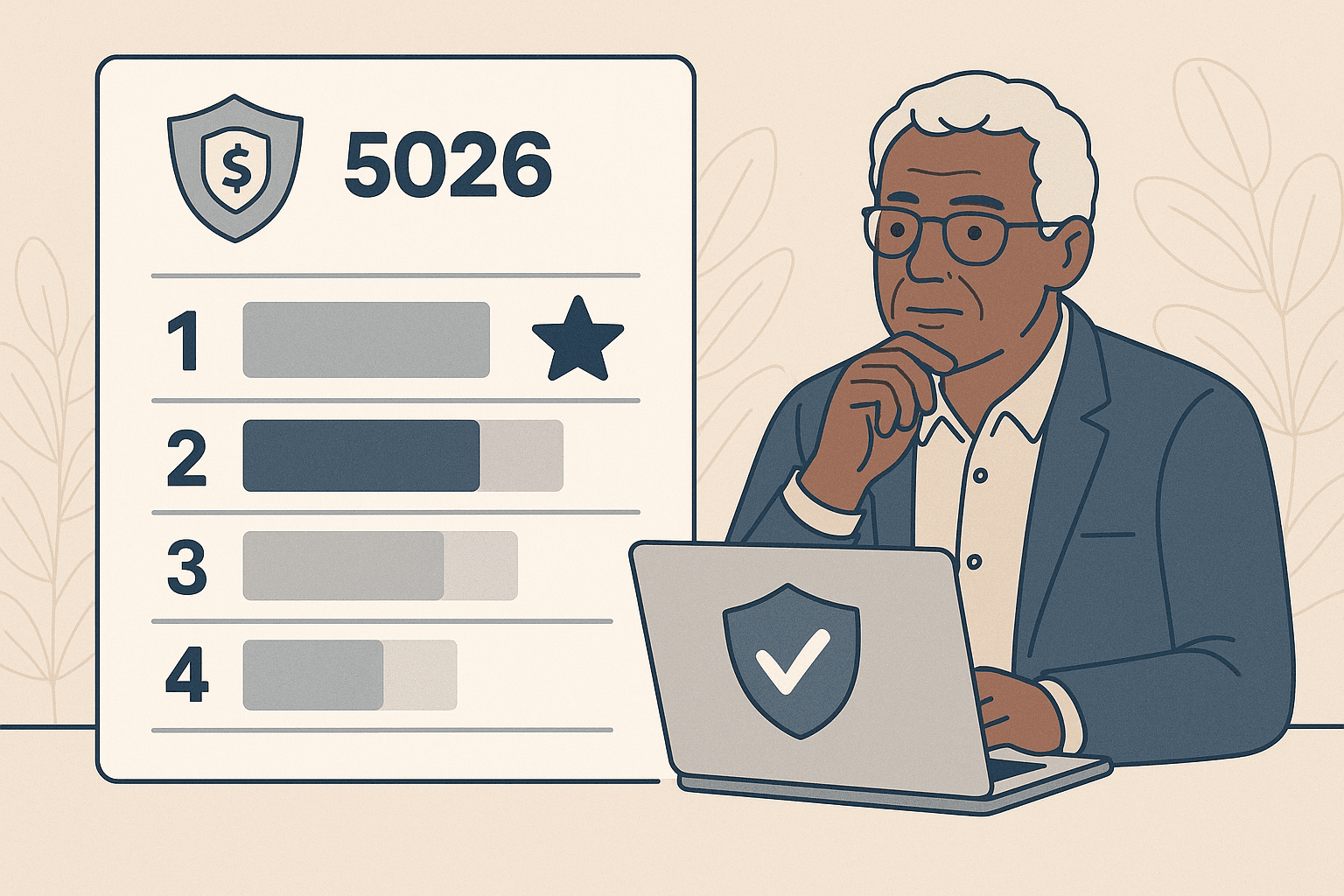
We ranked each scam category on four factors:
| Criteria |
Weight |
Why It Matters |
| Financial loss per victim |
High |
Higher loss schemes deserve the most attention |
| Frequency of targeting seniors |
High |
How often this scam appears in 60+ fraud reports |
| Emotional manipulation tactics |
Medium |
Scams using fear or affection are harder to resist |
| Prevention difficulty |
Medium |
Some scams are easier to block than others |
Data sources: FBI Internet Crime Complaint Center (IC3) 2023 Elder Fraud Report, FTC Consumer Sentinel Network, AARP Fraud Watch Network, and National Council on Aging.
1. Government Impersonation — The #1 Financial Threat to Seniors
Reported losses (60+): $770 million in 2023 (FBI IC3)
How it works: Caller claims to be from the Social Security Administration, IRS, or Medicare — threatening arrest, benefit suspension, or tax liens unless you pay immediately via gift cards, wire transfer, or cryptocurrency
The giveaway: Real government agencies never call to demand immediate payment, and they never ask for gift cards
This is the most financially devastating scam targeting older Americans. The caller may know your real name, partial Social Security number, and address (purchased from data brokers), making the call feel legitimate. The urgency and threat of arrest are designed to override your judgment. The Social Security Administration will never call you unsolicited to demand payment. If you receive such a call, hang up immediately — do not engage, explain, or ask questions, because any response signals you are a viable target for follow-up calls.
Red Flags
- Demands for gift cards (Amazon, Google Play, iTunes) — no real agency accepts gift cards as payment
- Threats of immediate arrest if you don't pay today
How to Protect Yourself
Hang up. Call the agency directly using the number from their official website (SSA: 1-800-772-1213; IRS: 1-800-829-1040) to verify any legitimate contact. Report the call to the FTC at reportfraud.ftc.gov. For Social Security-specific impersonation, understand your real Social Security claiming options so you know when SSA legitimately contacts you.
Who This Targets
Seniors who have had prior contact with the SSA, IRS, or Medicare — which is nearly everyone 65+. Also specifically targets seniors from immigrant communities who may be more fearful of government authority.
2. Medicare and Health Insurance Fraud — Your Benefits as a Theft Target
Reported losses: $1.1 billion in false Medicare billing annually (CMS estimate)
How it works: Caller offers "free" medical equipment, health screenings, or supplements — and just needs your Medicare number to bill for services never rendered
The giveaway: Unsolicited calls offering free medical equipment or claiming to update your Medicare information
Your Medicare ID number is as valuable as a credit card to fraudsters. They use it to bill Medicare for equipment, tests, or treatments you never received. You become aware only when you get an Explanation of Benefits (EOB) showing charges for items you didn't request. Medicare will never call you unsolicited to offer free equipment. Also be alert: fake Medicare plan representatives during open enrollment (October 15–December 7) are a growing problem — verify any plan information through Medicare.gov or 1-800-MEDICARE directly.
Red Flags
- Unsolicited calls about "updating" your Medicare card or transferring to a new plan
- Offers for free knee braces, back supports, or glucose monitors in exchange for your Medicare number
How to Protect Yourself
Guard your Medicare number as carefully as your Social Security number. Review your EOB statements every month for charges you don't recognize — call 1-800-MEDICARE to report suspicious charges. For legitimate Medicare plan comparison, use only Medicare.gov or a licensed, independent broker.
Who This Targets
Medicare beneficiaries (65+) and those on disability Medicare. Particularly common after major health events when seniors may be expecting medical billing communications.
3. The Grandparent Scam — An Attack Through Love
Reported losses (60+): $955 million in family/friend impersonation scams (FTC 2023)
How it works: Caller says "Grandma, it's me — I'm in trouble, please don't tell Mom and Dad" — then asks for bail money, medical bills, or emergency travel funds via wire transfer or gift cards
The giveaway: Requests for secrecy and urgency; legitimate grandchildren in real emergencies involve parents and authorities
This scam is devastating because it exploits genuine love. AI voice cloning technology (now widely accessible) has made these calls indistinguishable from your grandchild's actual voice. The caller keeps you on the phone while a "lawyer" or "police officer" confirms the story and provides wire transfer instructions. The defense: hang up and call your grandchild or their parents directly on a number you already have. Do not call back on any number the original caller provides.
Red Flags
- Requests for secrecy ("Don't tell Mom and Dad — I'm embarrassed")
- Wire transfers, Zelle payments, or gift cards for bail or emergencies
How to Protect Yourself
Establish a family code word — a word only real family members know that must be used in any emergency call. If you can't verify the code word, hang up and call directly. Never wire money or purchase gift cards for a claimed emergency without physical verification.
Who This Targets
Grandparents of any age with grandchildren old enough to conceivably be in legal or medical trouble (16+). More effective against grandparents who don't have frequent direct contact with grandchildren.
4. Tech Support Scams — Fake Microsoft and Apple Alerts
Reported losses (60+): $590 million in 2023 (FBI IC3)
How it works: A popup on your computer (or a phone call) claims your device has a virus. You call the number provided, and the "technician" requests remote access to your computer — then installs real malware or charges for fake repairs
The giveaway: Microsoft and Apple never send popups with phone numbers. Legitimate security software never demands immediate payment via gift cards
Once scammers have remote access to your computer, they can steal banking credentials, install ransomware, and access every saved password on the device. The fake popup may look exactly like a real Windows or macOS security alert. Rule: never call a phone number from a security popup. Close the browser tab (or restart your computer if needed) and call your internet provider or device manufacturer's official support number.
Red Flags
- Security popup that plays an alarm sound and cannot be closed by clicking X
- "Technician" who asks for remote access to your computer
- Demands for gift card payment to remove a virus
How to Protect Yourself
If a security popup appears, press Alt+F4 (Windows) or Command+Q (Mac) to force-close the browser. Do not call the number displayed. Real viruses are not announced by popups that include phone numbers.
Who This Targets
Computer users who are less familiar with normal operating system security behavior — often seniors who adopted computers later in life and are uncertain about what legitimate security warnings look like.
5. Romance Scams — Long Con Relationships Leading to Financial Devastation
Reported losses (60+): $240 million in romance fraud (FTC 2023)
How it works: A person meets you through a dating site, social media, or email — builds a relationship over weeks or months — then has an emergency and needs money, investment help, or cryptocurrency purchases
The giveaway: Person never meets in person despite extended relationship; always has a reason to avoid video calls; requests money for emergencies, medical bills, or business investments
Romance scams are the most emotionally destructive fraud on this list. The average loss per senior victim exceeds $10,000 — and many victims make multiple transfers before recognizing the fraud. AI-generated profile photos (detectable via reverse image search) and polished scripts have made these fraudsters extremely convincing. The consistent red flag: any online relationship where the other person cannot meet in person, is always traveling or deployed, and eventually needs financial help.
Red Flags
- Person claims to be widowed, a professional abroad, or a deployed military member — all common scammer identities
- Avoids video calls or camera is always "broken"
- Asks for gift cards, wire transfers, or cryptocurrency instead of traditional money
How to Protect Yourself
Do a reverse image search of any profile photo (drag the image to Google Images). Never send money to someone you haven't met in person regardless of how deep the relationship feels. Share the story with a trusted friend or family member — outside perspective breaks the emotional spell.
Who This Targets
Widowed or divorced seniors who are lonely and seeking companionship, particularly those active on Facebook, senior dating apps, or receiving unexpected emails or messages from attractive individuals.
6. Lottery and Sweepstakes Scams — "You've Won!" (You Haven't)
Reported losses: $301 million in prize, sweepstakes & lottery fraud (FTC 2023)
How it works: Letter, email, or phone call says you've won a large prize — but you must pay taxes, fees, or processing charges to receive your winnings
The giveaway: You cannot win a contest you didn't enter. Real lottery winnings do not require upfront payment of taxes to collect
This scam preys on hope. The "prize" amounts are large ($50,000, $1 million, foreign lotteries), the letters often look professional with official seals, and the caller may explain the "tax pre-payment" requirement with convincing legal-sounding language. Legitimate sweepstakes do not require upfront payment of any kind. Taxes on real winnings are handled at tax filing time — never as a precondition of claiming the prize.
Red Flags
- Any request for upfront payment to receive a prize
- Foreign lottery notifications (U.S. residents cannot legally win foreign lotteries)
- Check that arrives asking you to deposit and return a portion — the check will bounce
How to Protect Yourself
Hang up or shred the letter. Do not deposit any check sent as "advance prize winnings" — these checks are fraudulent and you will be held liable for the full deposited amount when they bounce.
Who This Targets
Anyone, but seniors are disproportionately targeted because direct mail is more effective with 65+ populations than with younger digital-first consumers.
7. Home Improvement and Contractor Fraud
Reported losses: Estimated $500 million annually (NAAG consumer fraud data)
How it works: Contractor knocks on your door offering a special deal on roof repair, driveway sealing, or tree trimming — takes a large cash deposit, does shoddy work or disappears entirely
The giveaway: Unsolicited door-to-door contractors, requests for large upfront cash payment, claims that your roof/driveway/tree requires "immediate" work
This scam is particularly effective after storms when concerns about real damage are elevated. The "storm chaser" contractor model targets seniors specifically because they are more likely to be home during weekday solicitations, more likely to pay cash, and less likely to verify contractor credentials before authorizing work. Real licensed contractors don't solicit door to door, don't demand full payment upfront, and always provide written contracts.
Red Flags
- Unsolicited door-to-door visit with a "special deal" expiring today
- Cash-only payment requested
- No written contract, license number, or local business address provided
How to Protect Yourself
Never hire a contractor who appears at your door unsolicited. Always get 3 written quotes, verify license and insurance with your state contractor licensing board, and never pay more than 30% upfront. Check reviews on the Better Business Bureau (bbb.org) before signing.
Who This Targets
Homeowners 65+, particularly those who live alone and who may genuinely be concerned about property maintenance issues following storms.
8. Prescription Drug and Supplement Scams
Reported losses: $500+ million in health product fraud (FTC estimates)
How it works: Online pharmacy offers dramatic discounts on name-brand prescriptions, or "clinically proven" supplements cure cancer, diabetes, or cognitive decline — products are counterfeit, ineffective, or dangerous
The giveaway: No legitimate prescription drug is available for 80–90% below retail. No supplement is FDA-approved to cure, treat, or prevent a disease
Counterfeit medications from fraudulent online pharmacies may contain wrong doses, wrong ingredients, or harmful contaminants. The FDA's BeSafeRx program maintains a list of verified online pharmacies (fda.gov/BeSafeRx). For supplements, the FTC has taken action against hundreds of companies claiming cognitive, joint, or cardiovascular benefits without scientific support. Supplements are not FDA-regulated for efficacy — a company can claim "supports memory" without any evidence.
Red Flags
- Online pharmacy does not require a valid prescription for prescription drugs
- Supplement promises to "reverse" Alzheimer's, cure diabetes, or eliminate cancer
- Payment required in gift cards, wire transfer, or cryptocurrency
How to Protect Yourself
Only purchase prescriptions from pharmacies verified by NABP (nabp.pharmacy/programs/safe.pharmacy). For supplements, check Consumerlab.com for independent testing of what's actually in the bottle. Talk to your doctor before adding any new supplement, regardless of how natural or safe it appears.
Who This Targets
Seniors with chronic conditions managing ongoing prescription costs and those with cognitive decline concerns seeking affordable solutions.
Quick Reference: 8 Senior Scams at a Glance
| Scam |
Avg. Loss |
Key Red Flag |
First Defense |
| Government impersonation |
$11,000 |
Gift card payment demand |
Hang up, call agency directly |
| Medicare fraud |
$1,100/incident |
Free equipment for Medicare # |
Guard Medicare number |
| Grandparent scam |
$9,000 |
Secrecy request |
Call grandchild directly |
| Tech support |
$24,000 |
Popup with phone number |
Don't call the number |
| Romance scam |
$10,000+ |
Won't meet in person |
Reverse image search |
| Lottery/sweepstakes |
$900 |
Upfront payment to collect prize |
You can't win what you didn't enter |
| Contractor fraud |
$3,500 |
Door-to-door cash-only |
Get 3 written quotes |
| Drug/supplement |
$200+ |
Discounts 80%+ on prescriptions |
Use NABP-verified pharmacies |
How We Researched This
This guide draws on the FBI Internet Crime Complaint Center (IC3) 2023 Elder Fraud Report, FTC Consumer Sentinel Network data, AARP Fraud Watch Network analysis, and the National Council on Aging. Loss figures represent 2023 data — the most recent year with complete FBI IC3 reporting. Fraud losses are systematically underreported; the FBI estimates fewer than 15% of fraud incidents are reported to authorities. Last updated: May 2026. We update this guide annually with new FBI IC3 data.
Frequently Asked Questions
What is the most common scam targeting seniors in 2026?
Government impersonation fraud — calls claiming to be from the Social Security Administration, IRS, or Medicare — is the most common and most financially damaging scam targeting seniors, accounting for over $770 million in reported losses to Americans 60+ in 2023 according to the FBI IC3.
How do I report a scam targeting a senior?
Report to the FTC at reportfraud.ftc.gov, the FBI's IC3 at ic3.gov, and AARP's Fraud Watch Network helpline at 1-877-908-3360. For Medicare fraud specifically, call 1-800-MEDICARE or contact your State Health Insurance Assistance Program (SHIP).
What should I do if I've already been scammed?
Contact your bank or financial institution immediately if money was transferred — some wire transfers can be recalled within 24 hours. File reports with the FTC, FBI IC3, and your local police department. Call the AARP Fraud Watch helpline (1-877-908-3360) for guidance on next steps.
How can I protect an elderly parent from scams?
Set up automatic fraud alerts on their bank and credit card accounts. Talk openly about common scams before they encounter them. Establish a family verification code word. Consider adding a "trusted contact" designation to financial accounts — this allows advisors to alert a family member if unusual activity is detected.
Are gift card payment requests always a scam?
Yes. No government agency, real court, real utility, or legitimate business accepts gift cards as payment for taxes, fees, or fines. Gift card payment requests are the universal signal of a scam — hang up immediately.
Does Medicare contact seniors by phone?
Medicare will send paper explanation of benefits (EOB) statements by mail. Medicare does not call you to offer free equipment, to update your Medicare card, or to demand any kind of payment by phone. If someone calls claiming to be from Medicare, hang up and call 1-800-MEDICARE to verify.
Important Disclosures
This content is for informational purposes only. If you believe you or someone you know is currently being victimized by fraud, contact the FTC at reportfraud.ftc.gov and call your local law enforcement. The loss figures in this article are derived from reported fraud data — actual losses are estimated to be significantly higher due to underreporting.