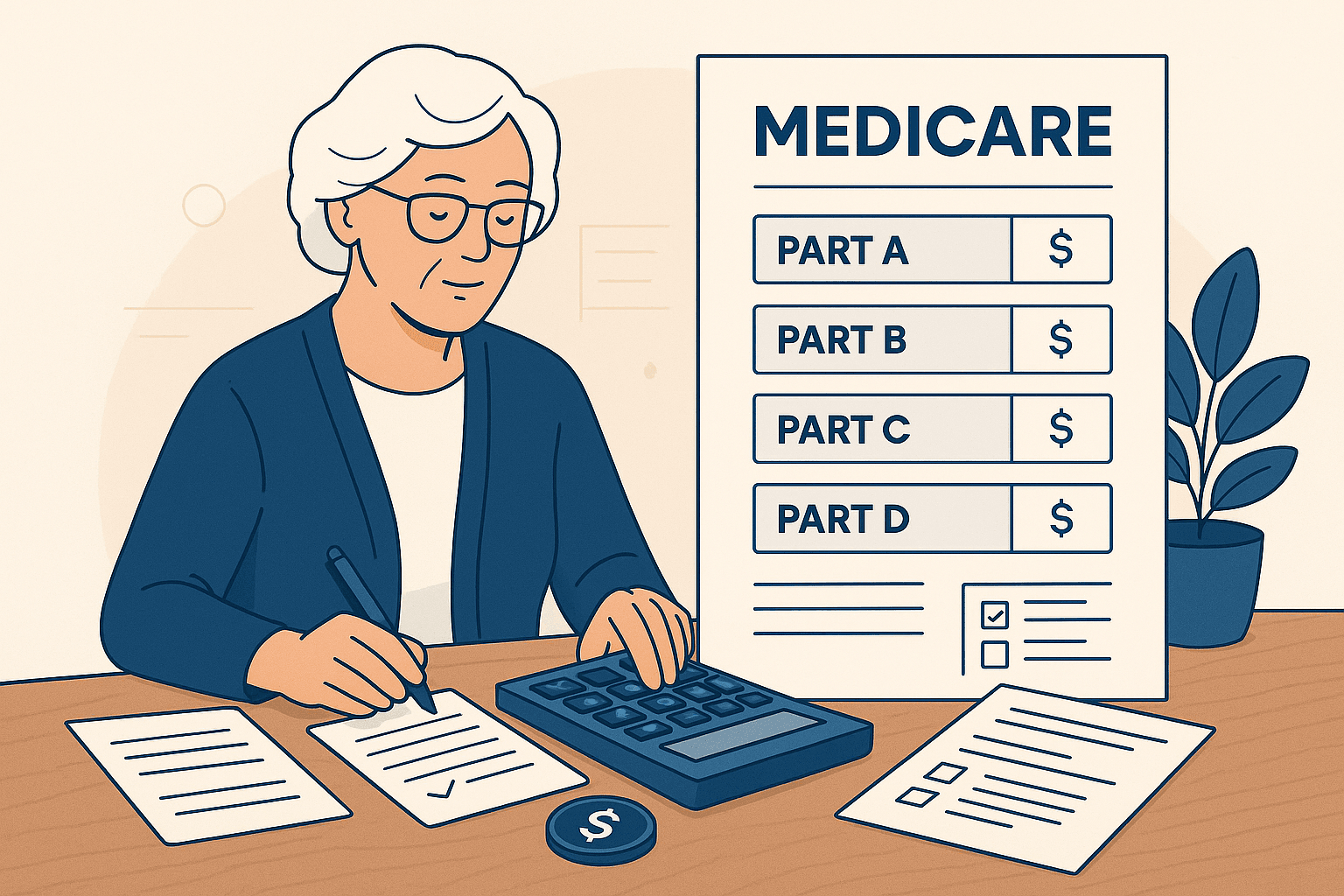
The best Medicare Advantage plans in 2026 come from UnitedHealthcare, Humana, and Blue Cross Blue Shield — carriers that consistently earn 4–5 star CMS ratings and offer the broadest network access, dental/vision/hearing benefits, and $0 premium options in most markets. The right plan depends on your state, doctors, prescriptions, and whether you value low premiums versus low out-of-pocket maximums. This guide explains what to look for and which carriers rank highest in 2026.
Last updated: April 28, 2026. Reviewed annually during Open Enrollment.
Quick Answers
What are the best Medicare Advantage plans for 2026?
The top-rated 2026 Medicare Advantage plans pair low or $0 premiums with strong CMS star ratings (4 stars or higher) and extra benefits like dental, vision, and prescription coverage. The best plan for you depends on your ZIP code, your preferred doctors, and your prescriptions.
Does Humana offer competitive Medicare Advantage plans in 2026?
Humana is one of the largest Medicare Advantage carriers and offers widely available plans, including $0-premium options with added benefits in many markets. Compare its star ratings and provider network in your area before enrolling.
Is Medicare Advantage right for me?
Medicare Advantage (Part C) bundles hospital, medical, and usually drug coverage plus extras like dental and vision, often at a low or $0 premium, in exchange for using a provider network. It fits seniors who want all-in-one coverage and lower monthly cost; those who want the broadest provider choice may prefer Original Medicare with a Medigap plan.
What Is Medicare Advantage (Part C)?
Medicare Advantage is a private insurance alternative to Original Medicare (Parts A + B) that must cover all Original Medicare benefits but often adds extras like dental, vision, hearing, fitness memberships, and prescription drug coverage (Part D). You still pay your Part B premium ($185/month in 2026) plus any plan premium — which is $0 for many popular plans.
Medicare Advantage vs. Original Medicare: Original Medicare has no annual out-of-pocket cap (unlimited exposure). Medicare Advantage caps your out-of-pocket costs — the 2026 federal maximum is $9,350 in-network. For most beneficiaries, this cap provides meaningful financial protection. See also: Medicare Supplement insurance explained.
How We Ranked These Medicare Advantage Plans
| Criteria |
Weight |
What We Measured |
| CMS Star Rating |
30% |
2026 official star ratings (1–5 stars) — quality and service score |
| Extra benefits |
25% |
Dental, vision, hearing, OTC allowance, fitness benefits |
| Out-of-pocket maximum |
20% |
In-network annual limit (lower = better protection) |
| Network breadth |
15% |
Number of in-network providers and hospitals nationally |
| Premium |
10% |
Monthly cost beyond Part B premium ($185/month in 2026) |
The 6 Best Medicare Advantage Carriers in 2026
1. UnitedHealthcare — Best for Network Size and Nationwide Availability
UnitedHealthcare's Medicare Advantage plans earn an average 4.2-star CMS rating in 2026 and are available in all 50 states. With 1.4 million+ in-network providers and AARP co-branding, UHC offers the broadest access of any national carrier — including $0 premium HMO plans in most markets with dental, vision, and hearing included.
Pros:
- Largest Medicare Advantage network in the nation — 1.4M+ providers
- Available nationwide — no geographic coverage gaps
- $0 premium plans widely available
- Renew Active fitness benefit included on most plans
- Strong prescription drug (Part D) integration
Cons:
- Customer service ratings vary significantly by region
- HMO plans require referrals for specialists — less flexibility than PPO
- Out-of-pocket maximums can be high on lower-premium plans
Who This Is Best For: Beneficiaries who travel frequently, have providers across multiple health systems, or live in rural areas where network size matters most.
2. Humana — Best for Extra Benefits and $0 Premium Plans
Humana Medicare Advantage plans average 4.1 stars in 2026 and are among the most generous for extra benefits — including over-the-counter (OTC) allowances up to $250/quarter, SilverSneakers fitness membership, and comprehensive dental with no waiting period on many plans. $0 premium plans available in most markets.
Pros:
- Among the most generous OTC allowances in the category ($250/quarter on many plans)
- SilverSneakers fitness membership included
- Strong dental benefits — no waiting period on some plans
- Consistent $0 premium plans in most counties
- 4.1 average star rating with several 5-star plans available
Cons:
- Plan availability varies significantly by county — fewer options in rural markets
- Network is smaller than UHC in some regions
- Drug formularies change annually — verify your prescriptions each year
Who This Is Best For: Beneficiaries who want maximum extra benefits — particularly OTC allowances, dental, and fitness perks — with low or no monthly premium.
3. Blue Cross Blue Shield (BCBS) — Best for Local Trust and PPO Options
BCBS Medicare Advantage plans (sold under various regional names — Anthem, Highmark, BCBSM, etc.) average 4.0 stars nationally with strong regional variation. BCBS offers the widest selection of PPO plans — which allow out-of-network provider access at higher cost — making it the best choice for beneficiaries who want to keep existing out-of-network providers.
Pros:
- Strongest PPO availability — best for keeping out-of-network doctors
- Deep local trust and established provider relationships in most markets
- Strong customer service ratings in most regions
- Good dental and vision benefit packages
Cons:
- Plan quality varies significantly by state (4.5 stars in some markets, 3.0 in others)
- Premium tends to be higher for PPO plans than HMO alternatives
- BCBS plans are separate companies by state — coverage varies
Who This Is Best For: Beneficiaries who want PPO flexibility to see out-of-network specialists or who have a strong preference for their local BCBS brand.
4. Aetna (CVS Health) — Best for CVS Integration and Pharmacy Benefits
Aetna Medicare Advantage plans average 4.0 stars in 2026. As part of CVS Health, Aetna integrates deeply with CVS pharmacies — offering MinuteClinic access, $0 CVS Health brand prescriptions on many plans, and robust care management programs. Available in 45+ states.
Pros:
- CVS MinuteClinic access for minor care — no appointment needed
- $0 cost on CVS Health brand medications on qualifying plans
- Strong care coordination and disease management programs
- Broad availability in 45+ states
Cons:
- Out-of-pocket maximums tend to be higher than UHC or Humana
- Fewer $0 premium plans than competitors in some markets
- Customer service ratings are mid-tier nationally
Who This Is Best For: Beneficiaries who primarily use CVS for prescriptions and want integrated pharmacy benefits with clinic access for routine needs.
5. Kaiser Permanente — Best Quality Rating (Where Available)
Kaiser Permanente Medicare Advantage plans are available in only 8 states (CA, CO, GA, HI, MD, OR, VA, WA) but consistently earn the highest CMS star ratings in the category — with multiple 5-star plans in 2026. Kaiser's integrated care model means your doctors, hospital, and insurance are all in the same system.
Pros:
- Highest star ratings nationally — multiple 5-star plans
- Integrated care model eliminates referral friction
- Lowest out-of-pocket costs in markets where available
- Preventive care is comprehensive and proactively managed
Cons:
- Only available in 8 states — not an option for most beneficiaries
- Requires using Kaiser's own providers exclusively (closed network)
- Not suitable for frequent travelers or snowbirds
Who This Is Best For: Beneficiaries who live in Kaiser's service area and want the highest quality-rated Medicare Advantage plan available with an integrated care experience.
6. Cigna — Best for Supplemental Benefits in Select Markets
Cigna Medicare Advantage plans average 3.8 stars nationally but offer competitive supplemental benefits in key markets — including hearing aid allowances up to $2,500, transportation benefits, and home safety modifications on select plans. Available in 28 states with $0 premium options.
Pros:
- Generous hearing aid allowances on qualifying plans (up to $2,500)
- Transportation benefits to medical appointments included on select plans
- $0 premium plans available in most covered markets
- Strong behavioral health and mental wellness benefits
Cons:
- Below-average national star rating (3.8) — quality is more variable
- Only available in 28 states
- Network is smaller than UHC or Humana in most markets
Who This Is Best For: Beneficiaries in Cigna's covered markets who need hearing aid coverage or transportation benefits not available on other local plans.
Medicare Advantage Carrier Comparison Table
| Carrier |
Avg CMS Stars |
States |
$0 Premium |
Top Extra Benefit |
Network Type |
| UnitedHealthcare |
4.2 |
All 50 |
Yes |
Largest network |
HMO/PPO |
| Humana |
4.1 |
Most |
Yes |
OTC $250/quarter |
HMO/PPO |
| Blue Cross Blue Shield |
4.0 |
All 50 |
Yes (varies) |
PPO availability |
HMO/PPO |
| Aetna (CVS) |
4.0 |
45+ |
Varies |
CVS MinuteClinic |
HMO/PPO |
| Kaiser Permanente |
4.7+ |
8 states |
Yes |
5-star ratings |
HMO only |
| Cigna |
3.8 |
28 states |
Yes |
Hearing: $2,500 |
HMO/PPO |
How to Choose the Right Medicare Advantage Plan
Step 1: Confirm your doctors are in-network. Use the free tool and 60-second match below to check provider participation. This is the single most important filter; you can also confirm on Medicare's Plan Finder at medicare.gov.
Step 2: Run your prescriptions through the plan's formulary. Drug costs vary dramatically between plans. Medicare's Plan Finder shows your estimated annual drug costs for each plan.
Step 3: Compare out-of-pocket maximums. A $0 premium plan with a $9,000 OOP max may cost more than a $50/month plan with a $4,000 OOP max if you use significant care.
Step 4: Check the CMS star rating. Plans rated 4+ stars consistently deliver better care coordination and member experience. Avoid 2- and 3-star plans unless there are no alternatives in your area.
Step 5: Evaluate extra benefits you will actually use. OTC allowances, dental, vision, and fitness memberships have real dollar value — but only if you use them.
Methodology
CMS star ratings sourced from CMS.gov 2026 Medicare Advantage star rating data (released October 2025). Premium and benefit data from Medicare Plan Finder as of April 2026. Network size data from carrier-published provider directories. SeniorSimple is not affiliated with any insurer and does not sell Medicare plans.
Frequently Asked Questions
What is the best Medicare Advantage plan in 2026?
There is no single best plan — it depends on your location, doctors, and prescriptions. Among national carriers, UnitedHealthcare has the largest network, Humana the best extra benefits, and Kaiser the highest star ratings where available. Use medicare.gov to compare plans available in your zip code.
What is a good CMS star rating for Medicare Advantage?
4 stars or higher indicates above-average quality. 5 stars is exceptional — beneficiaries in 5-star plans can switch during a special enrollment period. Avoid plans below 3 stars if alternatives exist.
Do Medicare Advantage plans cover dental?
Original Medicare does not cover routine dental. Most Medicare Advantage plans include some dental coverage — typically preventive care (cleanings, X-rays) at $0 and restorative coverage (fillings, crowns) at varying cost-shares. Review the specific dental maximum benefit before enrolling.
Can I switch Medicare Advantage plans?
Yes. During Open Enrollment (October 15–December 7) you can switch plans for January 1 coverage. The Medicare Advantage Open Enrollment Period (January 1–March 31) allows one switch if you are already enrolled in a Medicare Advantage plan.
What is the out-of-pocket maximum for Medicare Advantage in 2026?
The federal maximum is $9,350 in-network and $14,000 for in-network + out-of-network combined. Individual plans may set lower maximums — which is why comparing OOP caps matters, not just premiums.
Do I still pay Part B with Medicare Advantage?
Yes. You pay the standard Part B premium ($185/month in 2026) regardless of which Medicare Advantage plan you choose. Some plans offer a Part B premium reduction — offsetting some or all of this cost.
Is Medicare Advantage better than Original Medicare?
For most beneficiaries, Medicare Advantage provides better financial protection (annual OOP cap) and extra benefits (dental, vision, fitness). Original Medicare offers more provider flexibility nationwide. If you have a complex condition requiring multiple specialists across different health systems, Original Medicare + a Medigap supplement may be more practical. See: Medicare Supplement insurance explained.
Disclaimer: Medicare plan options, premiums, and benefits change annually. Always verify plan details at medicare.gov or by calling 1-800-MEDICARE before enrolling. This content does not constitute insurance advice. SeniorSimple is not affiliated with any insurer and does not sell Medicare plans.
Author: SeniorSimple Editorial Team | Last reviewed: April 28, 2026 | Next review: October 2026 (Open Enrollment)