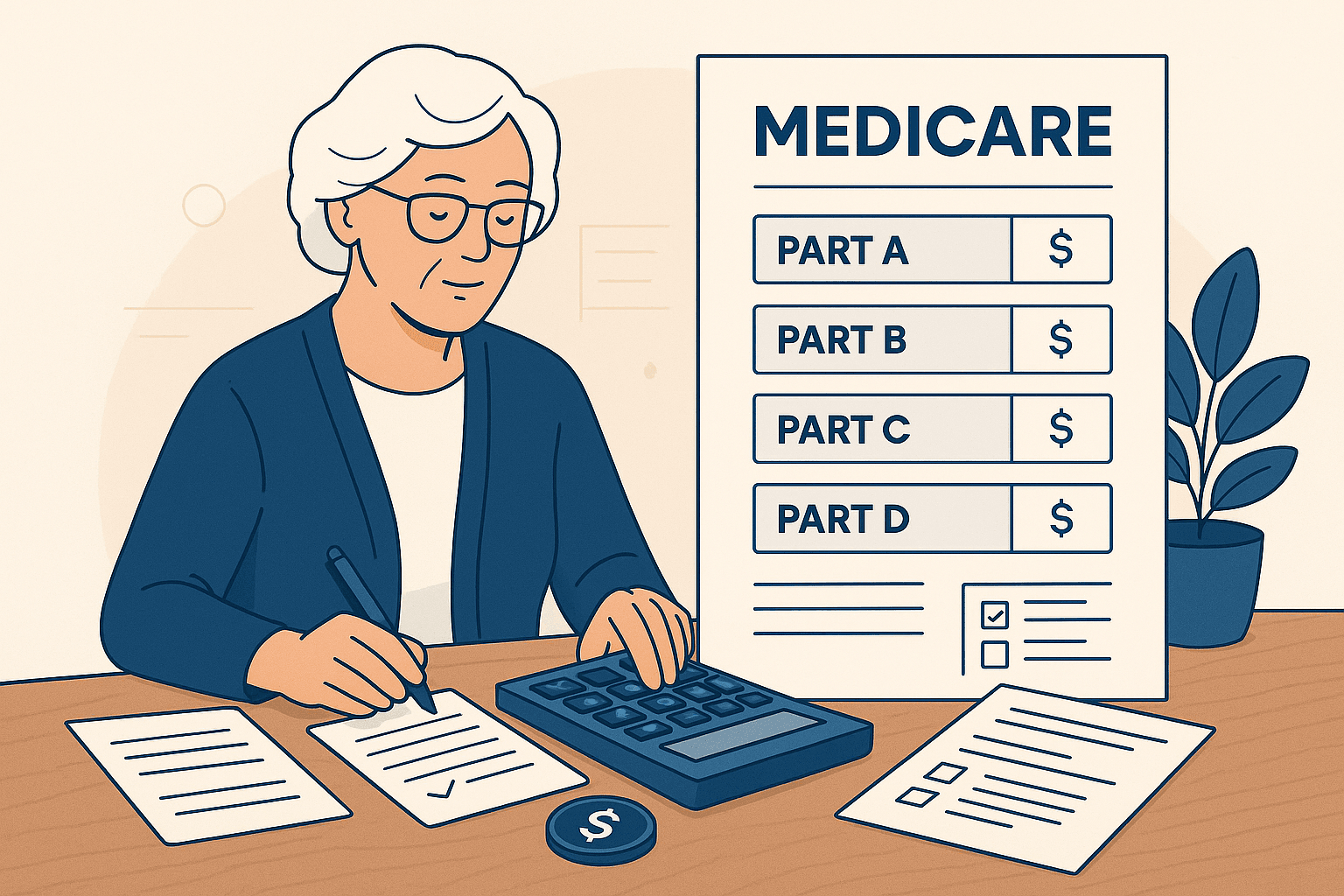
Medicare Advantage (also called Medicare Part C) is a private insurance alternative to Original Medicare that bundles Part A, Part B, and usually Part D drug coverage into one plan — often with extra benefits like dental, vision, and hearing. In 2026, more than 33 million Americans are enrolled in a Medicare Advantage plan, making it the most popular way to receive Medicare benefits.
This guide explains exactly how Medicare Advantage works, who it's right for, what it costs, and how to compare plans before Open Enrollment — without the insurance industry jargon.
Who this guide is for: Anyone turning 65, newly Medicare-eligible, or currently on Original Medicare who wants to understand whether switching to Medicare Advantage makes sense for their health and budget.
Last updated: May 2026. Rates and plan details change annually. Verify current information at Medicare.gov or by calling 1-800-MEDICARE.
What Is Medicare Advantage?
Medicare Advantage is a type of Medicare coverage offered by private insurance companies that have been approved by and contracted with the federal government. These companies receive a fixed monthly payment from Medicare to cover your care.
When you enroll in Medicare Advantage, you don't lose your Medicare benefits — you receive the same core coverage as Original Medicare (Part A for hospital care and Part B for outpatient services), but it's delivered through a private insurer instead of the government directly.
Most Medicare Advantage plans also include:
- Part D prescription drug coverage bundled in (no separate plan needed)
- Extra benefits not covered by Original Medicare — dental cleanings, eye exams, hearing aids, gym memberships, and sometimes transportation to appointments or over-the-counter health allowances
Medicare Advantage is formally known as Medicare Part C, and you'll see these terms used interchangeably throughout this guide and on Medicare.gov.
One critical distinction: When you're on Medicare Advantage, your insurance card comes from the private insurer — Humana, UnitedHealthcare, Aetna, Blue Cross, CIGNA, and others — not from the federal government. You present that card at the doctor's office, not your red, white, and blue Medicare card.
How Does Medicare Advantage Work?
Understanding the mechanics helps you avoid surprises — especially the ones that show up when you actually need care.
The Network System
Unlike Original Medicare — which is accepted by virtually every doctor, hospital, and specialist who participates in Medicare — Medicare Advantage plans operate within provider networks. This is the single most important structural difference between the two systems.
When you enroll in a Medicare Advantage HMO or PPO:
- You typically need to use doctors and hospitals within the plan's network
- Out-of-network care may cost significantly more or may not be covered at all, depending on plan type
- Some plans require you to choose a primary care physician (PCP) who coordinates your care
- Specialist visits often require a referral from your PCP
This structure works well for people who live in one area and have established relationships with in-network providers. It creates friction for frequent travelers or people with specialists they're unwilling to change.
The Funding Model
Medicare pays each private insurer a risk-adjusted monthly amount on your behalf. The insurer becomes responsible for your healthcare costs within the plan's benefit structure. This is how plans can afford extra benefits like dental and vision — they're managing a pool of funds and competing for your enrollment. The insurer profits when your care costs less than what Medicare pays; they absorb losses when it costs more.
Prior Authorization
Many Medicare Advantage plans require prior authorization for certain procedures, tests, specialist referrals, and medications. This means the insurer must approve the care before you receive it. Original Medicare has far fewer prior authorization requirements. For people managing complex or chronic conditions, this is a meaningful operational difference — approvals take time, and denials require appeals.
Annual Plan Changes
Medicare Advantage plans can change their benefits, premiums, deductibles, formularies, and provider networks every single year. Every September, your plan mails an Annual Notice of Change (ANOC) letter detailing what's different for the coming year. Most people don't read it. That's a costly habit.
Types of Medicare Advantage Plans
Medicare Advantage isn't a single product. There are five distinct plan structures, each with different network rules, referral requirements, and cost-sharing approaches.
HMO — Health Maintenance Organization
The most common Medicare Advantage plan type. HMOs require you to use in-network providers (except in emergencies) and typically require a PCP referral to see a specialist. HMOs generally offer the lowest monthly premiums in exchange for these network restrictions. If your primary care doctor, specialists, and preferred hospital are all in the network, an HMO can be an excellent value.
PPO — Preferred Provider Organization
PPOs offer more flexibility: you can see out-of-network providers, but you'll pay more for doing so. No referral is needed to see a specialist. PPOs typically carry higher monthly premiums than HMOs. They suit people who want plan structure plus the option to see any Medicare-accepting provider when needed — useful if you travel or want to keep a specialist who is not fully in-network.
PFFS — Private Fee-for-Service
PFFS plans set their own payment rates for providers. Not all doctors agree to accept PFFS plans, and coverage can vary by provider. These plans were more common before 2011 regulatory changes and have become less prevalent since.
SNP — Special Needs Plan
SNPs are designed for specific populations with particular healthcare needs:
- Dual Eligible SNPs (D-SNPs): For people eligible for both Medicare and Medicaid. These plans coordinate benefits from both programs and often include significantly enhanced extra benefits.
- Chronic Condition SNPs (C-SNPs): For people with specific conditions like diabetes, heart disease, chronic heart failure, or end-stage renal disease (ESRD).
- Institutional SNPs (I-SNPs): For people who live in or require the level of care provided by a nursing facility.
SNPs provide highly tailored benefits — extra transportation, home-delivered meals, disease management programs, and care coordination — that make them substantially more valuable for qualifying enrollees than standard plans.
MSA — Medical Savings Account
A less common structure that combines a high-deductible Medicare Advantage plan with a deposit into a tax-advantaged savings account. Suited for relatively healthy people who want to build reserves for future care costs. Plan availability is limited and enrollment is low compared to HMO and PPO options.
Medicare Advantage vs. Original Medicare: Key Differences
Understanding what you're trading is essential to making the right decision for your situation.
| Feature |
Original Medicare |
Medicare Advantage |
| Provider choice |
Any Medicare-participating provider nationally |
Network-based (varies by plan type) |
| Monthly premiums |
Part B premium (~$185/month in 2026) |
Part B premium + plan premium (often $0) |
| Out-of-pocket maximum |
None — unlimited exposure |
Required annual cap (max $9,350 in-network in 2026) |
| Prescription drug coverage |
Separate Part D plan required |
Usually bundled in |
| Dental, vision, hearing |
Not covered |
Commonly included as extras |
| Prior authorization |
Rarely required |
Commonly required |
| Coverage away from home |
Nationwide |
Often limited to network area |
| Medigap supplemental plan |
Can add Medigap to fill gaps |
Cannot add Medigap |
| Specialist referrals |
Never required |
Required with HMO plans |
| Plan stability |
Consistent government program |
Benefits change annually |
The out-of-pocket maximum is one of Medicare Advantage's most significant protections. Original Medicare has no annual cap on what you can pay — if you have a major illness, your 20% coinsurance under Part B continues without limit. Medicare Advantage plans are required to include an annual out-of-pocket ceiling, providing catastrophic cost protection that Original Medicare does not offer on its own.
You can achieve similar protection with Original Medicare by purchasing a Medigap supplement policy — see our complete guide to Medicare Supplement insurance and our 2026 Medigap plan comparison for details on that path.
Benefits of Medicare Advantage
All-in-one simplicity. One plan, one card, one premium structure. No managing separate Part A, Part B, and Part D coverage across multiple entities.
Extra benefits with real dollar value. Most plans include dental, vision, hearing, and fitness memberships. Some plans add over-the-counter health allowances ($50–$200/quarter), transportation to appointments, in-home support services, and meal delivery after hospitalizations. These extras translate to hundreds of dollars in annual value for people who use them.
$0 or very low monthly premiums. Many Medicare Advantage plans charge no additional premium beyond your standard Part B premium. In competitive markets, plans provide substantial extra benefits at zero additional cost.
Catastrophic cost protection. The annual out-of-pocket maximum caps your worst-case financial exposure. In 2026, the federal ceiling is $9,350 for in-network care. Many plans set lower internal caps.
Drug coverage bundled in. No separate Part D enrollment process, no second formulary to track, no second insurer to coordinate with for prescriptions.
Coordinated care potential. When well-designed, the HMO care coordination model can reduce gaps in care — particularly valuable for seniors managing multiple chronic conditions.
Drawbacks of Medicare Advantage
Network restrictions. The most significant practical limitation. If your preferred specialists, primary care doctor, or preferred hospital are not in-network, you face a real tradeoff: find new providers, pay out-of-network rates, or choose a different plan.
Prior authorization friction. Approval requirements for procedures, tests, and medications add time and administrative burden. Denials require appeals and can delay needed care.
Annual plan instability. Benefits, premiums, formularies, and networks change every year. A plan that was excellent in 2025 may have cut benefits or dropped key providers for 2026. Always review your Annual Notice of Change in September.
Limited geographic coverage. Networks are regional. Traveling for extended periods, maintaining a second home, or relocating creates coverage gaps for non-emergency care.
Cannot use Medigap. If you're on Medicare Advantage and want to switch to Original Medicare later, you may not be able to purchase a Medigap policy at standard rates — health underwriting applies in most states for applicants past their initial enrollment window. This is a long-term planning risk many people don't recognize until it's too late.
Quality varies significantly. A 5-star plan and a 2-star plan both carry the Medicare Advantage label. The difference in care quality, coverage dispute rates, and member experience between them is substantial.
Medicare Advantage Enrollment: Step-by-Step
When Can You Enroll?
Initial Enrollment Period (IEP): A 7-month window starting 3 months before the month you turn 65, including your birthday month, and extending 3 months after. This is your first and most protected opportunity to enroll — guaranteed issue, no health screening.
Annual Enrollment Period (AEP): October 15 – December 7 each year. Open to all Medicare beneficiaries. Changes take effect January 1 of the following year.
Medicare Advantage Open Enrollment Period: January 1 – March 31. If you're already enrolled in a Medicare Advantage plan, you may switch to a different MA plan or return to Original Medicare once during this period.
Special Enrollment Periods (SEPs): Triggered by qualifying life events — losing employer-sponsored coverage, permanently moving out of your plan's service area, qualifying for Medicaid, your plan losing its Medicare contract, or achieving dual-eligible status.
How to Enroll
Confirm eligibility. You must be enrolled in both Medicare Part A and Part B. Most Americans qualify at 65; some qualify earlier due to disability or end-stage renal disease.
Research plans in your ZIP code. Use the free tool and 60-second match below. Enter your ZIP code, your current doctors, and your prescriptions for personalized, side-by-side comparisons. You can also confirm on the Medicare Plan Finder at Medicare.gov.
Verify your doctors directly. Before enrolling, call the doctor's billing office — not just the plan's website — to confirm in-network status. Online provider directories are frequently outdated.
Check your prescriptions on the formulary. Verify that every medication you take is covered at a tier you can afford. A drug that's Tier 2 on one plan may be Tier 4 on another — a difference of hundreds of dollars annually.
Review the CMS Star Rating. Aim for plans rated 4 stars or above. Five-star plans can be enrolled in at any time during the year.
Enroll. Complete enrollment online at Medicare.gov, by calling 1-800-MEDICARE (1-800-633-4227), or by contacting the plan directly.
How to Choose the Right Medicare Advantage Plan
The right plan is the one that fits your specific situation — not the one with the most compelling commercial. Work through this decision framework:
Step 1: Lock in your providers first. List every doctor, specialist, and hospital you use or may need. Check which plans include all of them. Provider continuity is your top filter — everything else is secondary.
Step 2: Price your medications. Run your complete drug list against each plan's formulary. Compare tier levels, quantity limits, and prior authorization requirements. Drug cost differences between plans for identical medications can run $500–$2,000 annually.
Step 3: Model total annual cost, not just the premium. Add: monthly premium × 12 + realistic out-of-pocket estimate based on your health usage pattern. A $0 premium plan with $50 specialist copays may cost significantly more than a $40/month plan with $15 copays if you see specialists regularly.
Step 4: Value the extra benefits. If you need dental work, a plan with a $2,000 dental allowance has genuine dollar value. Factor extras into your total cost calculation — but don't let them override the provider and drug checks.
Step 5: Check the Star Rating. Prioritize plans rated 4 stars and above. The differences in care quality and member experience between high-rated and low-rated plans are real.
Step 6: Assess your lifestyle. Frequent travel, time at a second home, or plans to relocate affect which plan structures work for your actual life. PPOs offer more geographic flexibility than HMOs.
For a full side-by-side breakdown comparing Medicare Advantage, Original Medicare, and Medigap combinations, see our Medicare Plans Comparison 2026.
Common Medicare Advantage Mistakes to Avoid
Choosing a plan for the extras without checking the network. A plan that includes a free gym membership but excludes your cardiologist is a poor trade. Check providers first, always.
Not verifying the drug formulary each year. Formularies change annually. A medication that was Tier 2 last year may be Tier 4 this year — or dropped entirely. Review your Annual Notice of Change when it arrives in September.
Ignoring the Annual Notice of Change letter. Your plan mails this every September. It lists every change to benefits, premiums, formularies, and networks for the coming year. Most people don't read it. That's a costly habit when coverage has changed significantly.
Assuming you can add Medigap later. Returning to Original Medicare and then trying to purchase Medigap can be difficult or expensive. In most states, insurers use health underwriting to charge more or deny coverage for applicants past their initial enrollment window. This is a long-term risk that many people discover too late.
Choosing based on commercials. Medicare Advantage advertising is aggressive during AEP, featuring celebrity spokespeople and $0 premium messaging. Marketing budget has no correlation with plan quality.
Missing the Initial Enrollment Period. Delaying Part B enrollment when you first become eligible (without qualifying employer coverage) results in a permanent 10% premium penalty for each full 12-month period you waited. That penalty lasts for life.
Medicare Advantage Costs in 2026
Monthly plan premium: $0 to $100+ depending on plan and market. The national weighted average for Medicare Advantage plans including drug coverage in 2026 is approximately $17/month. In competitive urban markets, $0-premium plans with substantial extra benefits are widely available.
Medicare Part B premium: Continues regardless of which Medicare path you choose. The standard 2026 Part B premium is $185.00/month. Higher-income enrollees pay more via IRMAA (Income-Related Monthly Adjustment Amount), ranging up to $628.90/month for the highest income brackets.
Deductibles: Plans may carry a medical deductible ($0 to several hundred dollars) and/or a separate drug deductible (up to $590 in 2026).
Copays and coinsurance (typical ranges):
- Primary care visits: $0–$20
- Specialist visits: $30–$50
- Urgent care: $50–$90
- Emergency room: $120–$200 (waived if admitted to hospital)
- Inpatient hospital stays: $250–$350/day for first 5–7 days, then often $0
- Outpatient surgery: 20% coinsurance is common
Annual out-of-pocket maximum: Federal law caps in-network costs at $9,350 in 2026 (combined in-network and out-of-network maximum: $13,300). Many plans set lower caps. Your plan's Evidence of Coverage document contains the definitive figure.
Drug costs: The 2026 Part D out-of-pocket cap is $2,000 — once you reach that threshold, your covered drug costs are $0 for the remainder of the year. Generic drugs may cost $0–$10; brand-name medications can run $50–$400+ per month depending on tier.
Use our Medicare Cost Calculator guide to model your total annual exposure across different plan options.
Frequently Asked Questions About Medicare Advantage
What is the difference between Medicare Advantage and Original Medicare?
Original Medicare (Parts A and B) is managed by the federal government and accepted by virtually all Medicare-participating providers nationwide. Medicare Advantage is provided by private insurers, operates within provider networks, and usually includes extra benefits and drug coverage — but restricts which providers you can use at in-network rates.
Is Medicare Advantage the same as Medicare Part C?
Yes. Medicare Advantage is the consumer-facing name for what the government officially calls Medicare Part C. The terms are completely interchangeable.
Can I have both Medicare Advantage and Original Medicare at the same time?
No. When you're enrolled in Medicare Advantage, your primary coverage comes from the private plan. You retain Medicare eligibility but cannot simultaneously use both systems for the same claims.
Can I get Medicare Advantage if I also have Medicaid?
Yes. If you're eligible for both Medicare and Medicaid — called dual-eligible — you may qualify for a Dual Eligible Special Needs Plan (D-SNP), which coordinates both programs and typically provides significantly enhanced benefits.
What happens if I move out of my Medicare Advantage plan's service area?
A permanent move triggers a Special Enrollment Period to enroll in a new plan in your new location. Emergency care is always covered anywhere in the country. Urgently needed care must also be covered while you are temporarily away from the service area.
Do I still pay Medicare Part B premiums if I'm on Medicare Advantage?
Yes. Your Part B premium continues regardless of which Medicare coverage you choose. Some plans offer a Part B premium reduction as an extra benefit — availability varies by market.
Can I switch from Medicare Advantage back to Original Medicare?
Yes, during the Annual Enrollment Period (Oct 15 – Dec 7) or the Medicare Advantage Open Enrollment Period (Jan 1 – Mar 31). However, if you then want to add Medigap, health underwriting may apply if you're past your initial enrollment window, potentially resulting in higher premiums or denial of coverage in most states.
How do I confirm my doctor accepts my Medicare Advantage plan?
Check the plan's online provider directory as a starting point, then call the provider's billing office directly and ask: "Do you accept [plan name] from [insurer name] for new patients?" Online directories are frequently outdated — a direct call is the only reliable confirmation.
What does Medicare Advantage not cover?
Medicare Advantage must cover everything Original Medicare covers. Standard exclusions include custodial (non-medical) long-term care, most routine dental and vision beyond the plan's specific extra benefits, cosmetic procedures, and services the plan determines are not medically necessary.
What are Medicare Advantage Star Ratings?
CMS rates every Medicare Advantage plan annually on a 1–5 star scale based on quality of care, health outcomes, member satisfaction, and plan performance. Five-star plans can be enrolled in year-round. Plans rated 4 stars and above are generally considered high quality.
What is a Special Needs Plan (SNP)?
SNPs are Medicare Advantage plans designed for specific populations: dual-eligible seniors (D-SNPs), people with qualifying chronic conditions (C-SNPs), or people needing institutional-level care (I-SNPs). They provide tailored benefits and care coordination programs that often deliver substantially more value than standard plans for qualifying members.
When is the best time to enroll in Medicare Advantage for the first time?
During your Initial Enrollment Period — the 7-month window around your 65th birthday. This window provides guaranteed issue rights, no health screening, and the widest plan access. Missing it and enrolling later during Annual Enrollment Periods does not come with the same Medigap protections if you later want to switch.
Is Medicare Advantage worth it?
It depends on your health, providers, prescriptions, and lifestyle. For relatively healthy seniors in markets with strong plan options, Medicare Advantage can deliver excellent value at low cost. For people with complex conditions, multiple specialists, or a preference for provider freedom, Original Medicare with Medigap often provides better long-term value and flexibility.
Conclusion: Is Medicare Advantage Right for You?
Medicare Advantage works well for more than 33 million Americans — but it is not the right choice for everyone, and the decision deserves careful analysis rather than a response to advertising.
Medicare Advantage tends to work best for:
- Relatively healthy seniors who rarely need specialist care
- Those with established provider relationships within a large, stable local network
- Seniors who value $0 premiums and extra benefits like dental and vision
- People in markets with high-quality, highly-rated plan options
- Dual-eligible seniors who qualify for a D-SNP
Original Medicare plus Medigap tends to work better for:
- People with complex or chronic conditions requiring multiple specialists
- Frequent travelers or snowbirds splitting time between locations
- Those who want maximum provider flexibility without network friction
- People who can comfortably afford Medigap premiums for comprehensive, predictable coverage
- Anyone concerned about future health needs requiring care outside a local network
The most important next step: use Medicare.gov's Plan Finder, verify your specific doctors and prescriptions on each plan you're considering, and model total annual costs — not just monthly premiums. The right plan for your neighbor may be the wrong plan for you.
Explore related Medicare guides on SeniorSimple:
This article is for educational purposes only and does not constitute financial, legal, or medical advice. Medicare plan details, costs, premiums, and availability change annually. Always verify current information at Medicare.gov or by calling 1-800-MEDICARE (1-800-633-4227) before making enrollment decisions.
Author: SeniorSimple Editorial Team | Reviewed by: Licensed Medicare Insurance Specialist | Last updated: May 2026