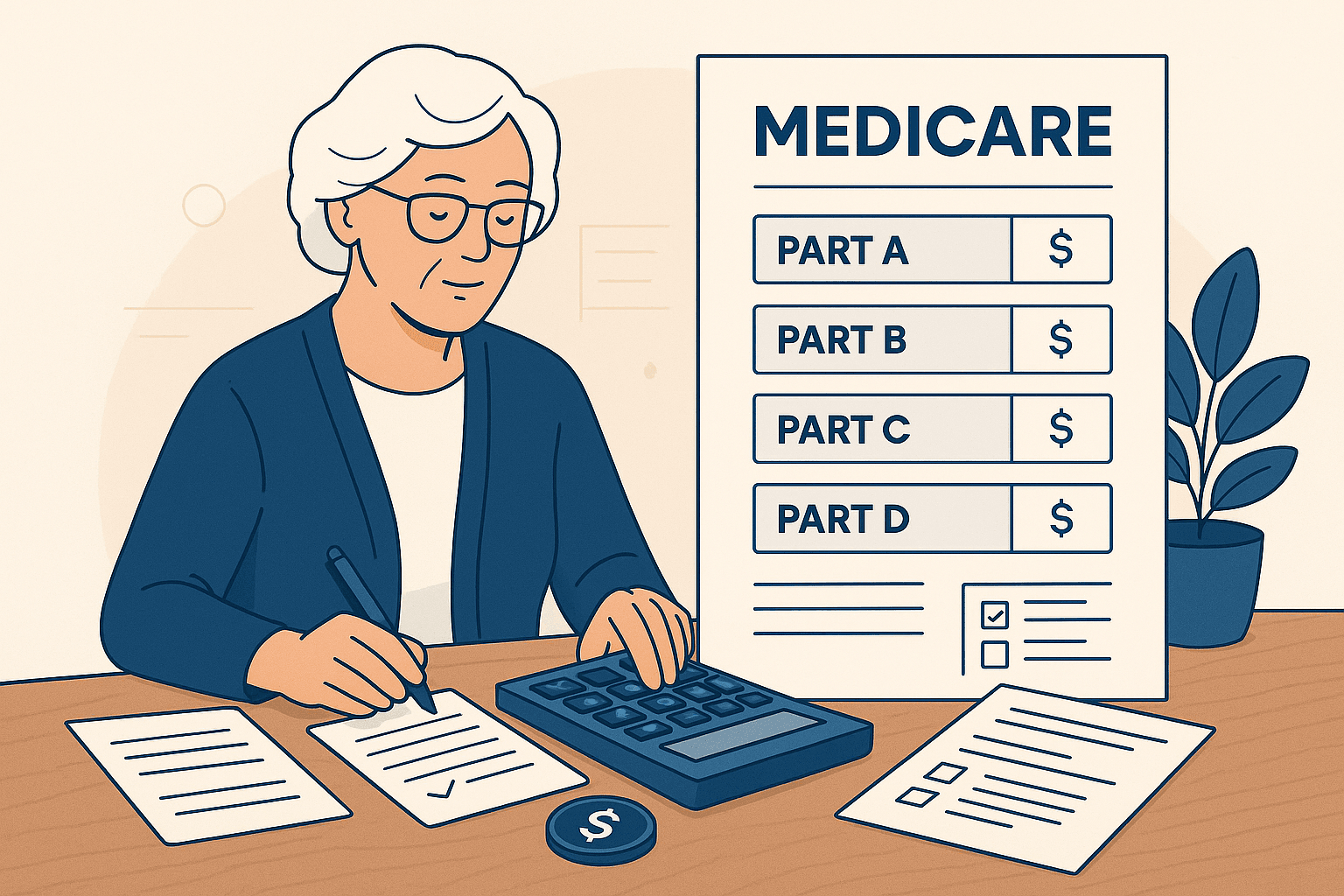
Estimating your annual Medicare costs is a crucial step in planning for a secure retirement, and it involves understanding the distinct premiums, deductibles, and copayments for Parts A, B, C, D,, learn more about assisted living vs independent living: key differences explained, learn more about how much does in-home care cost? hourly and monthly rates, learn more about medicare and assisted living: what's covered and what's not, learn more about nursing home vs assisted living: when to choose each and Medigap. This guide will walk you through each component, explain how costs can vary based on your income and plan choices,, learn more about in-home care vs assisted living: cost and care comparison and provide a clear methodology for creating your personalized annual estimate. By the end, you’ll know how to compare Medicare Advantage (Part C) and Original Medicare with a Medigap plan, empowering you to make an informed, confident decision about your healthcare coverage.
To begin, it’s helpful to understand that Medicare isn’t a single, monolithic program with one price tag. It’s more like a modular healthcare system, where you pay for the specific pieces you need. Your total cost is the sum of these individual parts, influenced by federal rules, your personal finances, and the specific insurance plans you select. The goal of a Medicare cost calculator—whether you use a sophisticated online tool or a simple pen-and-paper method—is to bring all these variables together into a coherent annual projection.
The Foundational Costs: Breaking Down Parts A & B
Your Medicare cost estimation starts with the foundation: Original Medicare, comprised of Part A (Hospital Insurance) and Part B (Medical Insurance). These are the constants in your equation, administered directly by the federal government.
Part A: The Hospital Stay Coverage
For most beneficiaries, Part A comes with a $0 premium. You’ve likely already paid for this through payroll taxes during your working years. However, “premium-free” does not mean “cost-free.” Part A has significant cost-sharing that activates when you use services.
Each benefit period—which begins the day you are admitted as an inpatient and ends when you haven’t received inpatient care for 60 consecutive days—carries its own deductible. For 2024, that deductible is $1,632. This covers your first 60 days of inpatient hospital care. If your stay extends beyond 60 days, you’ll pay a daily coinsurance: $408 per day for days 61-90, and $816 per day for up to 60 “lifetime reserve days.” Skilled nursing facility care, following a qualifying hospital stay, also has copayments: $0 for the first 20 days, then $204 per day for days 21-100.
Consider this: A single hospital stay that pushes into the coinsurance period can substantially impact your annual outlay. While we all hope to avoid lengthy admissions, a realistic budget accounts for this possibility.
Part B: The Doctor and Outpatient Coverage
This is where a fixed monthly premium enters the picture. The standard Part B premium in 2024 is $174.70. However, this amount is subject to an Income-Related Monthly Adjustment Amount (IRMAA). If your modified adjusted gross income from two years prior exceeds certain thresholds, your premium can increase significantly. For a single filer in 2024, premiums range from $174.70 up to $594.00 per month based on income.
Beyond the premium, Part B has an annual deductible ($240 in 2024). After meeting the deductible, you typically pay 20% of the Medicare-approved amount for most doctor services, outpatient therapy, and durable medical equipment. This 20% coinsurance has no annual out-of-pocket maximum under Original Medicare. This is the critical financial exposure that leads many to seek additional coverage.
Building on the Foundation: The Critical Choice of Supplemental Coverage
Here is where your cost estimation branches into two distinct paths. You must choose how to supplement Original Medicare to protect yourself from unlimited 20% coinsurance costs. This is the most significant financial decision you’ll make within Medicare.
Path One: Original Medicare with a Medigap Plan
A Medigap (Medicare Supplement) policy is private insurance that works alongside your Original Medicare. It pays after Medicare to cover some or all of your deductibles, coinsurance, and copayments. These plans are standardized by the federal government (Plans A, B, C, D, F, G, K, L, M, and N), meaning a Plan G from one company offers identical basic benefits to a Plan G from another, though premiums can vary widely.
- Estimating Medigap Costs: Your cost here is the monthly premium you pay to the private insurer. Premiums are influenced by your age, location, tobacco use, and the insurer’s pricing method (community-rated, issue-age-rated, or attained-age-rated). For a comprehensive plan like G or N, premiums can range from $100 to over $300 per month. The trade-off is predictability: once you pay your Medigap premium, your out-of-pocket costs for Medicare-covered services are often $0 or very low, providing profound peace of mind and simplifying your annual budgeting.
Path Two: A Medicare Advantage Plan (Part C)
Medicare Advantage is an alternative. Private insurance companies approved by Medicare provide these “all-in-one” bundles. They replace your Original Medicare (Parts A and B) and typically include Part D prescription drug coverage. When you join a Medicare Advantage Plan, you are still in Medicare, but the plan manages your care and costs.
- Estimating Medicare Advantage Costs: These plans often have low or even $0 monthly premiums (though you must still pay your Part B premium). The financial structure is different. Instead of a 20% coinsurance with no cap, Medicare Advantage Plans use copayments (e.g., $20 per primary care visit, $295 per day for hospital stays) and have a mandatory annual out-of-pocket maximum. In 2024, this maximum cannot exceed $8,850 for in-network services. Once you hit that limit, the plan pays 100% for covered services. Your estimation task involves forecasting your healthcare usage against the plan’s specific copayment schedule to gauge your likely annual spend.
The choice between these paths isn’t just mathematical; it’s about your preference for predictability versus potential upfront savings, and your willingness to manage provider networks.
Accounting for Prescriptions: The Part D Variable
Unless your Medicare Advantage Plan includes it, you will need a standalone Part D Prescription Drug Plan. This is a non-negotiable cost for most.
Part D plans have a monthly premium (varying by plan and region), an annual deductible (up to $545 in 2024), and then a cost-sharing structure during the initial coverage period, typically copays or coinsurance. The infamous “coverage gap” or “donut hole” has largely been closed, but there remains a phase where you pay 25% of the cost for brand-name and generic drugs until you reach the catastrophic coverage threshold.
Here’s the thing: Your drug costs are the most personal and variable part of the equation. An accurate estimate requires you to input your specific medications into the plan’s formulary. Two people with identical incomes and Medigap plans can have wildly different annual costs based solely on their prescription needs. This is where an online Medicare calculator becomes indispensable, as it can instantly compare dozens of Part D plans based on your drug list.
Pulling It All Together: Your Annual Estimation Methodology
Now, let’s synthesize these components into an annual estimate. Think of it as building a budget.
- Sum Your Fixed Premiums: Add your monthly Part B premium (adjusted for IRMAA if applicable), your Medigap or Medicare Advantage plan premium, and your Part D plan premium. Multiply this total by 12.
- Estimate Your Medical Usage: For Original Medicare + Medigap, this is straightforward—it’s often just your Part B deductible if your Medigap plan doesn’t cover it. For Medicare Advantage, review the plan’s Summary of Benefits. Estimate costs for your expected doctor visits, specialist consultations, and potential outpatient procedures using the listed copays.
- Model a “What-If” Hospital Scenario: Add the cost of a Part A hospital deductible ($1,632) or, if you have a Medigap plan, check if it’s covered. For Medicare Advantage, add the plan’s per-day hospital copay for a hypothetical 5-7 day stay.
- Calculate Your Prescription Drug Costs: Using your specific medications and a chosen Part D or Medicare Advantage Plan’s formulary, add up the projected annual copays and coinsurance. Don’t forget the deductible.
- Add It All Up: Total the figures from steps 1-4. For Medicare Advantage, ensure your total medical outlay (from steps 2 & 3) does not exceed the plan’s out-of-pocket maximum; if your estimate does, use the maximum amount instead.
This process reveals the core value of a digital Medicare cost calculator. It automates this complex, multi-variable math, instantly running scenarios across different Medigap letters and Medicare Advantage Plans available in your ZIP code. It turns a daunting spreadsheet exercise into an interactive exploration.
Beyond the Numbers: The Intangible Factors in Your Comparison
While the annual dollar figure is paramount, your comparison isn’t complete without considering these qualitative factors:
- Provider Network: Medicare Advantage Plans typically have networks (HMOs, PPOs). Are your doctors and preferred hospitals in-network? With Original Medicare + Medigap, you can see any provider nationwide who accepts Medicare.
- Prior Authorization: Medicare Advantage Plans often require pre-approval for certain services, tests, and specialist referrals—a layer of administrative oversight not present with Original Medicare.
- Travel Coverage: Original Medicare provides limited coverage outside the U.S. Some Medigap plans offer foreign travel emergency coverage. Most Medicare Advantage Plans do not, except in specific circumstances.
Your healthcare needs and lifestyle are part of the calculation. The plan with the slightly lower projected cost may carry higher restrictions or anxiety.
From Estimation to Action: Securing Your Coverage
An estimate is a planning tool. Turning that plan into reality requires action during your designated enrollment periods. Your Initial Enrollment Period around your 65th birthday is critical. If you’re comparing plans later, the Annual Election Period (October 15 - December 7) is your annual opportunity to switch Part D or Medicare Advantage Plans.
The most empowering step you can take is to move from general estimates to a personalized quote. A detailed analysis based on your ZIP code, health status, medications, and doctor preferences will give you the concrete numbers needed for a truly confident decision.
Ready to transform your Medicare cost estimate from a confusing puzzle into a clear, actionable plan? Our Medicare calculator is designed to do just that. It integrates all the variables—Parts A, B, D, Medigap, and Medicare Advantage—into a personalized snapshot. For a detailed review of your options and a precise quote tailored to your situation, schedule a consultation with our licensed advisors today. Let’s build your secure healthcare plan together.