Long-Term Care Insurance Explained: Do You Actually Need It?

70% of Americans who turn 65 will need some form of long-term care — at an average cost of $9,700/month for a nursing home in 2026. We ranked 5 LTC coverage options (traditional insurance, hybrid policies, short-term care, Medicaid planning, and self-insuring) by cost, flexibility, and who each is right for.

Published June 3, 2026Updated June 3, 2026
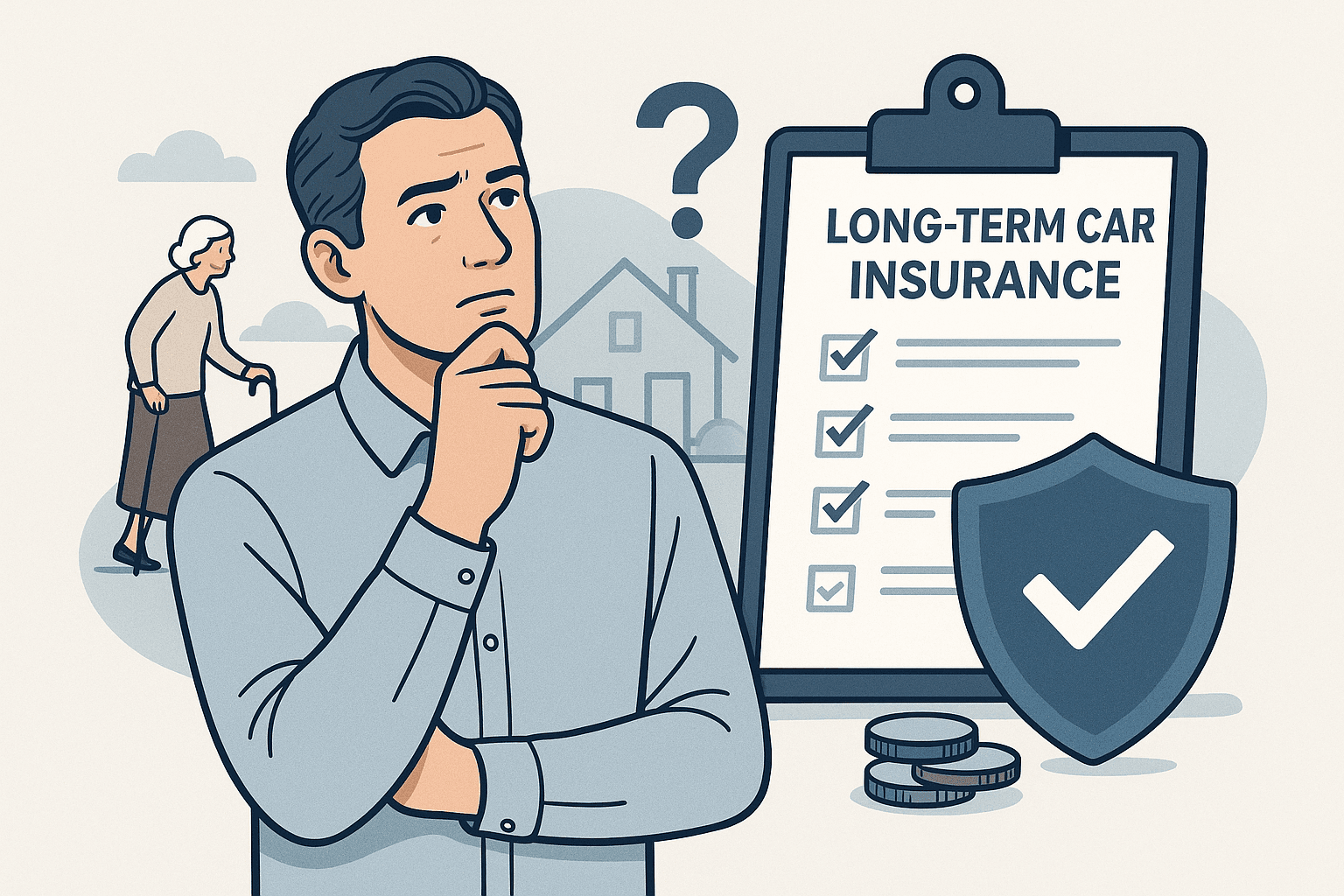
Long-Term Care Insurance Explained: Do You Actually Need It? - Featured image

The short answer: Long-term care (LTC) insurance covers the cost of care you can't get through health insurance or Medicare — things like assisted living, nursing home stays, and in-home aides. The odds you'll need it are real: 70% of Americans who turn 65 today will need some form of long-term care (HHS, 2023). A private nursing home room averages $9,700/month in 2026 (Genworth Cost of Care Survey). Whether you need LTC insurance depends on your assets, family support, and risk tolerance — but most people ignore this decision until it's too late.

Last updated: June 2026. Data sourced from HHS, Genworth Cost of Care Survey 2026, AALTCI, and NAIC.


How We Evaluated LTC Insurance Options

Criterion Weight
Cost of coverage vs. expected benefit 30%
Flexibility of care settings covered 25%
Financial strength of carrier 20%
Premium stability history 15%
Elimination period and inflation protection 10%

The 5 LTC Insurance Options Ranked


1. Traditional Standalone LTC Insurance — Best Pure Coverage

Best for: People ages 50–60 with assets of $250K–$1M who want maximum coverage flexibility

Traditional LTC insurance pays a daily or monthly benefit for qualifying care — home care, assisted living, adult day care, or nursing home — up to your policy limits. It's the most flexible and typically the most cost-efficient coverage option if you buy it before age 60.

What it covers:

Pros:

  • Highest benefit-to-premium ratio when purchased young (ages 50–60)
  • Inflation protection riders available (3% or 5% compound)
  • Covers all care settings, not just nursing homes
  • Premiums are partially tax-deductible for self-employed individuals

Cons:

  • Premiums can and have increased significantly (many carriers raised rates 50–100%+ over past decade)
  • "Use it or lose it" — if you never need care, premiums are not returned
  • Qualifying for coverage becomes harder with age and health conditions
  • Several major carriers have exited the market, reducing competition

Typical cost: $1,500–$3,000/year for a 55-year-old couple, combined, for $150/day benefit with a 90-day elimination period and 3-year benefit period.


2. Hybrid Life/LTC Policies — Best for Premium Protection

Best for: People who want LTC coverage but hate the "use it or lose it" nature of traditional insurance

Hybrid policies combine a life insurance death benefit with a long-term care rider. If you need LTC, the policy pays for care. If you don't, your heirs receive the death benefit. No premium is "wasted." The tradeoff: higher upfront cost and lower pure LTC benefit per dollar spent.

Pros:

  • No "use it or lose it" — money either pays for care or passes to heirs
  • Premiums are typically guaranteed never to increase
  • Simpler to underwrite than traditional LTC in some cases
  • Can be funded with a single lump-sum premium (asset repositioning)

Cons:

  • More expensive per dollar of LTC benefit than traditional standalone policies
  • Life insurance component dilutes LTC purchasing power
  • Inflation protection is less robust on most hybrid products
  • Complex product — illustration review required before purchase

Typical cost: $100,000–$300,000 lump-sum premium to fund $200,000–$500,000 in LTC benefits, depending on age and health.


3. Short-Term Care Insurance — Best for Tighter Budgets

Best for: People who can't qualify for or afford traditional LTC insurance

Short-term care insurance provides benefits for 360 days or less — covering the gap between a health event and Medicare coverage, or a brief care need. It's dramatically cheaper than traditional LTC insurance and easier to qualify for.

Pros:

  • Much lower premiums ($50–$150/month vs. $150–$300/month for traditional LTC)
  • Easier underwriting — accessible to people who don't qualify for traditional LTC
  • Fills the Medicare gap (Medicare covers only the first 20 days of skilled nursing facility care at 100%)

Cons:

  • 360-day maximum — insufficient for longer care needs (average nursing home stay is 2.5 years)
  • Not a substitute for comprehensive LTC coverage
  • Won't cover extended Alzheimer's or dementia care costs

Typical cost: $600–$1,800/year for a 65-year-old for $150/day benefit.


4. Medicaid Planning — Best for Low-Asset Households

Best for: People with limited assets who expect to qualify for Medicaid

Medicaid covers long-term care for those who qualify based on income and asset limits. In most states, a single person can have no more than $2,000 in countable assets to qualify. For couples, rules are more complex. Medicaid does cover assisted living in many states, but options are more limited than private pay.

See our full guide to Medicaid and assisted living coverage by state.

Pros:

  • No premium — government-funded for those who qualify
  • Covers nursing home care comprehensively
  • Spousal protection rules allow a healthy spouse to retain assets

Cons:

  • Strict asset and income limits — most middle-class households won't qualify without significant planning
  • Medicaid look-back rules (5 years) penalize asset transfers made before application
  • Quality and choice of facilities is more limited than private pay
  • Not a substitute for insurance if you have assets to protect

Typical planning cost: $3,000–$10,000 in elder law attorney fees for Medicaid planning; Medicaid itself has no premium.


5. Self-Insuring — Best for High-Net-Worth Households

Best for: Individuals with $2M+ in liquid assets

Self-insuring means setting aside assets to cover future LTC costs instead of paying insurance premiums. At $2M+ in liquid assets, the math often favors self-insurance — the expected LTC cost ($250,000–$400,000 lifetime average) is a manageable percentage of the portfolio.

Pros:

  • No premium payments; assets remain invested
  • Full control over care choices — no insurer approval required
  • Remaining assets pass to heirs if care is less expensive than projected
  • No carrier risk (no concern about insurer solvency or premium increases)

Cons:

  • Catastrophic care needs (Alzheimer's, 7–10 year nursing home stays) can erode even substantial portfolios
  • Requires discipline to actually earmark assets for LTC, not spend them
  • Full cognitive decline can impair ability to direct care even with assets available

Threshold: Most financial planners suggest self-insuring is viable at $2M+ in liquid assets. Between $500K–$2M, LTC insurance typically makes economic sense. Below $500K, Medicaid planning is often the most practical path.


LTC Option Comparison Table

Option Best Ages to Buy Avg Annual Cost "Use It or Lose It" Inflation Protected
Traditional LTC 50–60 $1,500–$3,000 Yes Optional rider
Hybrid Life/LTC 45–65 Lump sum $100K+ No Limited
Short-Term Care 60–75 $600–$1,800 Yes Rarely
Medicaid Planning Any (plan early) $3K–$10K attorney N/A N/A
Self-Insurance Any $0 premium N/A Yes (invested)

The Real Cost of Long-Term Care in 2026

Care Type Avg Monthly Cost (2026)
In-home aide (44 hrs/week) $6,292
Adult day health care $2,080
Assisted living facility $5,900
Nursing home (semi-private) $8,929
Nursing home (private room) $9,733

Source: Genworth Cost of Care Survey 2026. National medians — regional variation is significant.

Medicare does NOT cover most long-term care. Medicare Supplement plans and Medicare Part D do not include LTC benefits. Medicare Supplement (Medigap) plans cover only acute medical care, not custodial LTC.


When to Buy LTC Insurance

The single most important variable is age at purchase. A 50-year-old pays roughly half what a 65-year-old pays for the same coverage. And insurers apply increasingly strict health underwriting as you age.

General guidelines:

  • Ages 45–55: Ideal window — best rates, easiest underwriting
  • Ages 55–65: Still viable; rates higher but coverage is valuable
  • Ages 65–70: Possible but expensive; health conditions may preclude coverage
  • Ages 70+: Traditional LTC difficult to obtain; explore hybrid or short-term care

FAQ

What does long-term care insurance actually cover?
LTC insurance covers custodial care — help with activities of daily living (ADLs) like bathing, dressing, toileting, and eating — that health insurance and Medicare do not cover. It pays for in-home aides, assisted living, adult day care, memory care, and nursing home care, subject to policy limits.

Does Medicare cover long-term care?
Medicare covers short-term skilled nursing facility care — up to 100 days following a qualifying hospital stay, with significant copays after day 20. It does not cover custodial care (help with daily activities), which is what most long-term care actually consists of.

How much does long-term care insurance cost in 2026?
A 55-year-old couple pays an average of $1,500–$3,000/year combined for a traditional LTC policy with $150/day benefit, 90-day elimination period, and 3-year benefit period. Costs increase significantly with age and decline in health.

What are hybrid LTC policies?
Hybrid policies combine life insurance with a long-term care rider. If you need care, the policy pays LTC benefits. If you don't, your heirs receive a death benefit. Premiums are guaranteed not to increase. The tradeoff is a higher cost per dollar of LTC benefit vs. standalone policies.

Who needs long-term care insurance?
People with $250,000–$2,000,000 in assets typically benefit most from LTC insurance. Below $250K, Medicaid planning may be more practical. Above $2M in liquid assets, self-insuring is often viable. The decision also depends on family support availability and personal risk tolerance.

Can you be denied LTC insurance?
Yes — insurers use health underwriting. Conditions like Alzheimer's, Parkinson's, MS, recent cancer, or diabetes with complications can result in denial. Buying earlier means fewer health conditions to disclose and better approval odds.

What is the average length of a nursing home stay?
The average nursing home stay is approximately 2.5 years, but stays for cognitive conditions (Alzheimer's, dementia) frequently extend 5–10 years. A 3-year benefit period covers most cases; a 5-year unlimited policy covers catastrophic scenarios.


Methodology

Data sourced from: Genworth Cost of Care Survey 2026, U.S. Department of Health and Human Services LTC statistics (2023), American Association for Long-Term Care Insurance (AALTCI) premium survey 2026, NAIC insurance market data. Individual quotes vary significantly by age, health, state of residence, and benefit design. Always obtain multiple quotes from a licensed LTC specialist.


This guide is for informational purposes only and does not constitute financial, insurance, or legal advice. Long-term care insurance products vary by state and insurer. Consult a licensed financial advisor or elder law attorney before making LTC planning decisions.

Reviewed by the SeniorSimple Editorial Team | Last updated: June 3, 2026

Related Articles

Stay Informed About Retirement Planning

Get expert insights and practical advice delivered to your inbox weekly.

Join 50,000+ seniors making informed retirement decisions.