Last updated: June 2026 | Reviewed by the SeniorSimple Editorial Team
By the SeniorSimple Editorial Team | Financial educators specializing in retirement and healthcare planning for Americans 55+
Choosing a Medicare plan is one of the most important financial decisions you'll make in retirement — (learn more about beneficiary planner tool: organize your beneficiary designations) (learn more about "how annuities can help fund your medical tourism expenses") (learn more about healthcare cost strategy guide) (learn more about complete guide to memory care: understanding alzheimer's and dementia care) (learn more about disability insurance strategy guide) (learn more about medicare enrollment periods explained) and one of the most confusing. The short answer is this: you choose between two paths — Original Medicare (often paired with a Medigap supplement and a separate drug plan) or Medicare Advantage (an all-in-one plan from a private insurer) — and the right choice depends on your health, your budget, the doctors you want to keep, and how much financial predictability you need.
This guide walks you through that decision in plain language. There is no single "best" plan for everyone, despite what television commercials suggest. The best plan is the one that fits your doctors, your prescriptions, and your tolerance for risk. By the end, you'll understand exactly how Medicare is structured, what each piece costs in 2026, and the step-by-step process for choosing the coverage that's right for you.
What you will learn in this guide:
- The four parts of Medicare and what each one actually covers
- The single biggest decision: Original Medicare vs. Medicare Advantage
- What every piece of Medicare costs in 2026, with real dollar figures
- A seven-step process for choosing your plan with confidence
- A clear decision framework for weighing your two paths against each other
- The enrollment windows that determine when you can choose or switch — and the penalties for missing them
- The most common mistakes people make, and how to avoid them
A note on this guide: This is educational information, not personalized medical, insurance, or financial advice. Medicare rules are complex and your situation is unique. Before enrolling, confirm details with Medicare.gov, your State Health Insurance Assistance Program (SHIP), or a licensed advisor.
What Is Medicare?
Medicare is the federal health insurance program for people who are 65 or older, as well as for certain younger people with disabilities or specific conditions like End-Stage Renal Disease and ALS. It's funded by payroll taxes you paid during your working years, along with premiums, and it covers the majority of Americans once they reach retirement age.
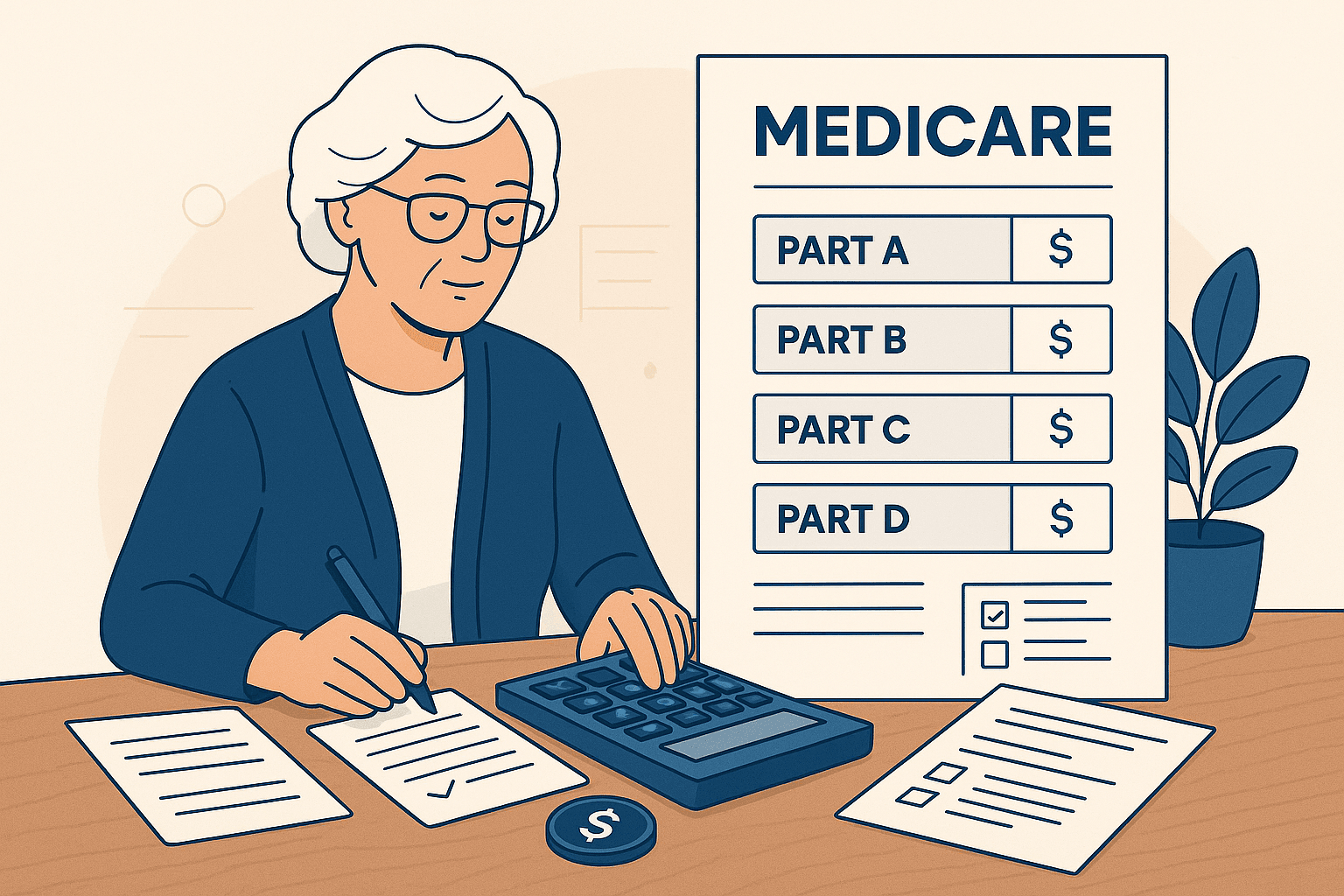
The thing that trips most people up is that Medicare is not one single plan you sign up for. It's a system made up of four "parts," and the way you assemble those parts is the entire decision you're making. Understanding the parts is the foundation for everything else.
Medicare Part A (Hospital Insurance) covers inpatient hospital stays, skilled nursing facility care, hospice, and some home health care. Most people get Part A premium-free because they (or a spouse) paid Medicare taxes for at least 10 years (40 quarters) of work.
Medicare Part B (Medical Insurance) covers doctor visits, outpatient care, preventive services, lab tests, durable medical equipment, and ambulance services. Part B has a monthly premium that nearly everyone pays.
Together, Part A and Part B are called Original Medicare — the traditional, government-run program.
Medicare Part C (Medicare Advantage) is the alternative to Original Medicare. These are bundled plans offered by private insurance companies approved by Medicare. A Medicare Advantage plan includes everything Part A and Part B cover, almost always includes drug coverage, and often adds extras like dental, vision, and hearing. We'll spend a lot of time on this below, because choosing between Original Medicare and Medicare Advantage is the central decision.
Medicare Part D (Prescription Drug Coverage) helps pay for prescription medications. If you choose Original Medicare, you add a standalone Part D plan. If you choose most Medicare Advantage plans, drug coverage is already built in.
There's also one more piece that isn't technically a "part" of Medicare but is critical to the decision: Medigap (Medicare Supplement Insurance). Medigap policies are sold by private insurers and pay for many of the out-of-pocket costs Original Medicare leaves behind — the deductibles, copays, and coinsurance. Medigap only works with Original Medicare; you cannot use it with a Medicare Advantage plan. For a deeper look, see our full guide to Medicare Supplement (Medigap) plans.
The Central Decision: Original Medicare vs. Medicare Advantage
Almost every Medicare choice flows from one fork in the road. You can go with Original Medicare or with Medicare Advantage, and these two paths work very differently. Most of the confusion people feel comes from not realizing this is the first and most important decision to make.
Path 1: Original Medicare (often + Medigap + Part D)
With Original Medicare, you have Part A and Part B directly through the federal government. You can see any doctor or use any hospital in the country that accepts Medicare — and the overwhelming majority do. There are no networks and no referrals needed to see a specialist.
The trade-off is that Original Medicare alone has no annual cap on what you might spend out of pocket. That's why most people who choose this path also buy a Medigap policy to cover the gaps, and a standalone Part D plan for prescriptions. When you add those two pieces, you get a setup with very predictable costs: you pay fixed monthly premiums, and your supplement absorbs most or all of the surprise bills.
This path tends to suit people who want maximum freedom to choose providers, who travel frequently or split time between states, who have ongoing health conditions and value predictability, or who want to keep a specific doctor or specialist.
Path 2: Medicare Advantage (Part C)
With Medicare Advantage, a private insurer manages your Medicare benefits. You still have Medicare, but you get your coverage through the plan rather than directly from the government. These plans usually have lower (sometimes $0) monthly premiums and bundle in drug coverage plus extras like dental, vision, hearing aids, and gym memberships.
The trade-offs are real. Medicare Advantage plans use provider networks — HMOs and PPOs — so you generally need to use in-network doctors and may need referrals. They often require prior authorization for certain services, which means the plan must approve some care before you receive it. And while they cap your annual out-of-pocket spending (a genuine advantage over Original Medicare alone), your costs come as copays and coinsurance as you use care, which can be less predictable month to month.
This path tends to suit people who are generally healthy, who are comfortable working within a network, who want the lowest possible premium, and who value the bundled extras.
Our companion article breaks this comparison down in detail: Medicare vs. Medicare Advantage: Pros and Cons for 2026. One important 2026 development to be aware of: a number of insurers have trimmed or exited certain Medicare Advantage markets, so always confirm your plan is still offered before you renew. See Medicare Advantage plan exits in 2026.
How Each Piece of Coverage Works
Before you can choose, it helps to understand the mechanics of each component you might assemble.
Part A: Hospital Coverage
Part A kicks in when you're admitted to a hospital as an inpatient. You pay a deductible for each "benefit period," and after a certain number of days, daily coinsurance applies. Part A also covers skilled nursing facility care after a qualifying hospital stay, hospice, and limited home health care. Most people pay no premium for Part A.
Part B: Medical Coverage
Part B is your everyday medical coverage — doctor appointments, outpatient surgery, preventive screenings, mental health care, and durable medical equipment like walkers and wheelchairs. After you meet the annual deductible, you typically pay 20% of the Medicare-approved amount for most services, and Medicare pays the other 80%. That 20% has no ceiling under Original Medicare alone, which is exactly the gap Medigap is designed to fill.
Part D: Prescription Drug Coverage
Part D plans are run by private insurers and vary widely in which drugs they cover (their "formulary"), what tier each drug falls into, and which pharmacies are preferred. A major 2026 improvement: there is now a hard annual cap on what you pay out of pocket for covered drugs (more on the exact figure below). For a plain-English walkthrough, see Medicare prescription drug coverage explained. If you take newer medications — for example, GLP-1 drugs — coverage varies by plan, so check the formulary carefully (GLP-1 drugs covered by Medicare in 2026).
Medigap: Filling the Gaps
Medigap policies are standardized and labeled by letter — Plan G, Plan N, Plan K, and so on. Every Plan G sold by every insurer covers the same things by law, so the only differences between two Plan G policies are price and the company's service. The most popular choices for new enrollees are Plan G and Plan N. Plan G covers nearly everything Original Medicare doesn't (except the Part B deductible), while Plan N has a lower premium in exchange for small copays at the doctor and ER. Our guides cover this in depth: Medigap plans explained and Plan G vs. Plan N for 2026.
Critical timing note: The best time to buy Medigap is during your six-month Medigap Open Enrollment Period, which starts the month you're 65 and enrolled in Part B. During this window, insurers must sell you any policy at the best available rate regardless of your health. Miss it, and in most states they can deny you or charge more based on pre-existing conditions. This is one of the most important — and most frequently missed — deadlines in all of Medicare.
2026 Medicare Costs at a Glance
Knowing the real numbers makes the decision concrete. Here are the official 2026 figures, announced by the Centers for Medicare & Medicaid Services (CMS).
| Medicare cost (2026) |
Amount |
| Part B standard monthly premium |
$202.90 |
| Part B annual deductible |
$283 |
| Part A inpatient hospital deductible (per benefit period) |
$1,736 |
| Part A coinsurance, days 61–90 |
$434/day |
| Part A coinsurance, lifetime reserve days |
$868/day |
| Skilled nursing facility coinsurance, days 21–100 |
$217/day |
| Part A premium (30–39 work quarters) |
$311/month |
| Part A premium (fewer than 30 quarters) |
$565/month |
| Part D annual out-of-pocket maximum |
$2,100 |
A few things worth highlighting. The Part B premium rose to $202.90 in 2026, up from $185.00 in 2025 — about a 9.7% increase. If that jump matters for your budget, see what the Part B premium increase means and how to plan around it. And the $2,100 Part D out-of-pocket cap is one of the most consequential changes in years: once your covered drug spending hits $2,100, you pay nothing more for covered drugs for the rest of the calendar year. For people on expensive specialty medications, that's a transformative protection that simply didn't exist a few years ago.
Higher earners pay more for Parts B and D through a surcharge called IRMAA, which we cover in the costs section below.
Step-by-Step: How to Choose Your Medicare Plan
Here is the actual process, in the order that makes the decision manageable. Work through it one step at a time.
Step 1: Confirm Your Enrollment Timing
First, figure out when you're choosing. If you're approaching 65, your Initial Enrollment Period is a seven-month window: the three months before the month you turn 65, the month itself, and the three months after. If you're already on Medicare and want to switch, you'll generally use the fall Annual Enrollment Period (more on all the windows below). Knowing your window tells you how much time you have and which choices are available to you right now.
Step 2: List Your Doctors and Prescriptions
Make two simple lists: the doctors and hospitals you want to keep, and every prescription you currently take (with dosages). This single step does more to narrow your options than anything else. If keeping a specific doctor or specialist is non-negotiable, that pushes you toward Original Medicare, where almost every provider participates. If your medications are expensive or unusual, you'll want to check each plan's drug formulary carefully.
Step 3: Decide Your Priority — Freedom or Lowest Premium
Be honest about what matters most to you. Do you value the freedom to see any provider anywhere, with predictable costs — even if it means higher monthly premiums? Or do you prioritize the lowest possible premium and bundled extras, and you're comfortable staying in a network? Your honest answer here essentially selects your path. There is no wrong answer; there's only the answer that fits your life.
Step 4: Choose Your Path
Based on Steps 2 and 3, choose between Original Medicare (Path 1) and Medicare Advantage (Path 2). If you choose Original Medicare, you'll also be shopping for a Medigap policy and a Part D drug plan. If you choose Medicare Advantage, you'll be shopping for a single plan that bundles everything.
Step 5: Compare Specific Plans on Total Cost — Not Just Premium
This is where most people go wrong. A $0-premium plan is not free; you pay through copays, coinsurance, and out-of-pocket maximums when you actually use care. Compare plans on your estimated total annual cost — premiums plus expected out-of-pocket spending based on your real health needs — not the headline premium. Use the official Plan Finder at Medicare.gov to enter your drugs and pharmacies and see true projected costs.
Step 6: Verify Networks and Formularies
If you chose Medicare Advantage, confirm your doctors are in-network and your medications are on the formulary at a tier you can afford. If you chose a standalone Part D plan, do the same drug check. Networks and formularies change every year, so verify for the specific plan year you're enrolling in — not last year's information.
Step 7: Enroll, Then Review Every Year
Once you've confirmed the fit, enroll through Medicare.gov, the plan directly, or a licensed broker (whose services are free to you). Then mark your calendar: review your coverage every fall during Annual Enrollment, because plans change their costs, networks, and drug coverage annually. The plan that was perfect this year may not be next year. Our step-by-step Medicare application guide walks through the mechanics of signing up.
A Decision Framework: Weighing Your Two Paths
If you're still torn between Original Medicare and Medicare Advantage, run your situation through these questions. The more you answer in a given direction, the clearer your path becomes.
Lean toward Original Medicare + Medigap + Part D if:
- You want to keep a specific doctor or specialist, or see providers without referrals
- You travel often, snowbird between states, or want nationwide coverage
- You have a chronic condition and value highly predictable, capped costs
- You'd rather pay a steady premium than face variable copays when you're sick
- You can afford somewhat higher monthly premiums for that peace of mind
Lean toward Medicare Advantage if:
- You're generally healthy and use care infrequently
- You want the lowest possible monthly premium
- The bundled extras (dental, vision, hearing, fitness) are valuable to you
- You're comfortable using a provider network and getting referrals
- Your preferred doctors are already in the plan's network
One honest trade-off to sit with: Medicare Advantage is easiest to join and hardest to leave. If you start with Medicare Advantage and later want to switch to Original Medicare with a Medigap policy — often because your health declined and you now want the freedom and predictability — you may be subject to medical underwriting for the Medigap policy in most states, meaning you could be denied or charged more. This is why your health trajectory, not just your health today, belongs in the decision.
Enrollment Periods: When You Can Choose or Change
Medicare runs on a calendar of enrollment windows. Choosing the right plan does you no good if you try to do it at the wrong time. Here are the windows that matter.
Initial Enrollment Period (IEP). Your first window, around your 65th birthday — the three months before your birth month, your birth month, and the three months after. This is when most people first sign up.
Annual Enrollment Period (AEP), October 15 – December 7. The big one. Every year during this window you can switch between Original Medicare and Medicare Advantage, change Medicare Advantage plans, or join, drop, or switch a Part D plan. Changes take effect January 1. This is also your annual reminder to re-shop your coverage. See what every senior needs to know before open enrollment.
Medicare Advantage Open Enrollment Period, January 1 – March 31. If you're already in a Medicare Advantage plan, you get one chance in the new year to switch to a different Advantage plan or return to Original Medicare (and add a Part D plan).
General Enrollment Period (GEP), January 1 – March 31. For people who missed their Initial Enrollment Period and don't qualify for a Special Enrollment Period. Late penalties may apply.
Special Enrollment Periods (SEPs). Triggered by life events — losing employer coverage, moving out of your plan's service area, qualifying for Extra Help, and others. SEPs give you a limited window to make changes outside the normal calendar.
Medigap Open Enrollment Period. As noted earlier, this six-month window — starting the month you're 65 and enrolled in Part B — is your one guaranteed-issue shot at any Medigap policy regardless of health. It does not repeat, so protect it.
Common Mistakes to Avoid
Even careful people stumble on the same handful of errors. Knowing them in advance is half the battle.
Choosing a plan based on premium alone. A low or $0 premium can hide high copays, coinsurance, and out-of-pocket maximums. Always compare total expected annual cost based on your real health needs.
Missing the Medigap Open Enrollment window. This is the costliest timing mistake in Medicare. Once your six-month guaranteed-issue window closes, buying a supplement later can mean medical underwriting, higher rates, or denial.
Not checking the drug formulary. A plan can be excellent overall and still not cover a medication you depend on — or cover it at an unaffordable tier. Always run your specific drugs through the plan before enrolling.
Assuming your doctors are in-network. With Medicare Advantage, networks change yearly and providers come and go. Confirm for the exact plan year, not last year's directory.
Setting it and forgetting it. Plans change their costs, networks, and formularies every single year. Failing to review during Annual Enrollment is how people end up overpaying or losing access to a needed drug or doctor.
Delaying Part B or Part D without creditable coverage. If you don't sign up when first eligible and you don't have other creditable coverage, you can face lifelong late-enrollment penalties (covered next).
Trusting a TV ad over a cost comparison. Marketing pushes whatever pays the most commission. Your decision should come from the Plan Finder and your own two lists — doctors and drugs — not from a celebrity spokesperson.
Costs, Penalties, and the IRMAA Surcharge
Beyond premiums and deductibles, two cost factors can change your math significantly.
IRMAA: The High-Income Surcharge
If your income is above a threshold, you pay an Income-Related Monthly Adjustment Amount (IRMAA) on top of your standard Part B and Part D premiums. For 2026, IRMAA begins for individuals with modified adjusted gross income (MAGI) above $109,000 and for married couples filing jointly above $218,000. The surcharge is tiered and rises with income; Part D surcharges in 2026 range from about $14.50 to $91.00 per month on top of your plan's premium, with Part B surcharges considerably larger at the top brackets.
Two important nuances. First, IRMAA is based on your tax return from two years prior — your 2026 surcharge looks at your 2024 income. Second, if your income has since dropped due to a life-changing event (retirement, loss of a spouse, reduced work hours), you can appeal using Form SSA-44. There are also legitimate planning strategies — Roth conversions timed carefully, managing capital gains — to keep income under the brackets. See how to avoid the IRMAA Medicare surcharge.
Late-Enrollment Penalties
Medicare uses permanent penalties to encourage timely enrollment. The Part B late-enrollment penalty adds 10% to your premium for each full 12-month period you could have had Part B but didn't — and it lasts for as long as you have Part B. The Part D late-enrollment penalty adds roughly 1% of the national base beneficiary premium for every month you went without creditable drug coverage, and it's added to your premium for life. The lesson is simple: enroll on time, or make sure you have other creditable coverage that lets you delay without penalty.
Frequently Asked Questions
What's the difference between Medicare and Medicaid?
Medicare is federal health insurance based primarily on age (65+) or disability. Medicaid is a joint federal-state program based on income and need. Some people qualify for both ("dual eligible"). See Medicaid vs. Medicare differences.
Do I have to choose between Original Medicare and Medicare Advantage?
Yes. You can't have both at the same time. You either keep Original Medicare (and optionally add Medigap and Part D) or you enroll in a Medicare Advantage plan that replaces how you receive your benefits.
Is Medicare Advantage cheaper than Original Medicare?
Often it has a lower monthly premium — sometimes $0 — but "cheaper" depends on how much care you use. Advantage plans charge copays and coinsurance as you go, so a heavy year of medical use can cost more than the steadier premiums of Original Medicare plus Medigap. Compare total expected cost, not premium.
Can I keep my own doctor?
With Original Medicare, almost certainly — most providers nationwide accept it. With Medicare Advantage, only if your doctor is in that plan's network. This is exactly why making a list of your doctors first is so important.
What is Medigap, and do I need it?
Medigap (Medicare Supplement) is a private policy that pays many of the out-of-pocket costs Original Medicare leaves behind. You only need it if you choose Original Medicare — and many people on that path find it well worth the predictability. It cannot be used with Medicare Advantage.
When is the best time to buy a Medigap policy?
During your six-month Medigap Open Enrollment Period, which starts the month you turn 65 and are enrolled in Part B. During this window you have guaranteed-issue rights regardless of your health.
What does Part D cover, and how much will I pay in 2026?
Part D covers prescription drugs, with each plan setting its own formulary. In 2026, your out-of-pocket spending on covered drugs is capped at $2,100 for the year — after which you pay nothing more for covered drugs that calendar year.
How much does Medicare cost in 2026?
The standard Part B premium is $202.90/month with a $283 annual deductible. Part A is premium-free for most people, with a $1,736 inpatient deductible per benefit period. Medigap and Part D premiums vary by plan and insurer, and higher earners pay IRMAA surcharges.
What is IRMAA?
It's a surcharge on Parts B and D for higher earners, beginning in 2026 at MAGI above $109,000 (single) or $218,000 (joint), based on your income from two years earlier.
What happens if I don't sign up on time?
You may face permanent late-enrollment penalties for Part B (10% per 12-month period delayed) and Part D (about 1% of the base premium per uncovered month), unless you had other creditable coverage.
Can I change my mind after I choose?
Yes, during the appropriate windows. You can switch during the Annual Enrollment Period (Oct 15 – Dec 7), and Medicare Advantage members get an extra switch window Jan 1 – Mar 31. But switching back to Original Medicare with Medigap may involve medical underwriting after your guaranteed-issue window closes.
Do I need to re-enroll every year?
No — your coverage renews automatically. But you should review it every year during Annual Enrollment, because plan costs, networks, and drug formularies change annually.
Should I use a broker, and does it cost extra?
A licensed independent broker can help you compare plans at no cost to you (they're paid by the insurers). Just make sure they represent multiple carriers so the advice isn't skewed toward one company's products.
Where can I get unbiased help?
Your State Health Insurance Assistance Program (SHIP) offers free, unbiased Medicare counseling, and the official Plan Finder at Medicare.gov lets you compare plans using your own drugs and pharmacies.
Conclusion: The Right Plan Is the One That Fits You
Choosing a Medicare plan comes down to a clear sequence: understand the parts, pick your path (Original Medicare or Medicare Advantage), compare specific plans on total cost rather than premium alone, verify your doctors and drugs, and enroll within the correct window. The "best" plan isn't the one with the flashiest ad or the lowest premium — it's the one that keeps your doctors, covers your medications, fits your budget, and gives you the financial predictability you need.
Take it one step at a time, make your two lists, and don't let the commercials rush you. A few hours of careful comparison now can save you thousands of dollars and a great deal of stress over the years ahead.
Where to go next:
This guide is for educational purposes only and does not constitute medical, insurance, legal, or financial advice. Medicare rules, costs, and plan availability change and vary by location. Always verify current details at Medicare.gov, with your State Health Insurance Assistance Program (SHIP), or with a licensed advisor before making enrollment decisions. SeniorSimple is not affiliated with or endorsed by the federal Medicare program or any government agency.